The humanitarian crisis in the Rohingya refugee camps of southern Bangladesh has reached a critical breaking point. Already the largest refugee settlement in the world, these overcrowded camps are struggling to absorb a renewed surge of arrivals fleeing a fresh wave of extreme violence in Myanmar. Since early 2024, the security situation in Rakhine State has shifted drastically as the conflict between the Myanmar military and the Arakan Army (AA) intensifies, leaving the Rohingya trapped in the crossfire of a brutal power struggle.
While the Rohingya have faced decades of state-sponsored persecution, they are now facing a terrifying new reality. In areas like Buthidaung and Maungdaw townships—traditionally the heartland of the Rohingya population—reports indicate that the Arakan Army is carrying out systematic campaigns of arson, drone strikes on civilians, and forced displacement. These townships, once home to hundreds of thousands, have been nearly completely ethnically cleansed as villages are burned to the ground and survivors are pushed toward the Naf River.
The brutality of recent attacks, including targeted drone strikes on families attempting to flee, suggests a deliberate effort to permanently remove the Rohingya from Rakhine. Many who manage to reach the safety of Balukhali or Kutupalong camps arrive with severe physical injuries and deep psychological trauma, only to face a dire lack of specialized medical care and dwindling international aid. At the current pace of atrocities, observers fear that the centuries-old presence of the Rohingya in Myanmar is being systematically erased, leaving a "lost generation" to face an uncertain and stateless future in the sprawling bamboo cities of Bangladesh.
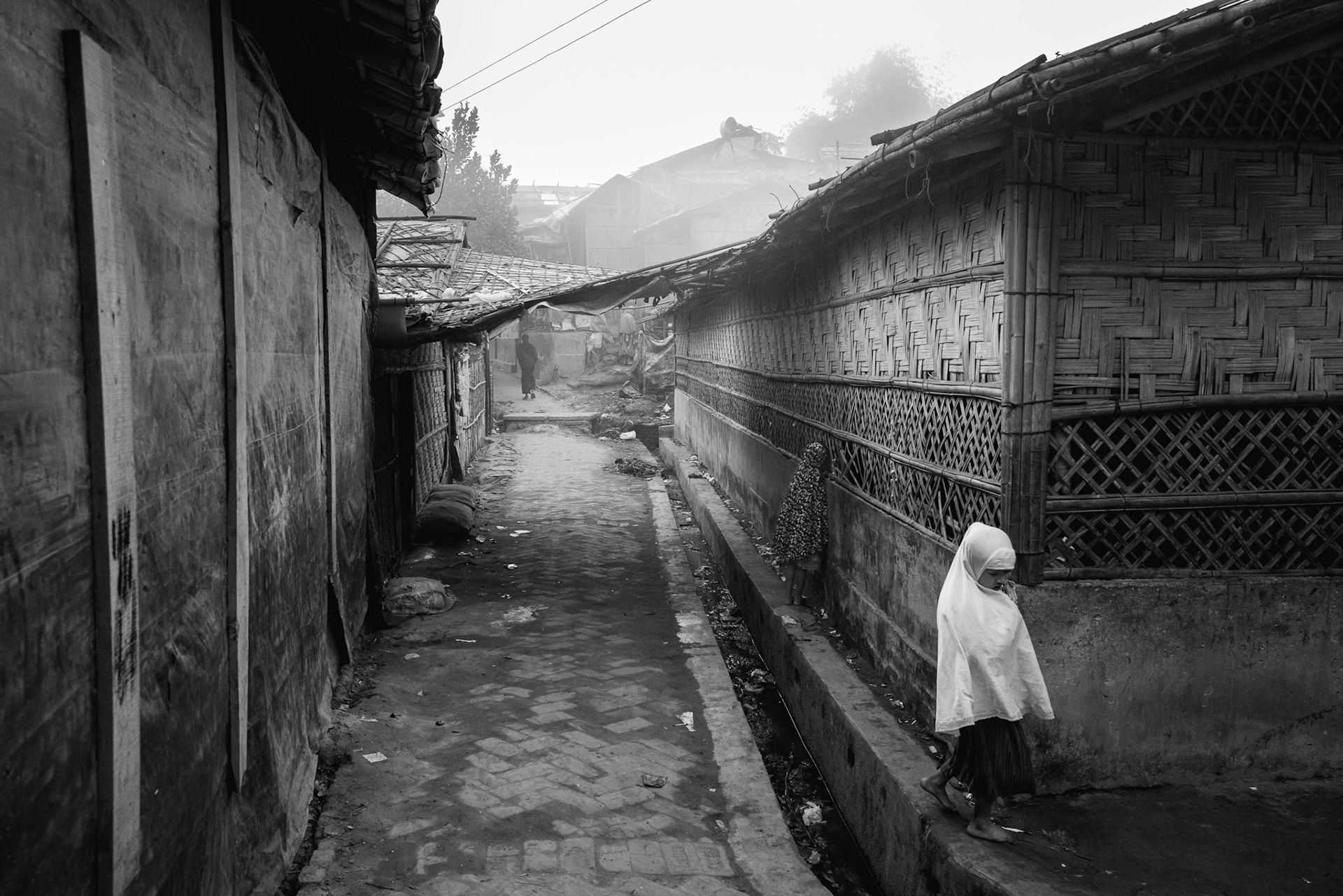
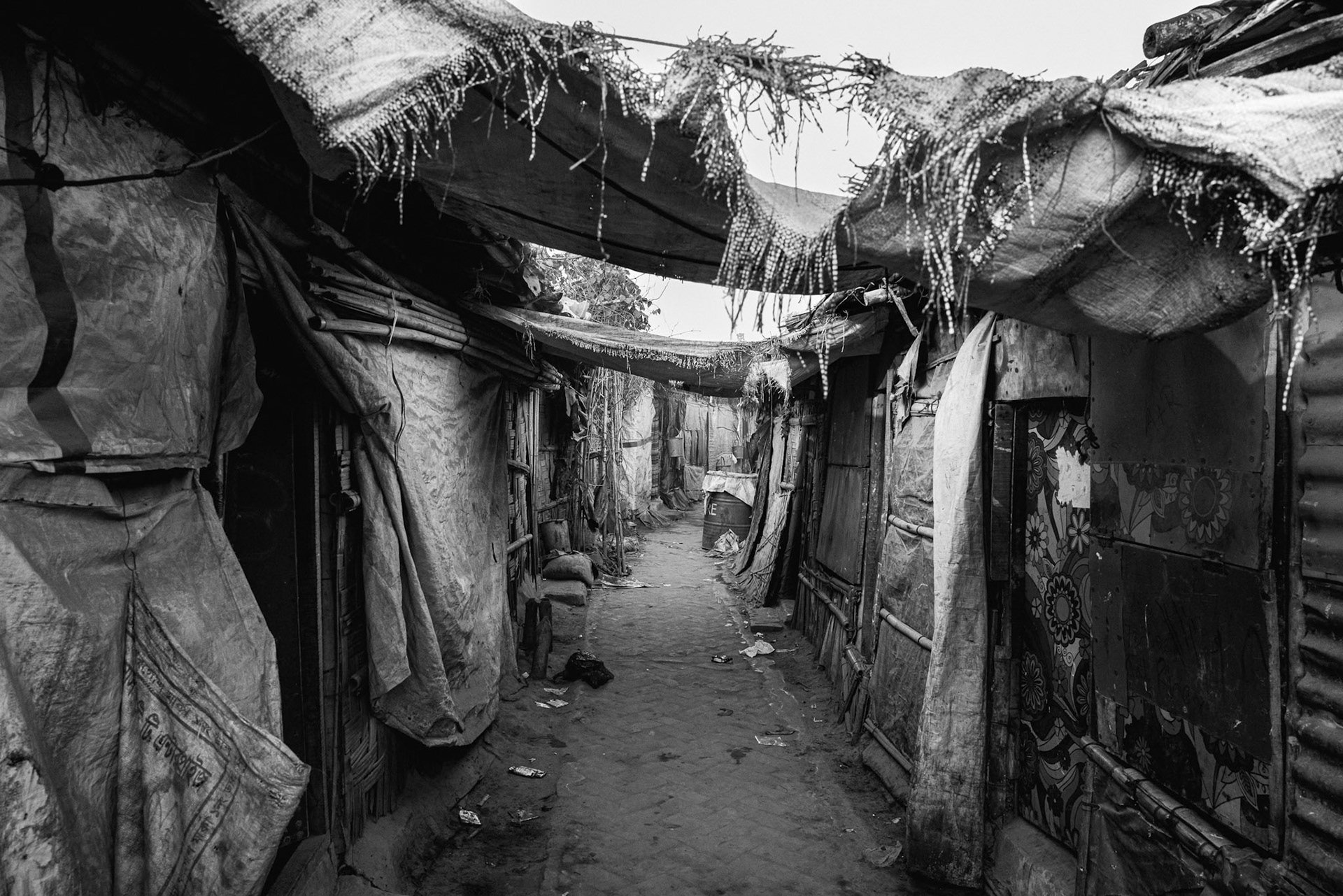
A view of a narrow, brick-paved alleyway between shelters where young girls are walking to a religious school in the early morning. In the camps, religious schools (madrasas) are often the primary form of education available to children. Balukhali camp, Bangladesh, January 2026
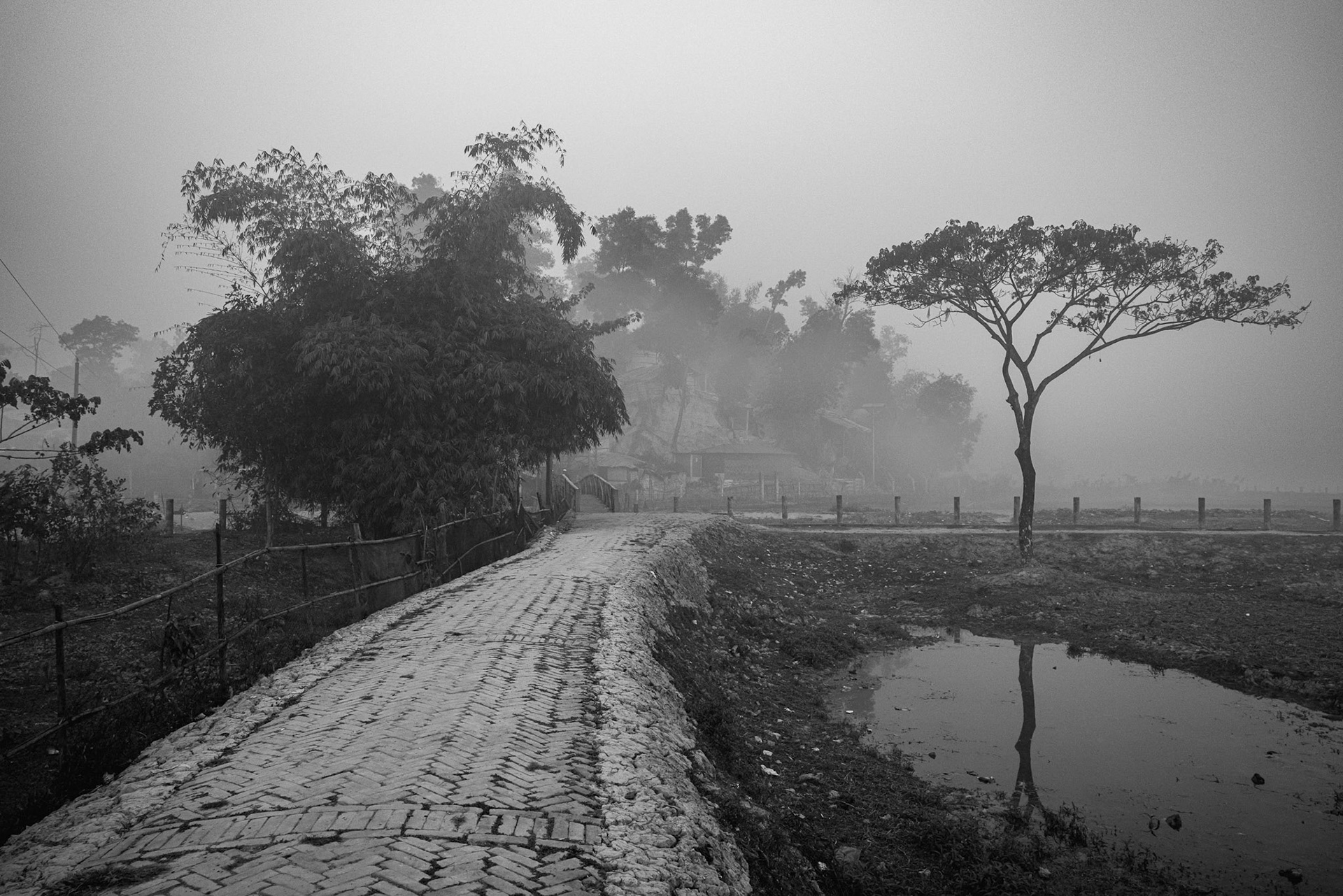
A brick road leading toward the camp's edge. Despite the serene morning mist, these boundaries mark the limit of life for a community that remains stateless and unable to return home safely. Balukhali camp, Bangladesh, January 2026
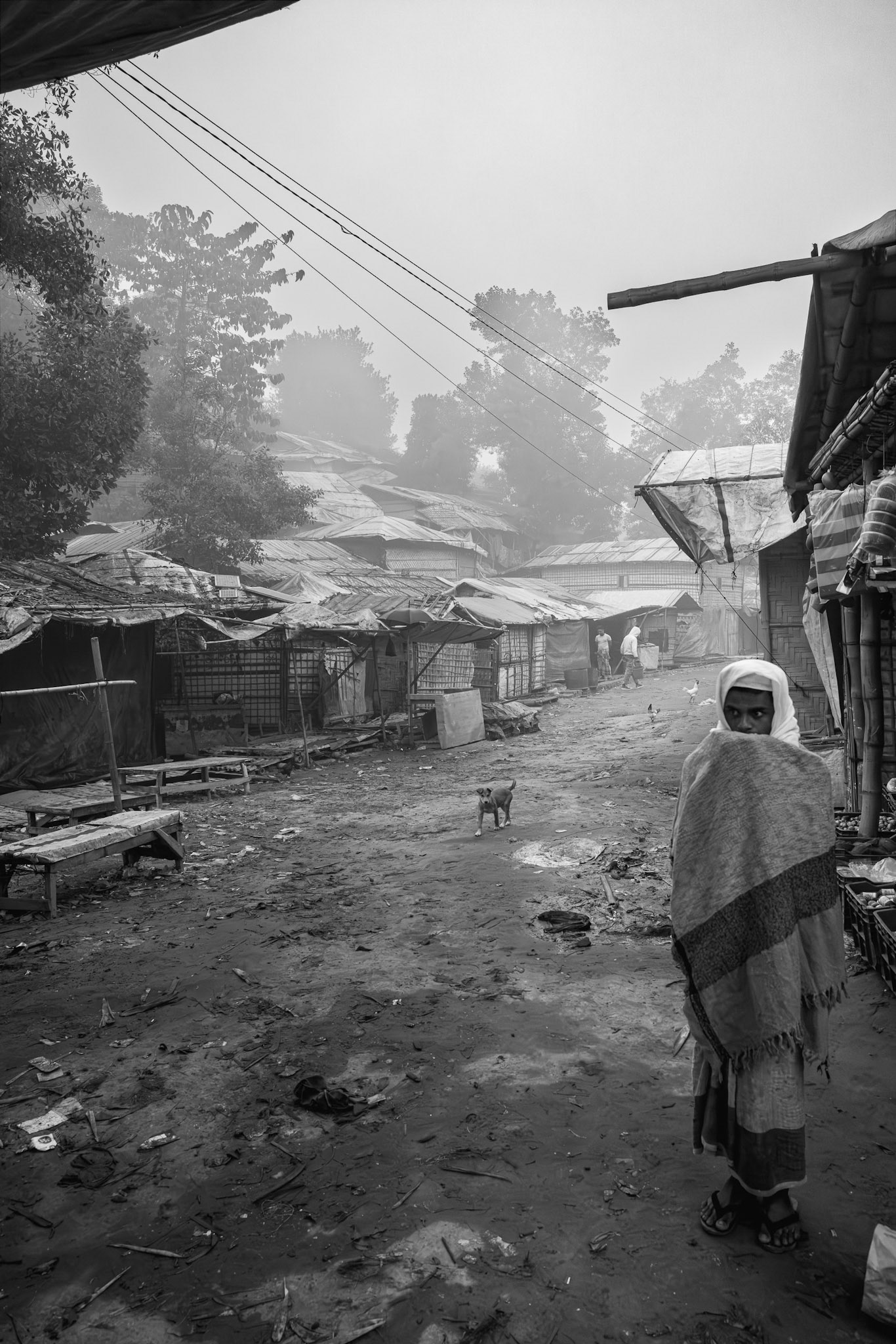
As new waves of persecuted Rohingya continue to arrive from Myanmar due to ongoing conflict in Rakhine State, the infrastructure of the camps is stretched to its absolute limit. Kutupalong camp, Bangladesh, January 2026
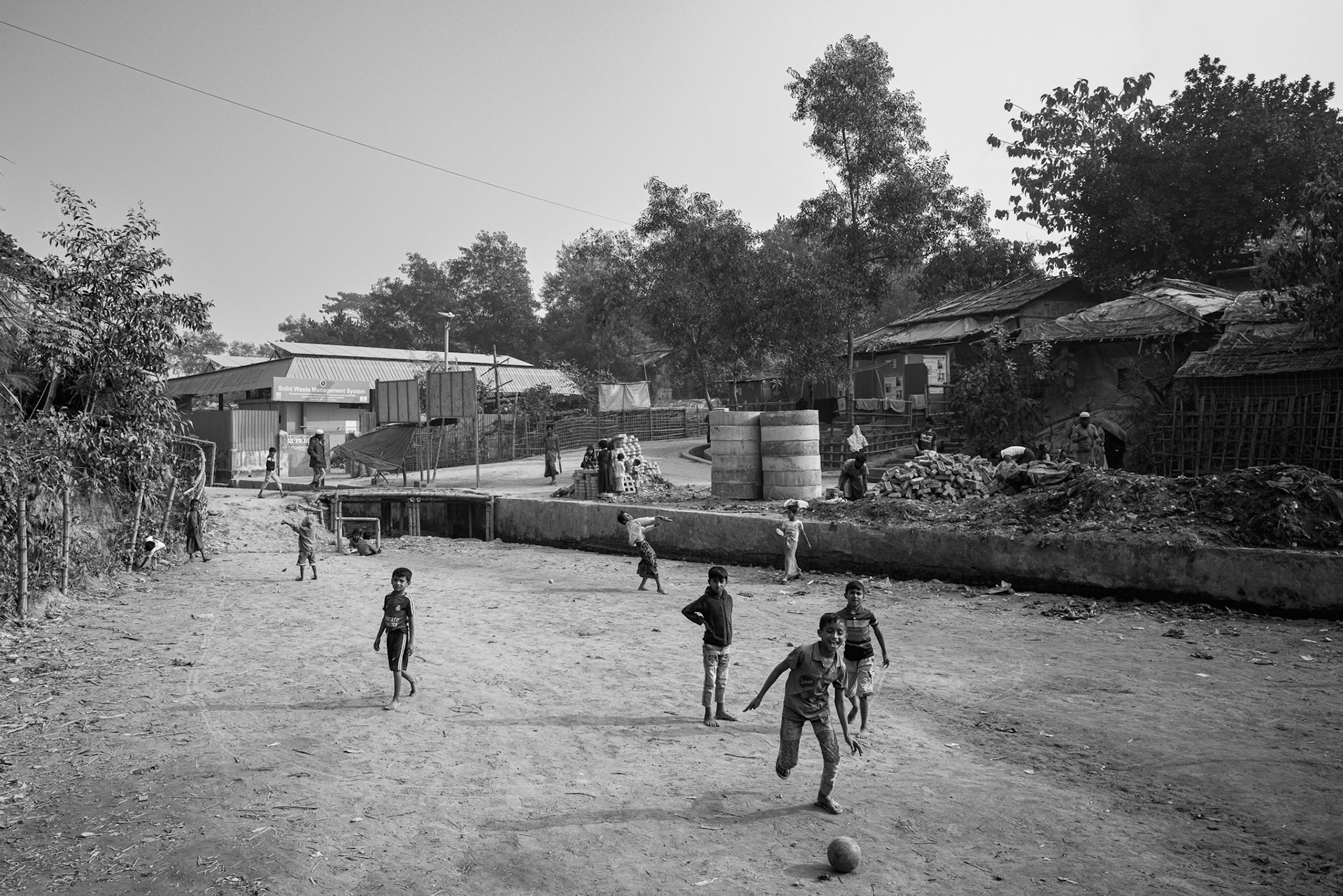
Children playing in a rare open clearing. With nearly half of the camp population being minors, the lack of safe recreational and educational spaces is a critical issue for a generation growing up in exile. Kutupalong camp, Bangladesh, January 2026
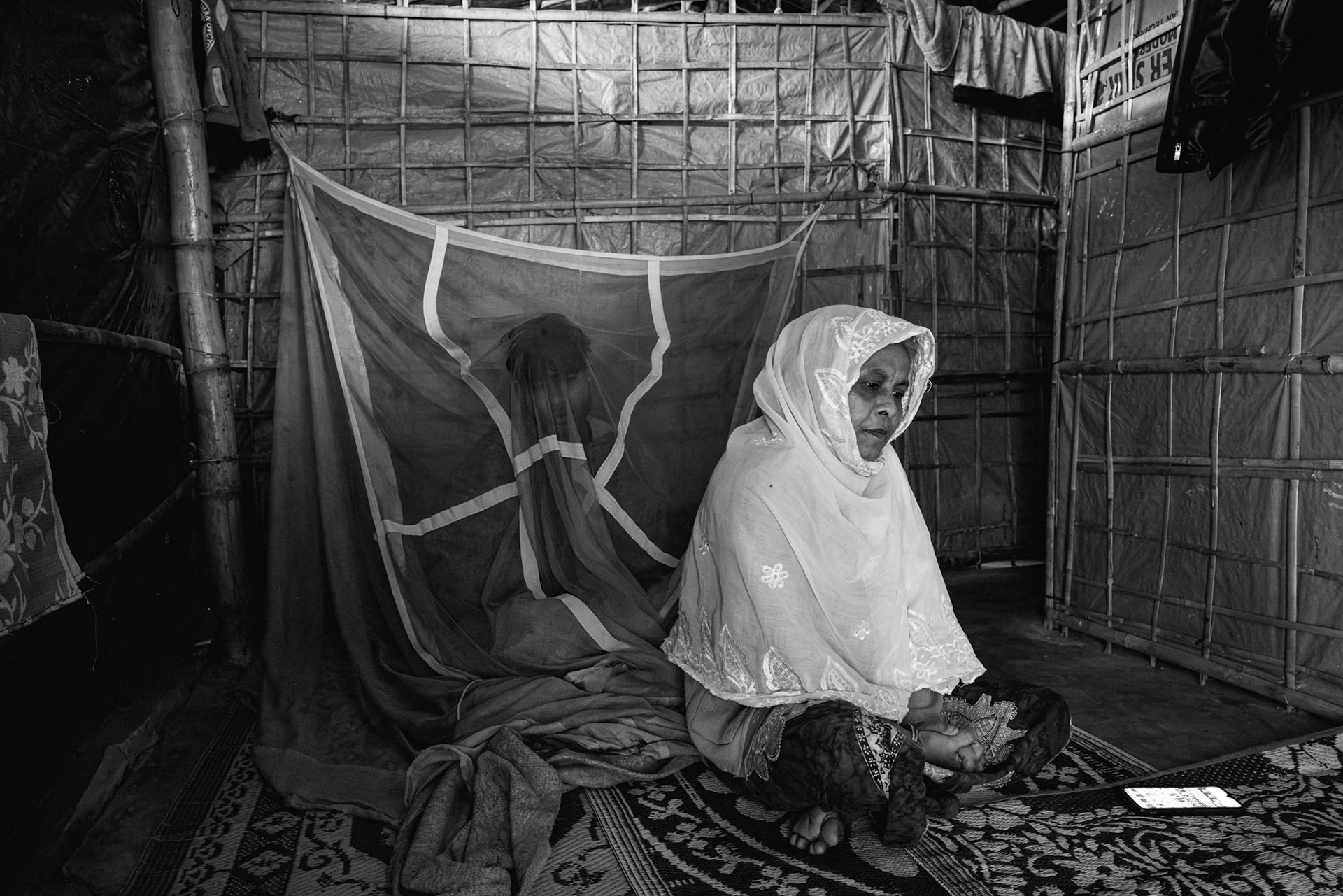
Rohima Kathun, 52, from Etalya village, Maungdaw Township, Myanmar; husband Md Kassim, 55, killed in a drone strike on their home during an attack by the Arakan Army, now she lives alone and moves from shelter to shelter; Balukhali camp in Bangladesh, January 2026.
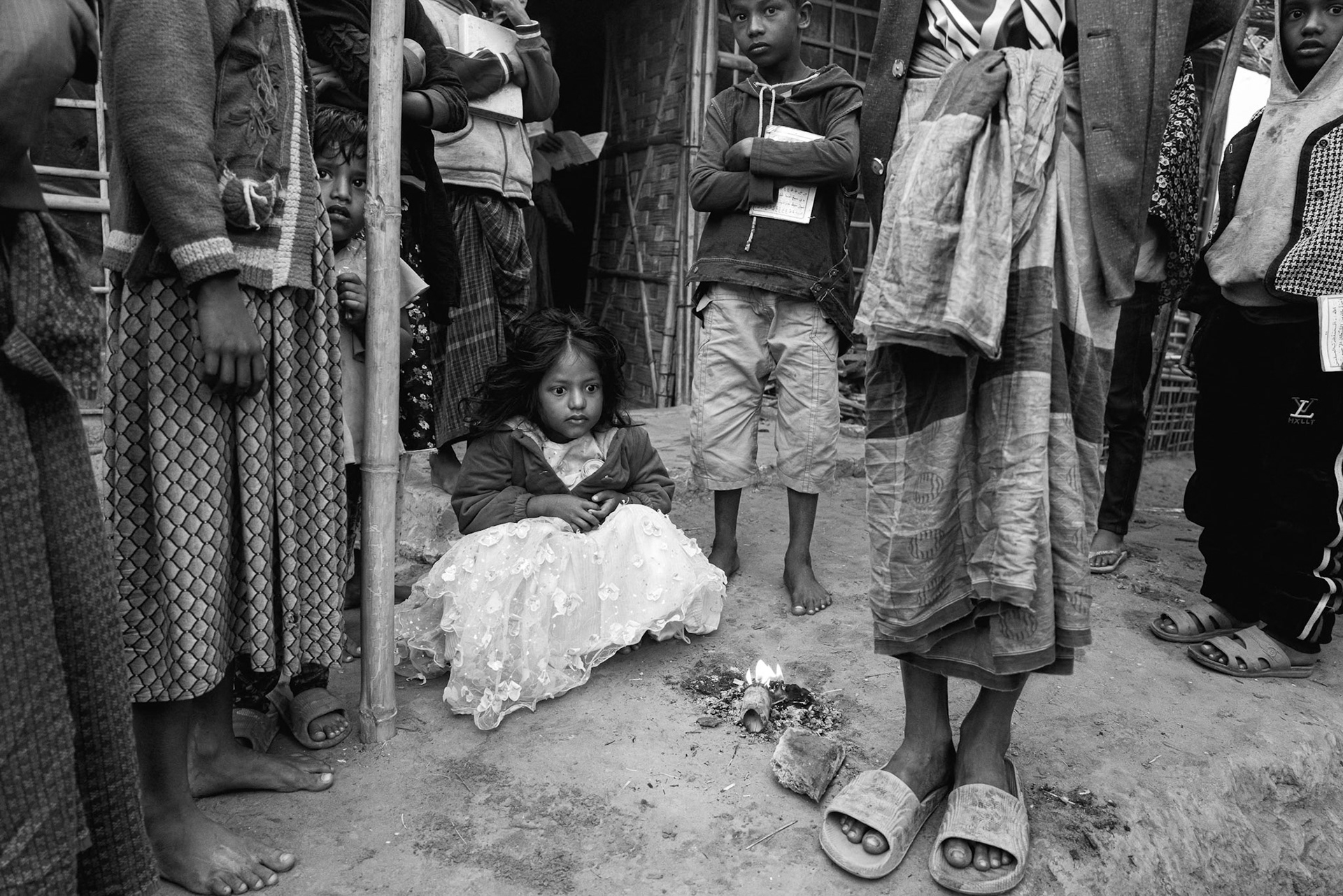
A group of children standing near a child seated on the ground in a communal area of Balukhali refugee camp in southern Bangladesh, January 2026
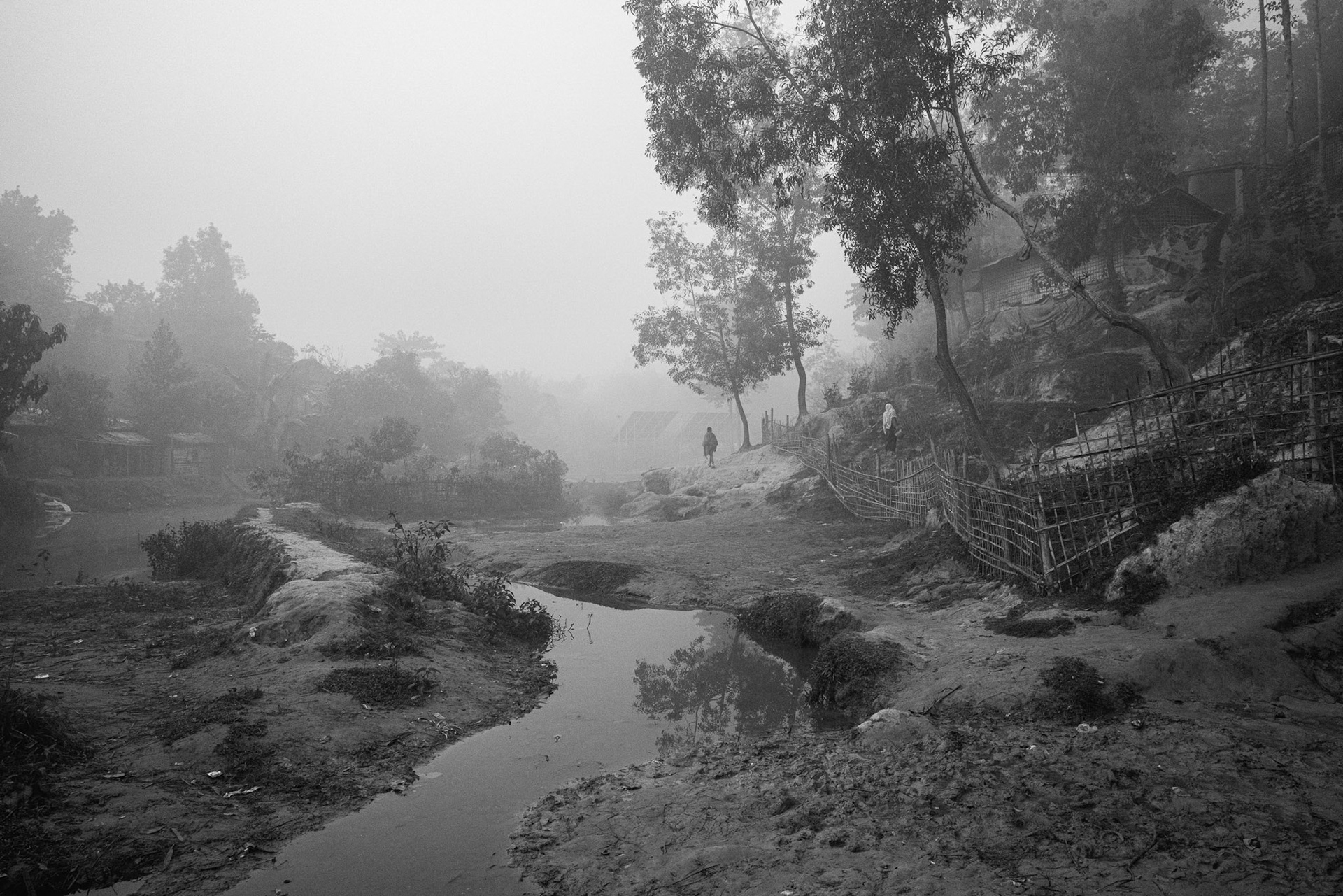
Environmental degradation is a constant concern in the world's largest refugee complex, where massive deforestation was necessary to provide space for hundreds of thousands of arrivals. Kutupalong camp, Bangladesh, January 2026
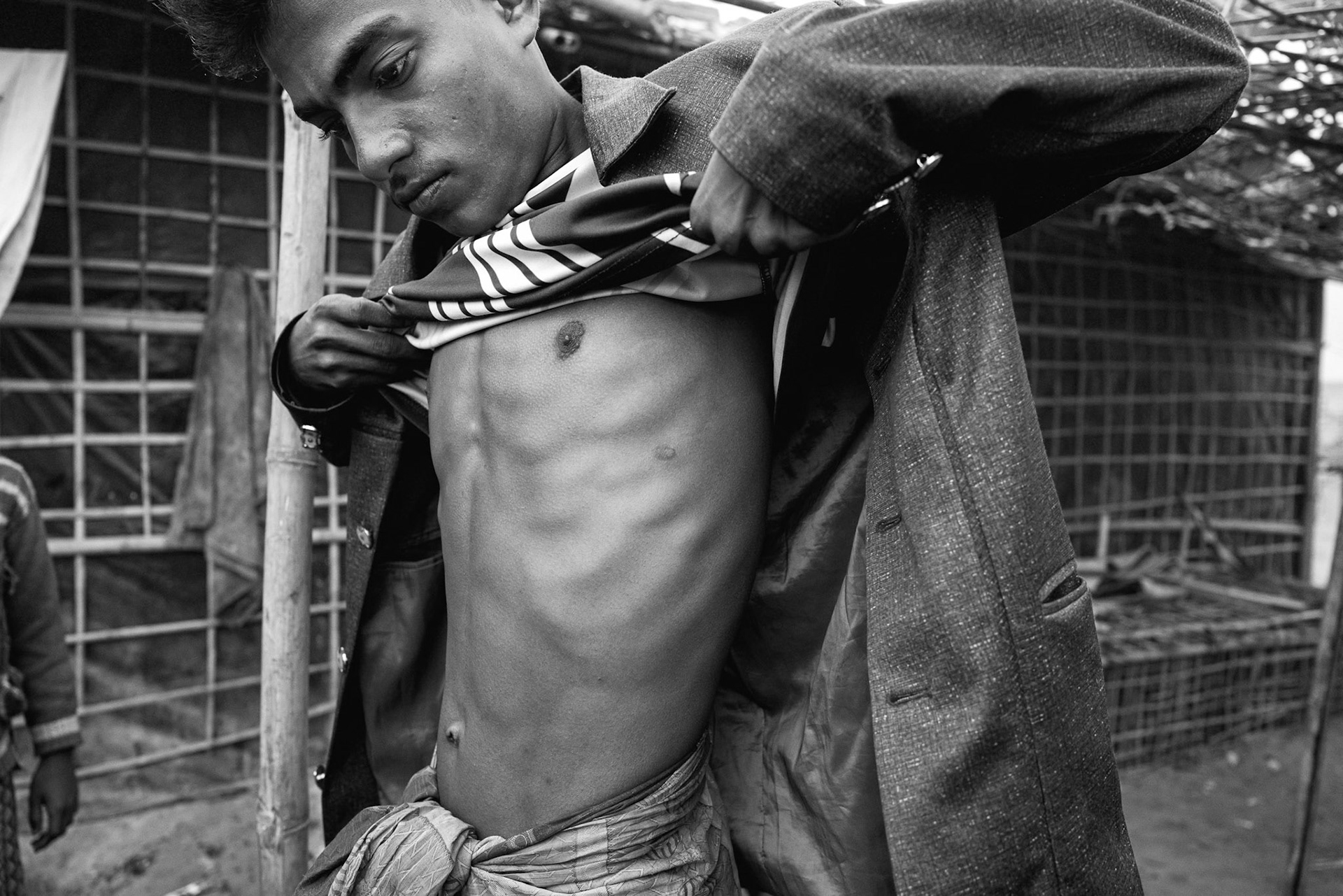
Huson Ahmed, 16, from Maungdaw, Myanmar; wounded by gunfire in August 2024; arrived in Bangladesh shortly after. Balukhali, Bangladesh, January 2026.
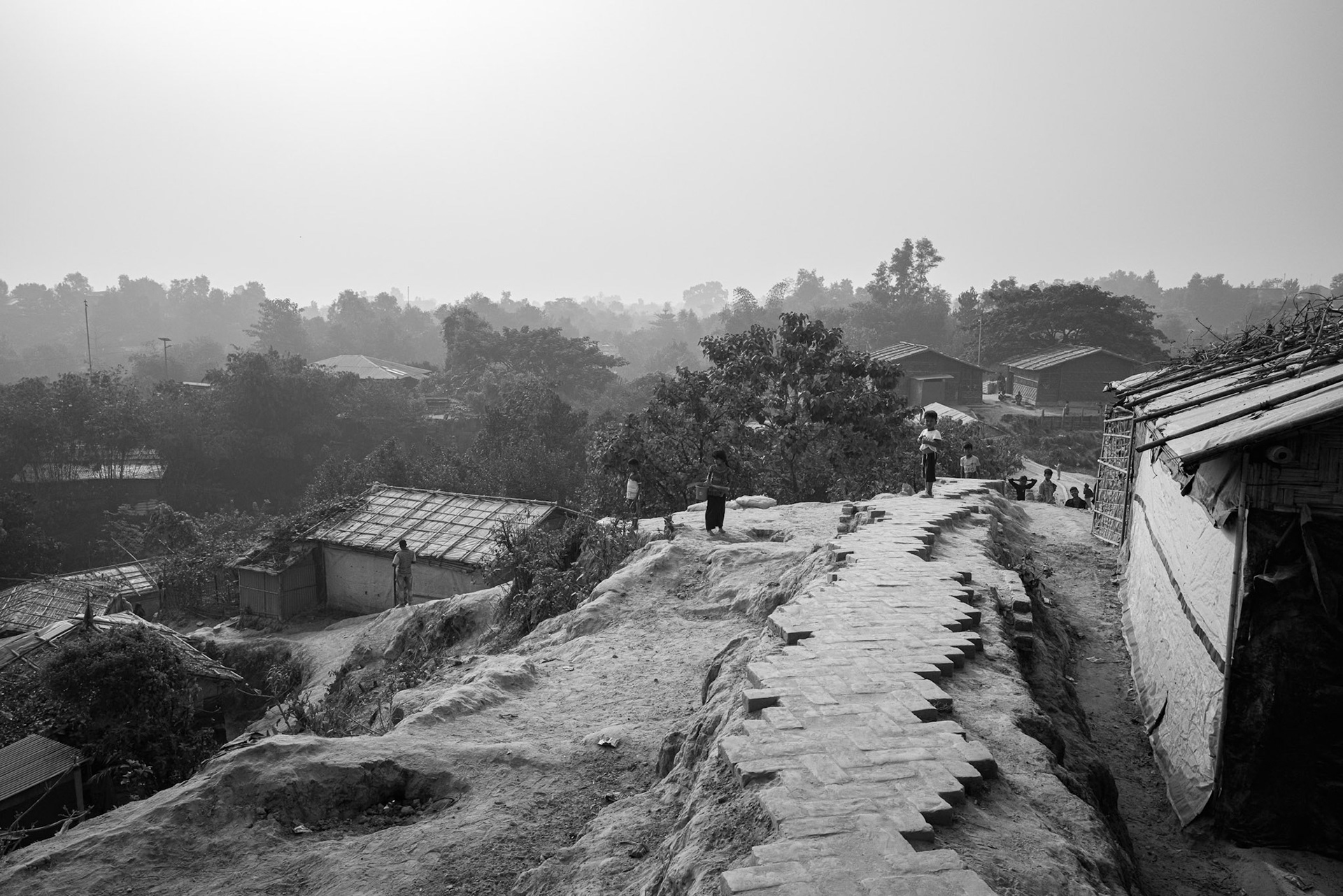
An elevated view of the brick-paved "interceptor" paths. These paths are vital arteries for a population that has been stripped of its freedom of movement and remains entirely dependent on humanitarian corridors. Kutupalong camp, Bangladesh, January 2026
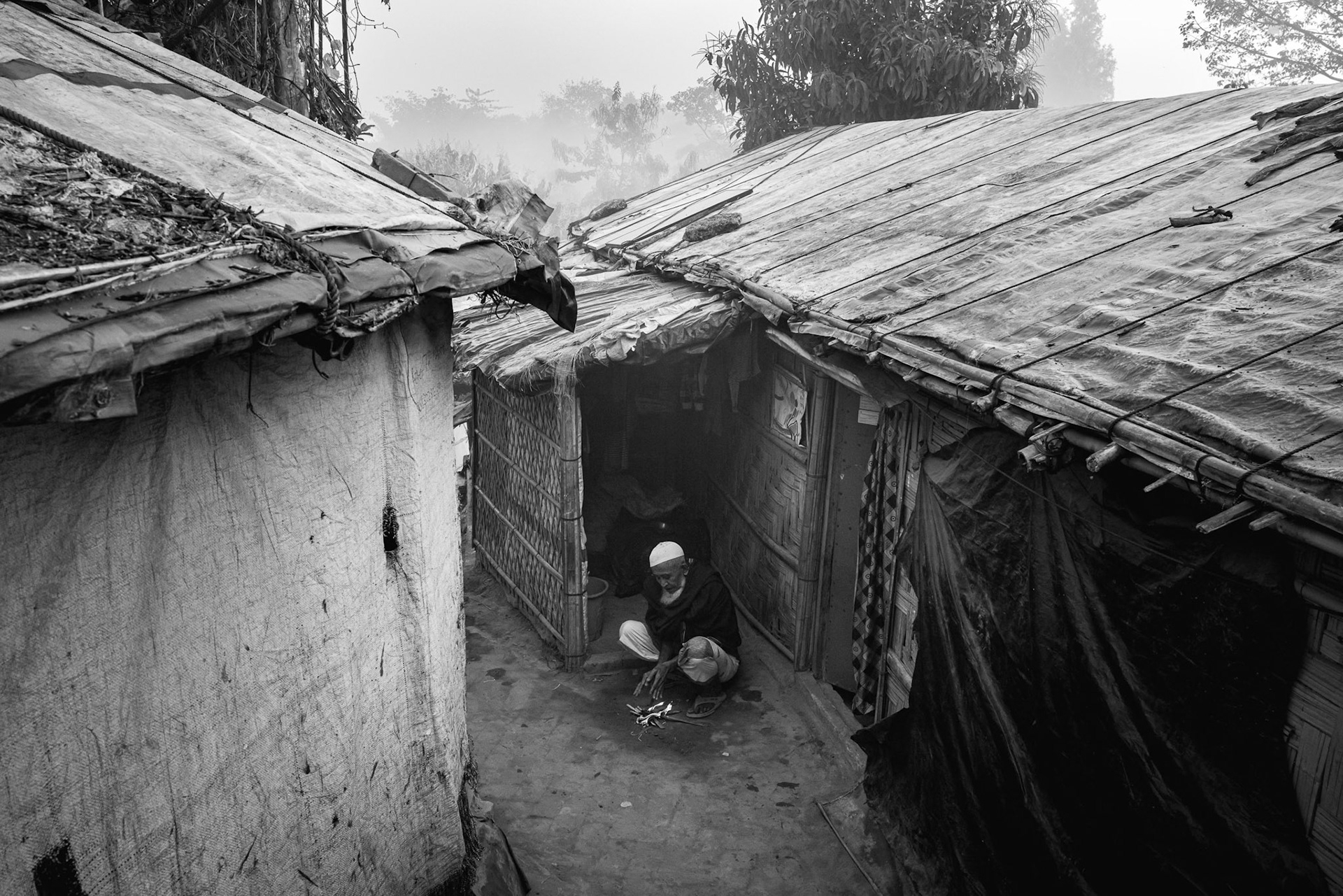
A person seated at the entrance of their home. This image captures the quiet endurance of a family that has survived extreme violence and continues to seek dignity within the confines of the world's most crowded displacement settlement. Balukhali camp, Bangladesh, January 2026
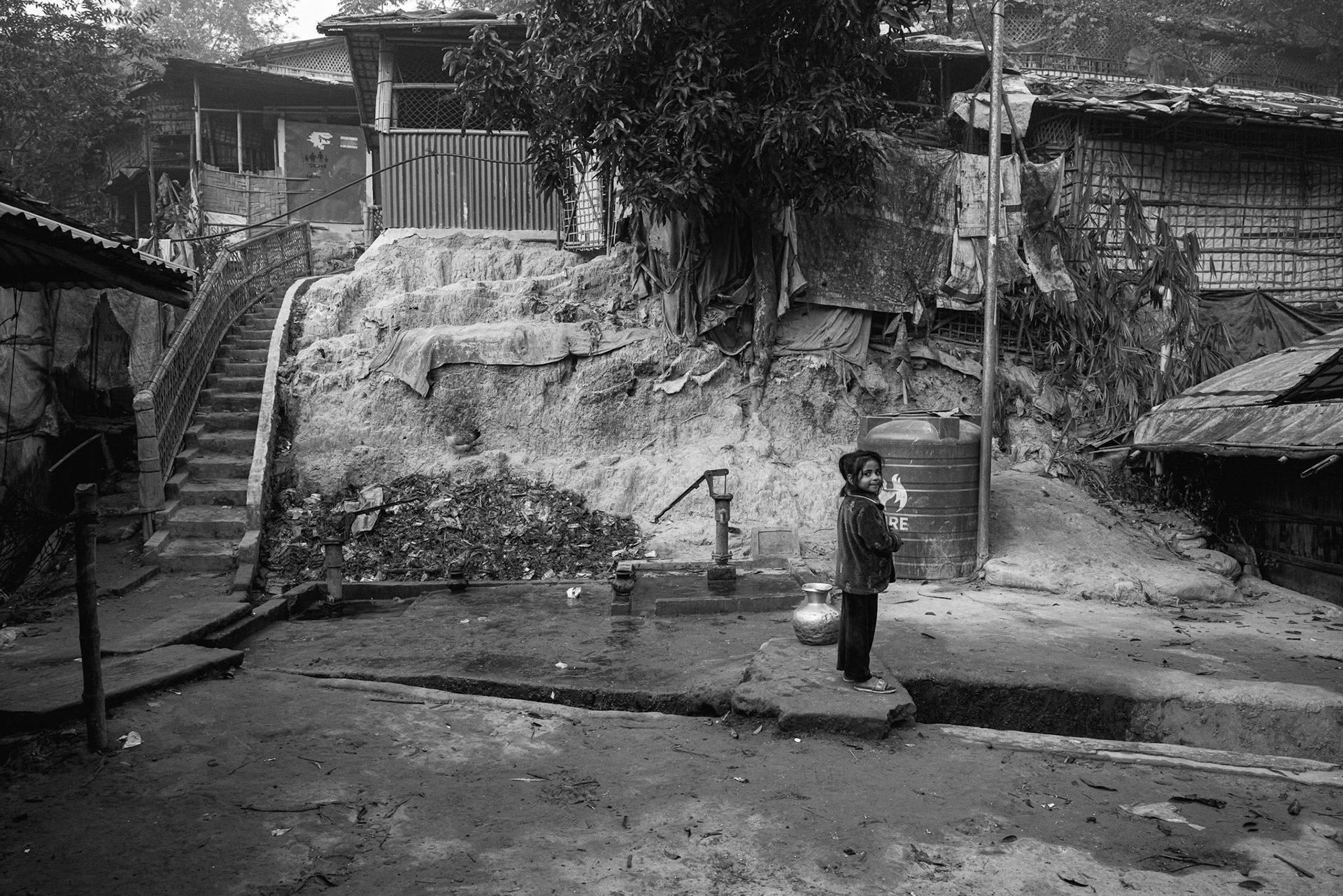
Access to clean water is a daily struggle in the camps, where thousands of people often rely on a single hand pump or distribution tank. Balukhali camp, Bangladesh, January 2026
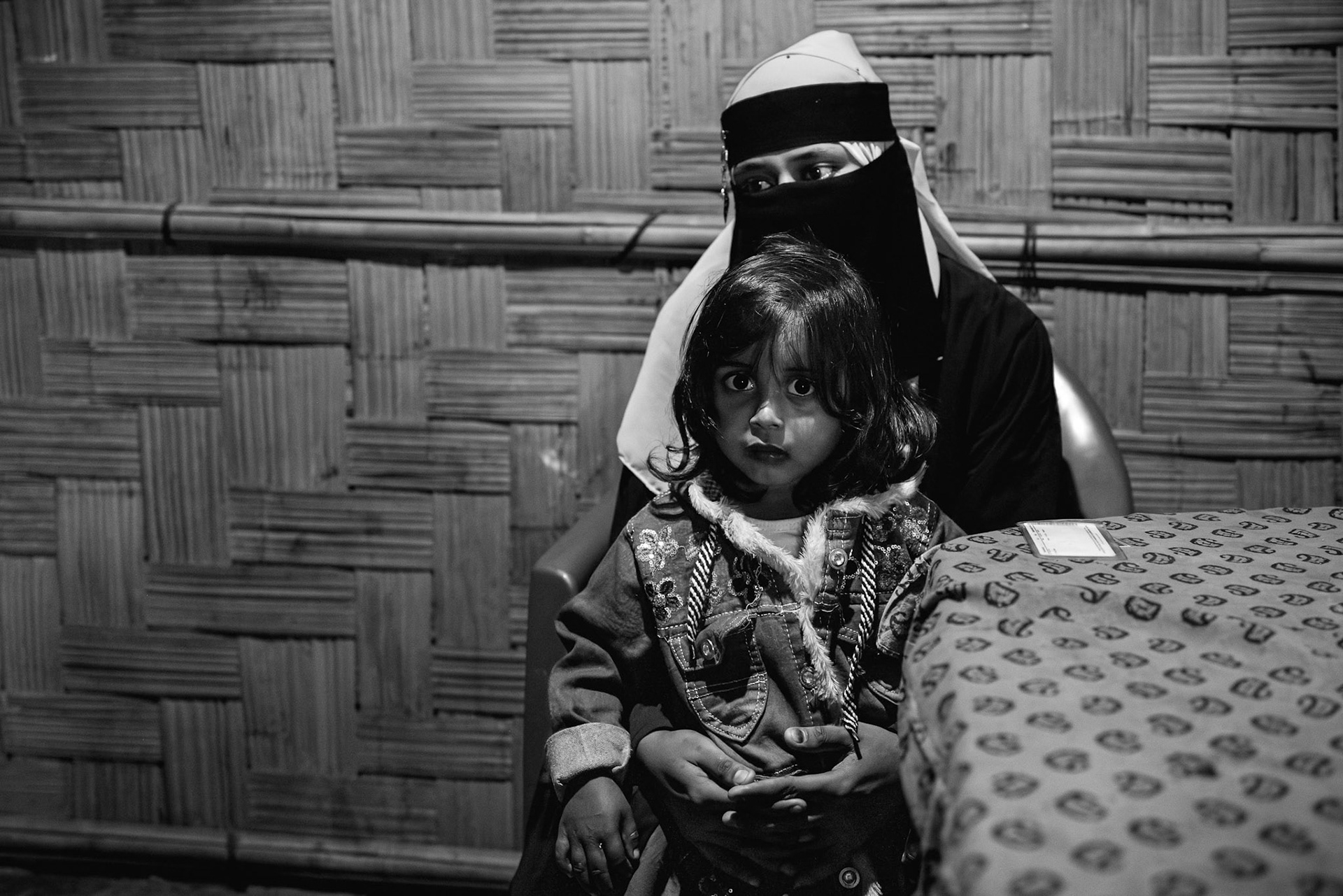
Samira Bibi, 20, with her 3.5-year-old daughter, from Ward 1, Maungdaw, Myanmar; her husband, 25, and one-month-old daughter were killed in an Arakan Army drone strike on their home in August 2024; Balukhali refugee camp, Bangladesh, January 2026
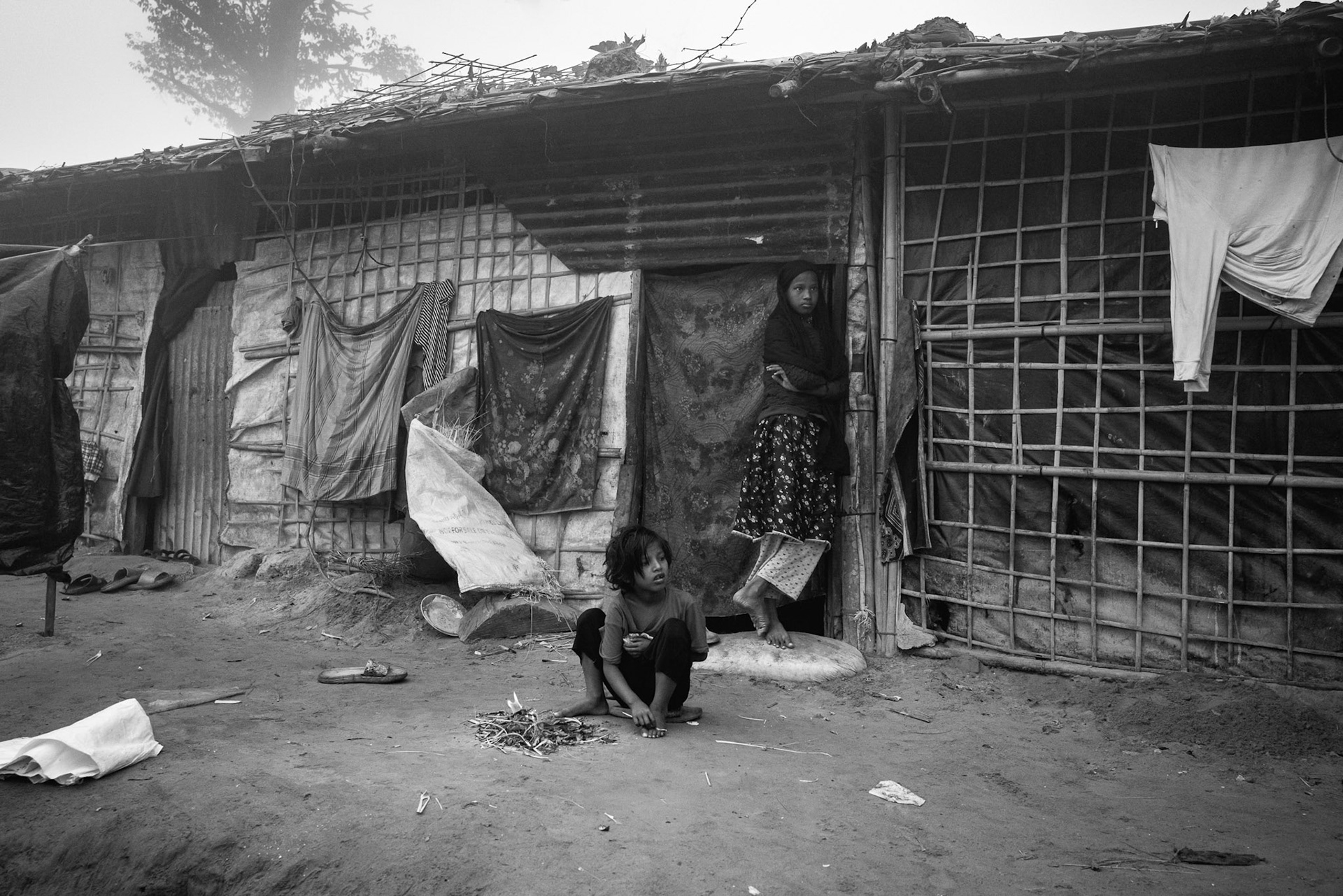
A young child sits outside a shelter in Balukhali camp 9, Cox's Bazar, Bangladesh, January 2026
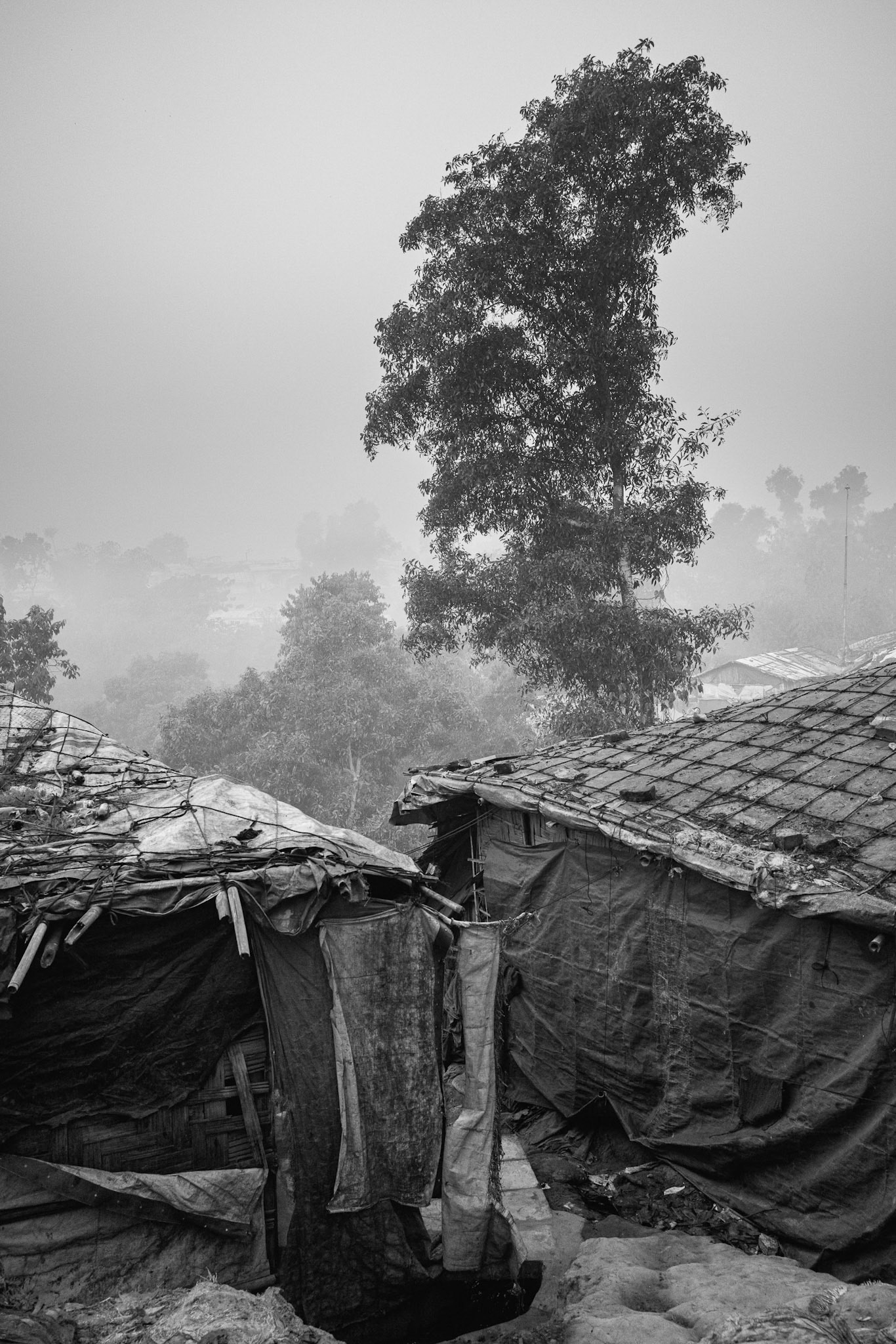
These "mega-camps" have transformed the landscape of southern Bangladesh into a permanent city of bamboo, housing a population larger than many mid-sized global cities. Balukhali camp, Bangladesh, January 2026
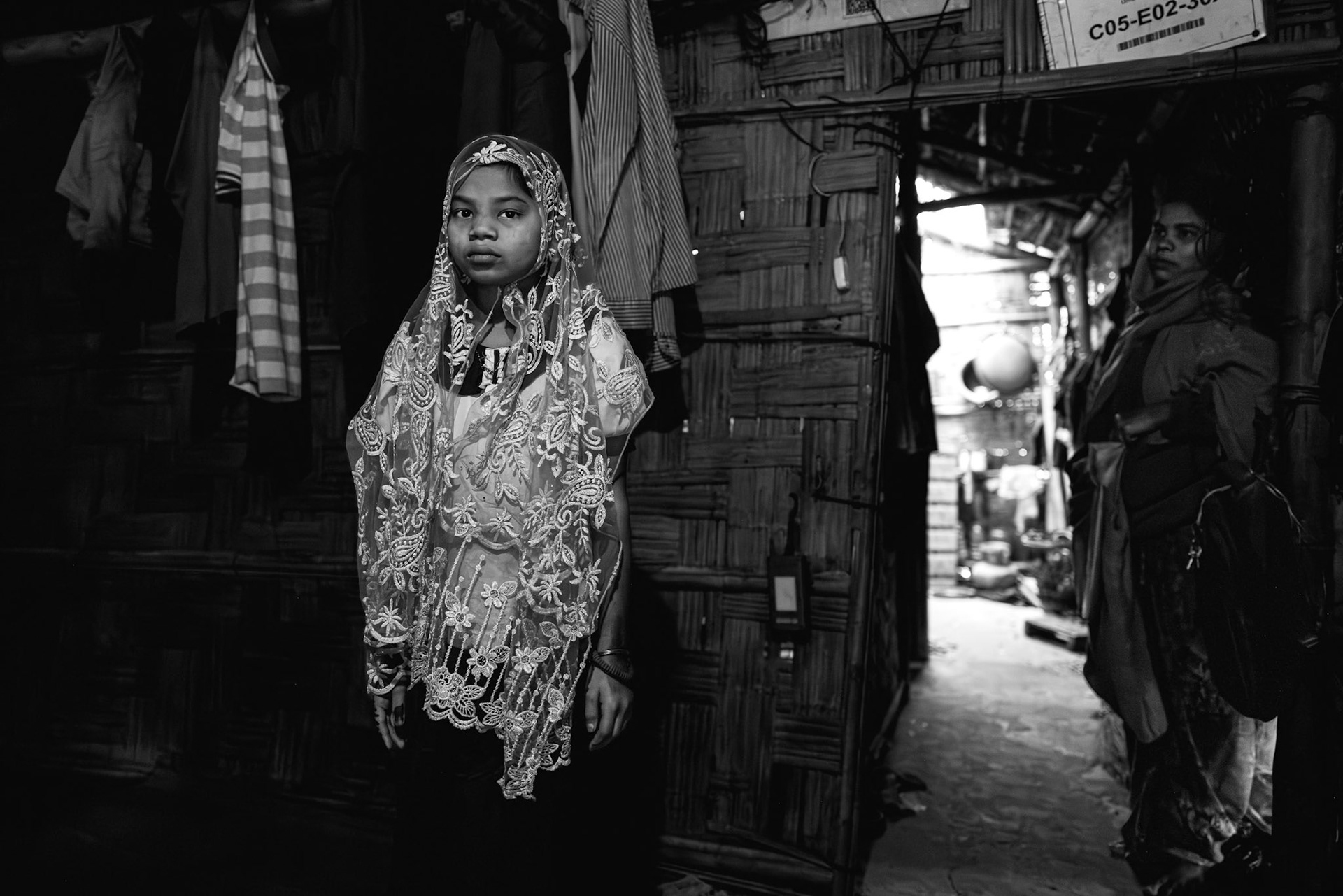
Safa Nur, now 12 years old, was only a toddler when she fled Southern Maungdaw for Bangladesh in 2017. She arrived as a three-year-old survivor of a shotgun wound, a physical reminder of the violence that displaced her family. Nearly a decade later, Safa continues to carry the deep psychological trauma of her early childhood. Despite her urgent need for specialized medical follow-up to address her injury and its long-term effects, accessing adequate care within the refugee camps remains a significant challenge. Kutupalong camp, Cox's Bazar, Bangladesh, January 2026
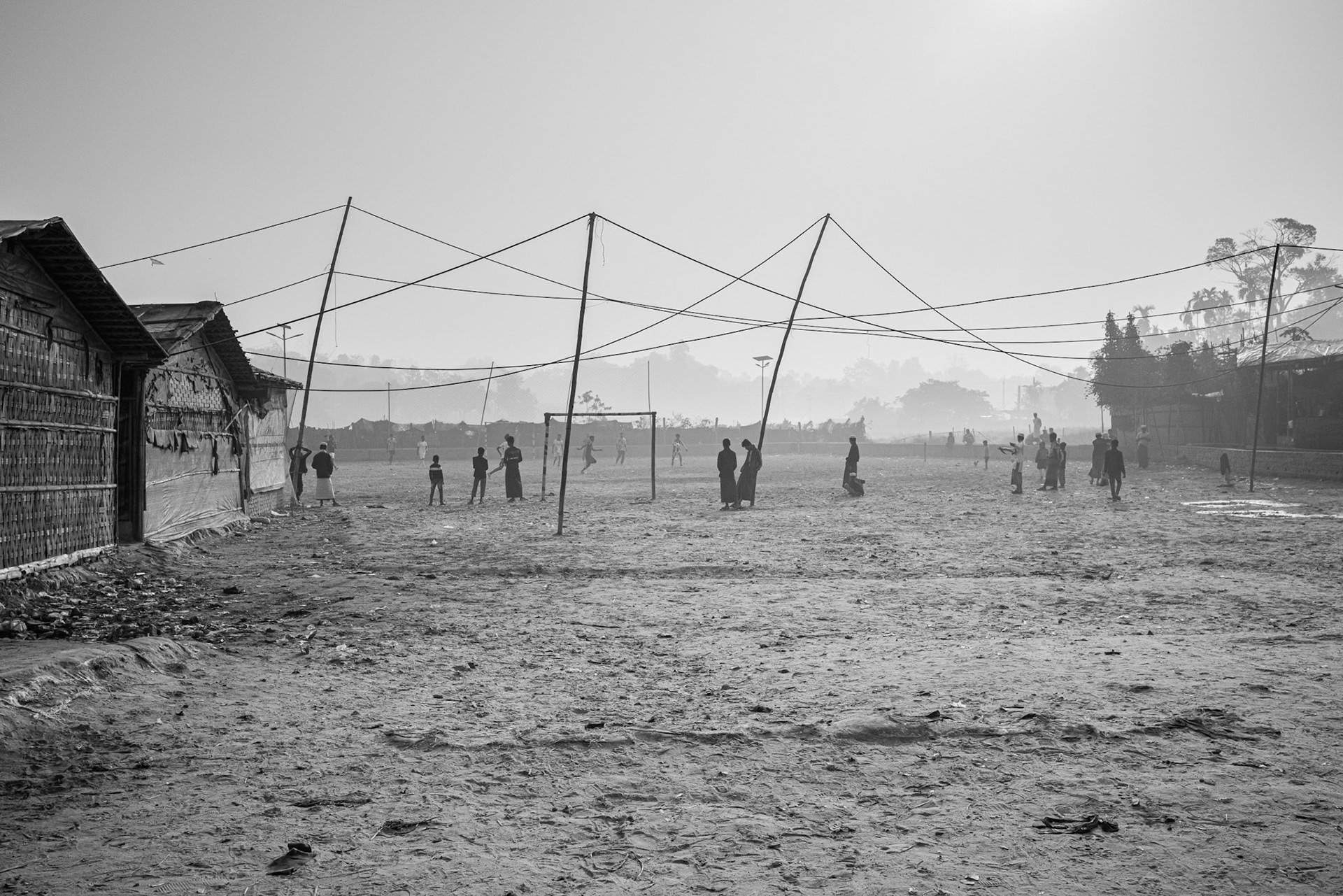
Even as the camps become more established, they remain a site of humanitarian crisis, housing a persecuted people waiting for a safe, voluntary, and dignified return to their homeland. Balukhali camp, Bangladesh, January 2026
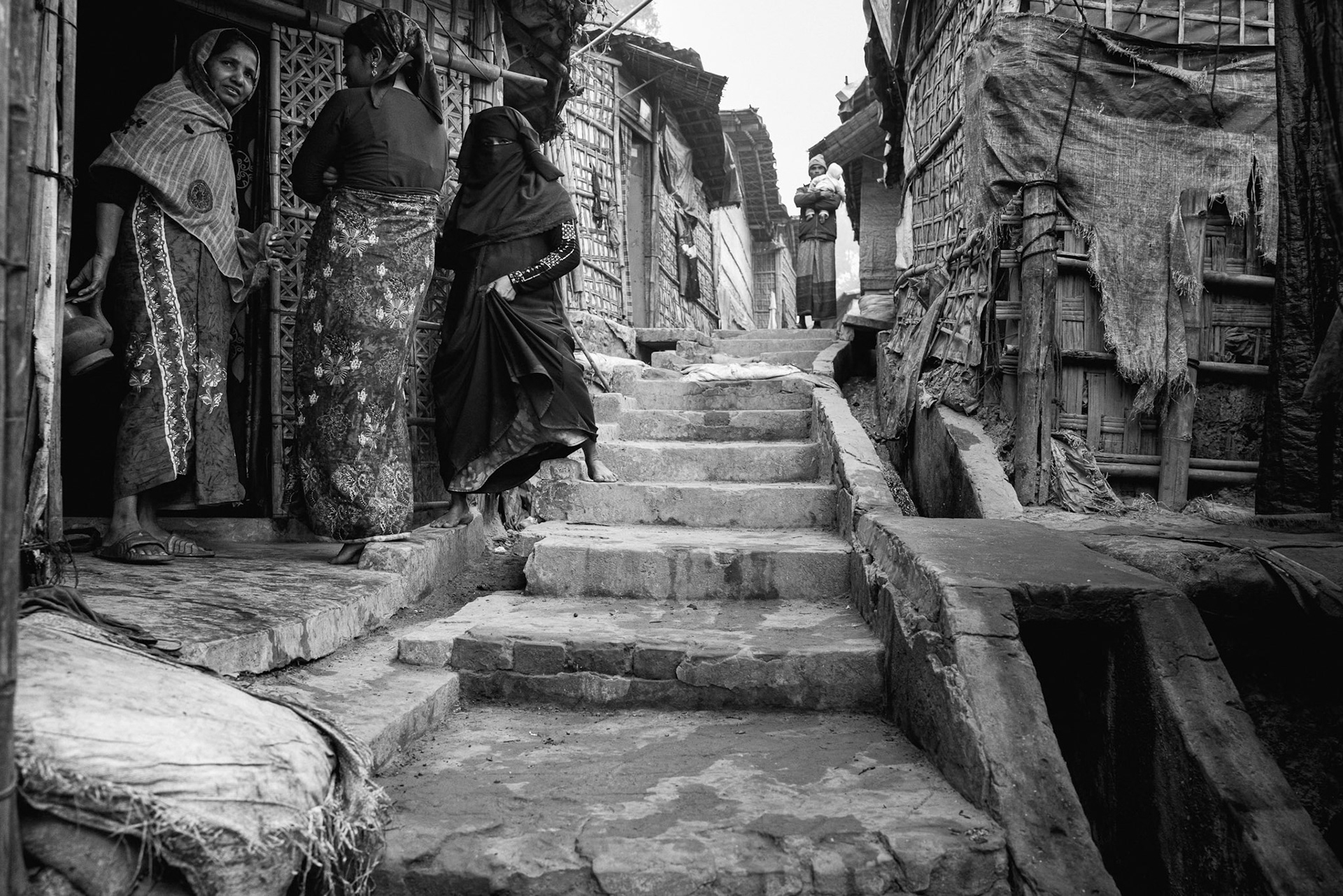
People navigating the vertical landscape of the camp. The physical exertion required for daily tasks like fetching water or attending clinics highlights the difficult living conditions for the elderly and injured. Balukhali camp, Bangladesh, January 2026
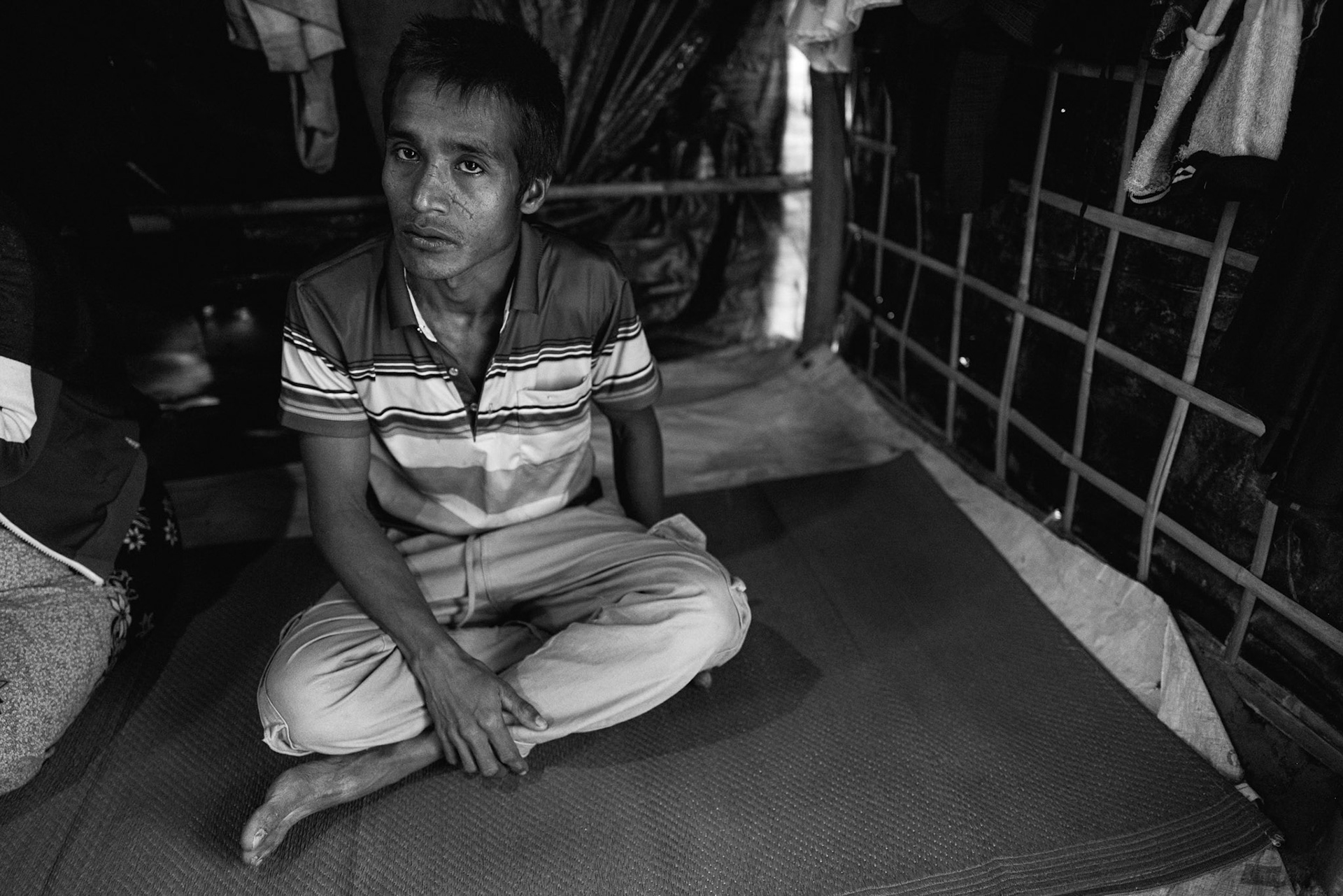
In February 2024, the lives of Md Toyub 30 years (photo) and his wife Sajida, 33, were upended when a drone strike targeted their home in Emudin Para, Buthidaung Township. The attack, which occurred on February 19, left Sajida with critical leg injuries.Just three days later, the Arakan Army (AA) arrested and tortured Toyub, leaving him unconscious in a field until villagers rescued him. After paying for Sajida’s medical treatment at an AA-controlled clinic, the family spent four months displaced in a neighboring village. To escape the violence, the community raised $2,000 to evacuate Toyub and their three sons (ages 3, 9, and 16) to Bangladesh. Sajida was finally reunited with her family later after an additional $1,200 was paid for her evacuation. Kutupalong refugee camp, Bangladesh, January 2026
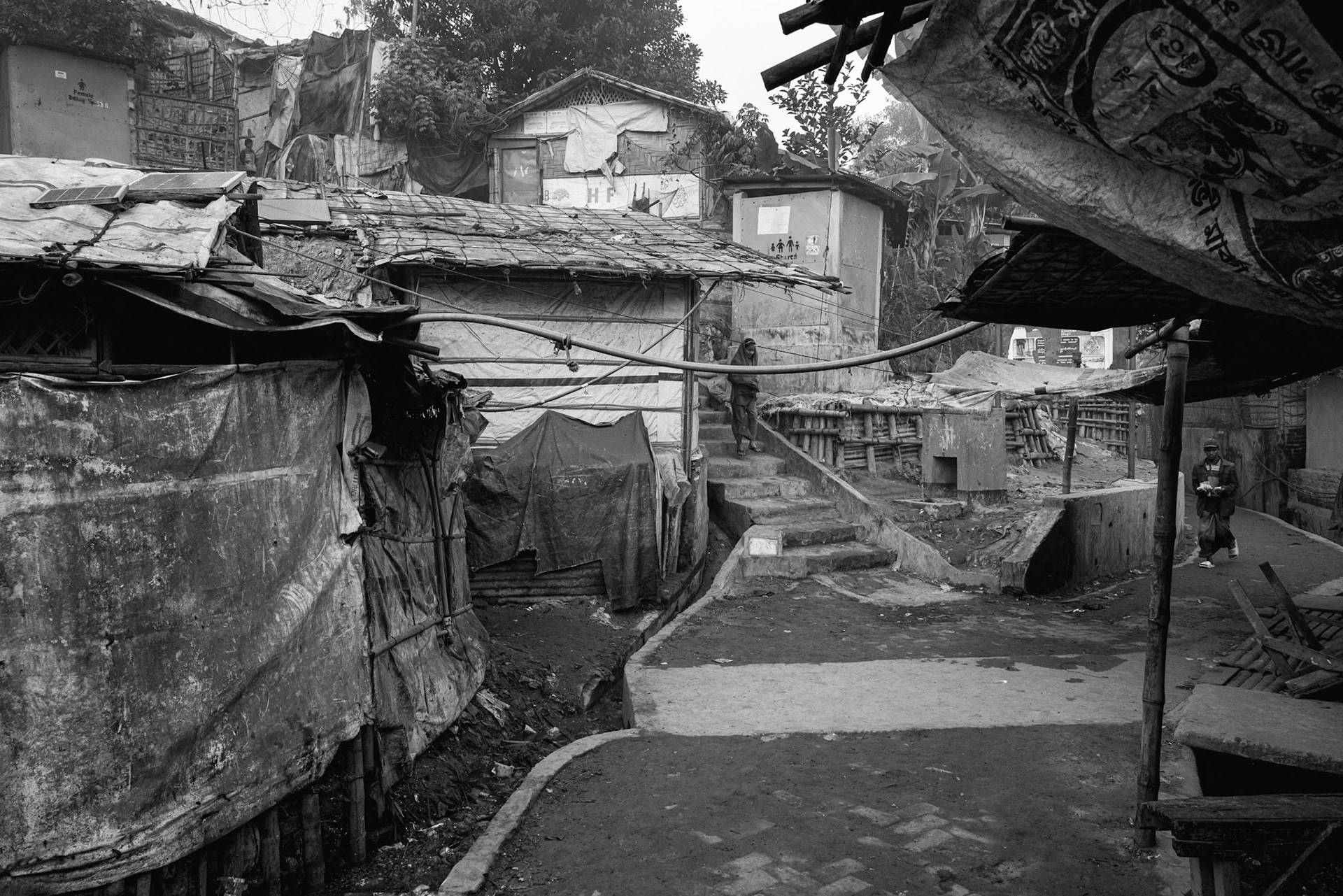
Dense infrastructure and drainage systems. Managing waste and water in the world's most crowded refugee setting is a constant battle against outbreaks of waterborne diseases. Balukhali camp, Bangladesh, January 2026
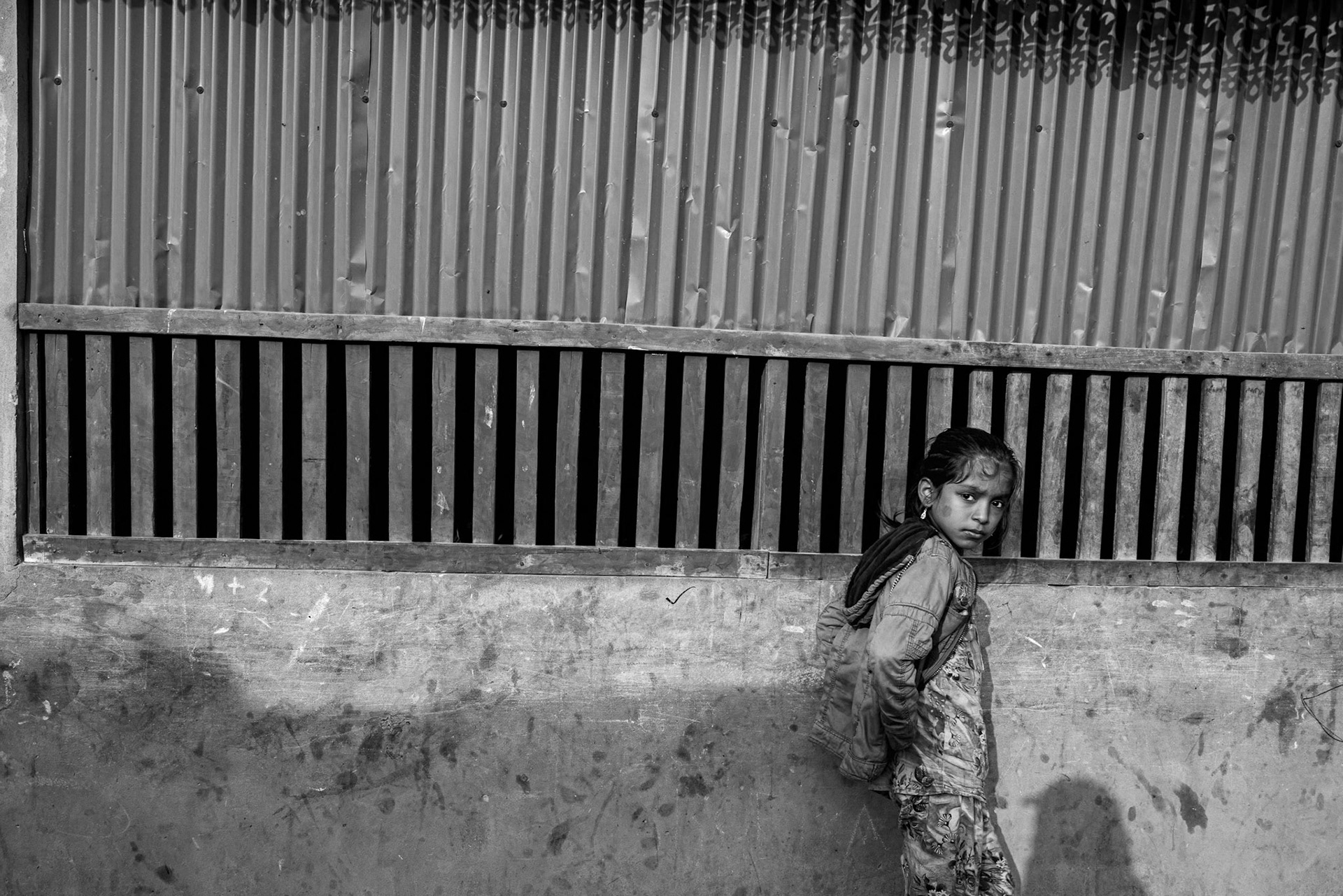
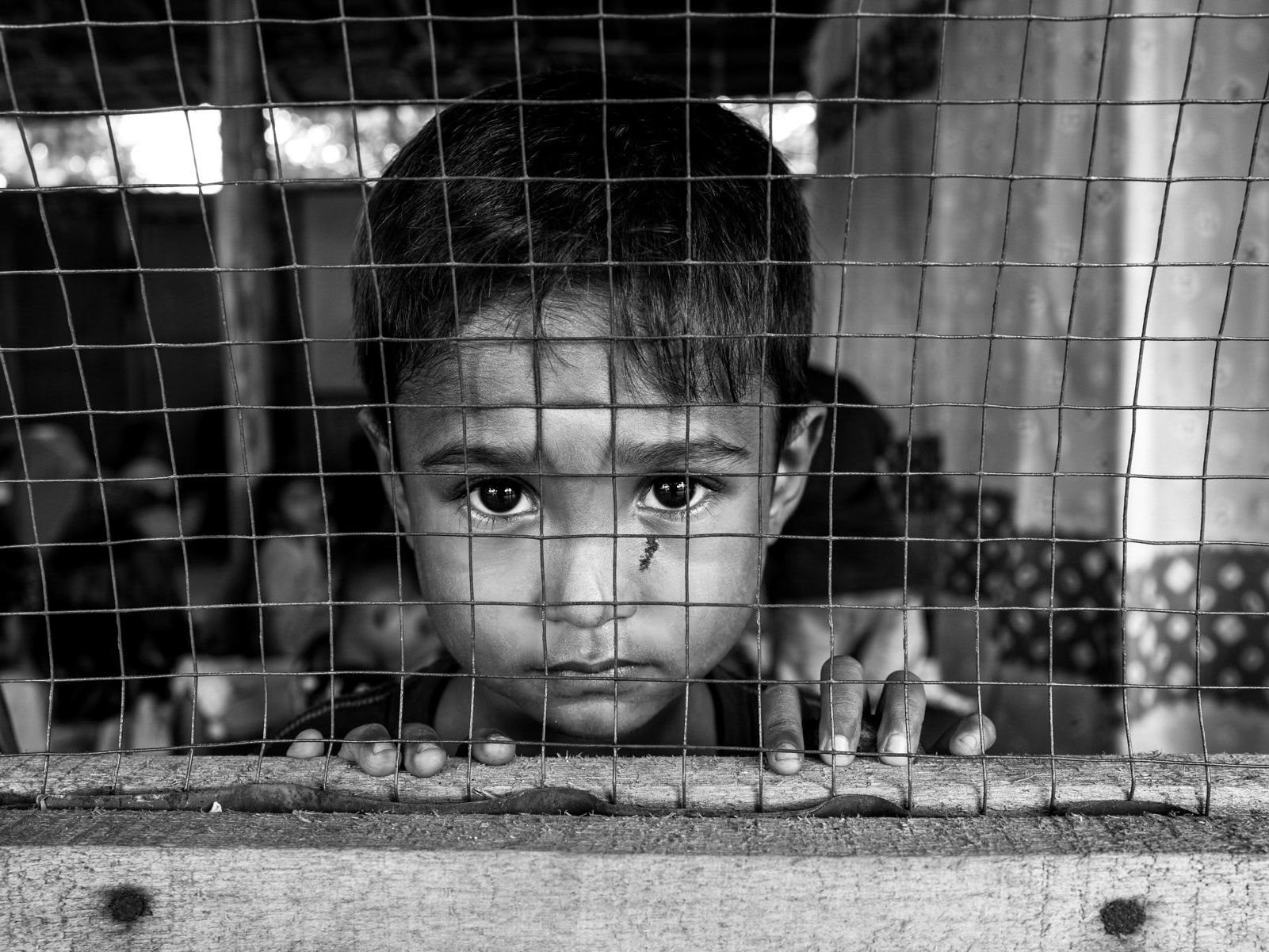
The gaze of the younger generation reflects the uncertainty of a future spent in a camp where formal employment and education are largely unavailable. Balukhali camp, Bangladesh, January 2026
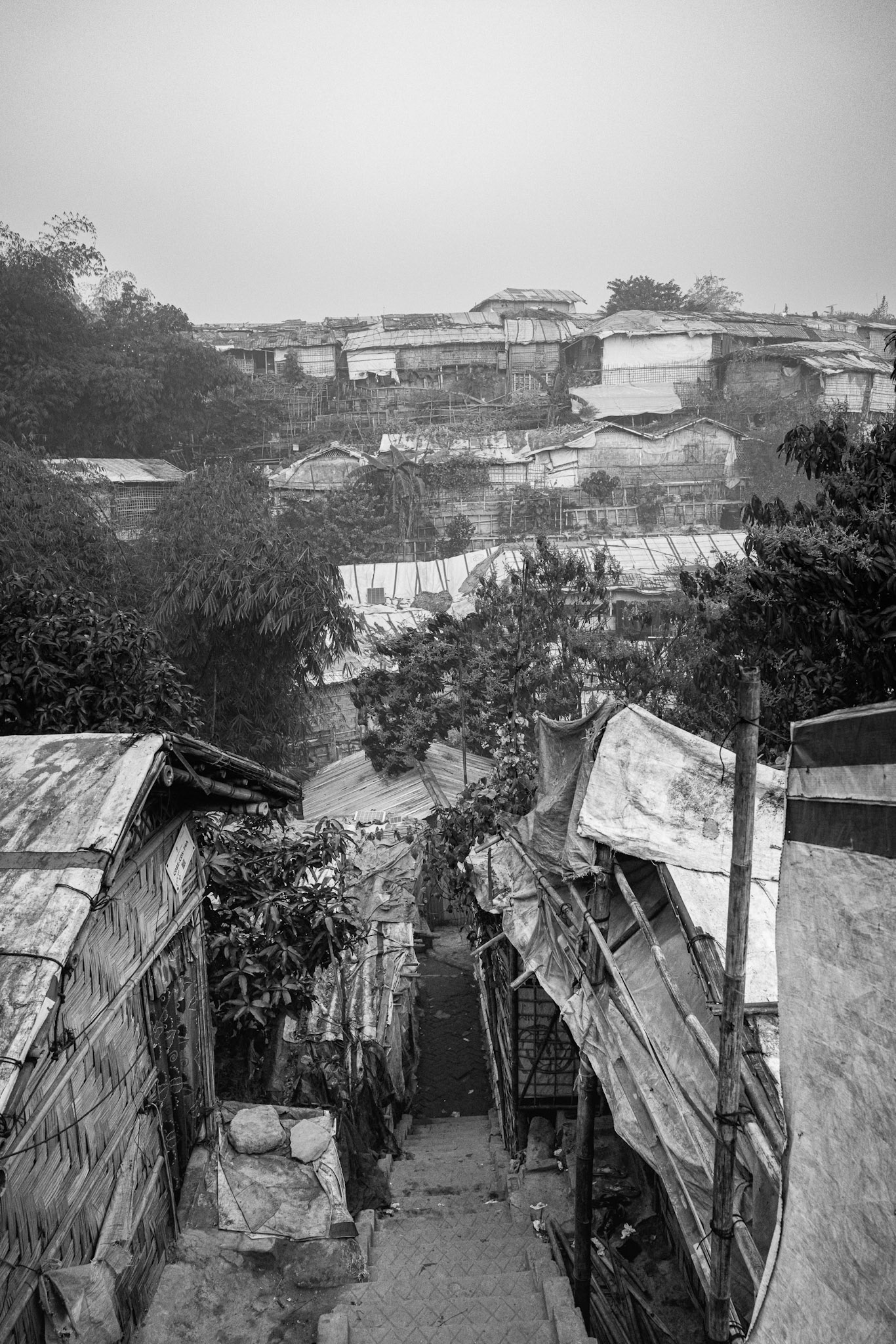
The vertical expansion of the camps is a direct result of the lack of available flat land to house the ever-growing refugee population. Balukhali camp, Bangladesh, January 2026
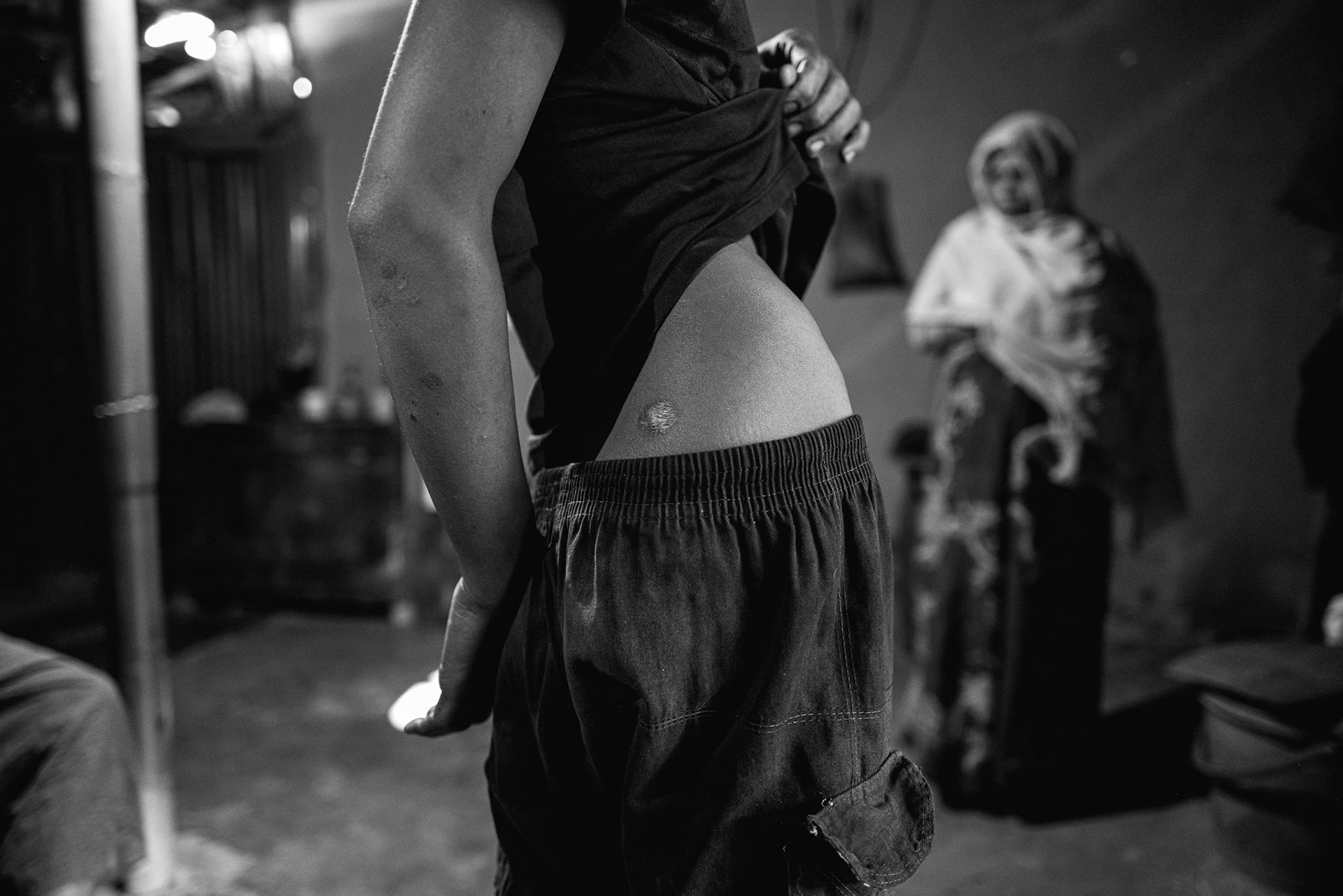
This close-up captures the shrapnel wounds sustained by 13-year-old Aji Nur during a 2024 Arakan Army drone strike in Maungdaw downtown. Aji Nur, who also lives with mental health challenges, was one of four family members injured in the blast that instantly killed his father, Md Isaak (45).Alongside his mother, Morijan (42), and his surviving siblings, Aji Nur is now a refugee in Balukhali camp, where the family continues to deal with the physical and psychological scars of the attack. Balukhali camp in Bangladesh, January 2026
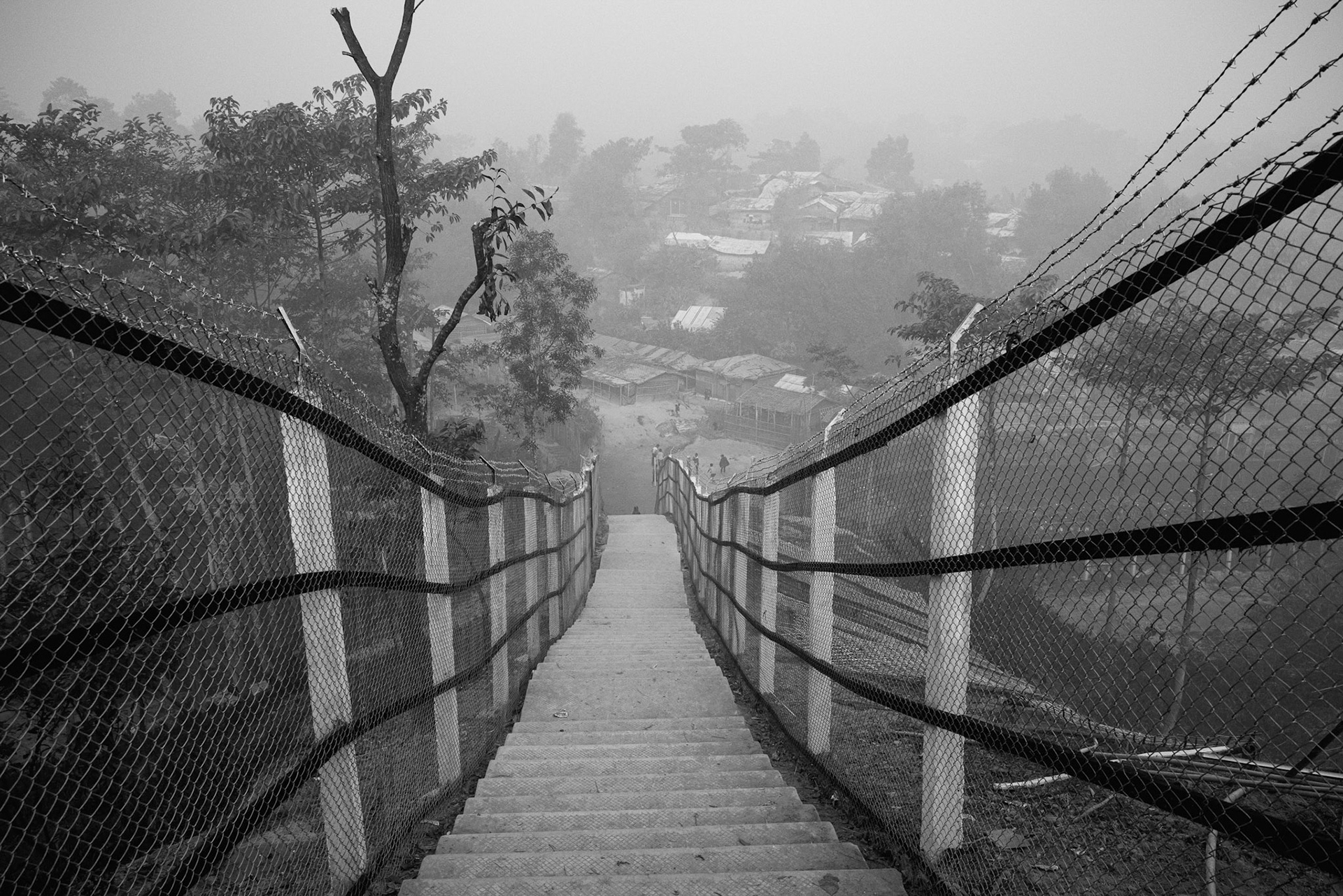
To manage the overcrowding, shelters are built on precarious hillsides, requiring extensive "site-maintenance" projects to prevent landslides during the monsoon season. Kutupalong camp, Bangladesh, January 2026
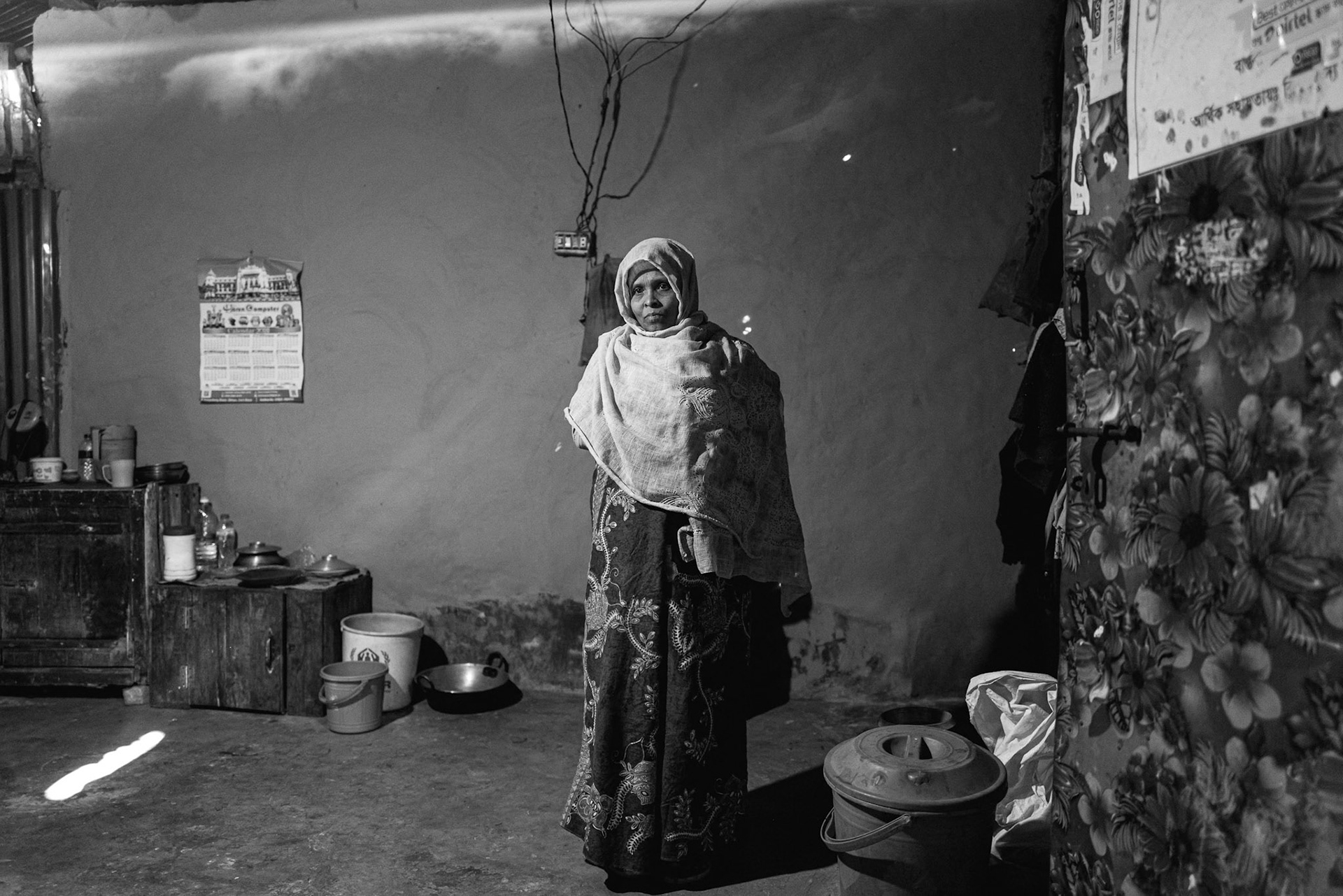
In Maungdaw downtown, Morijan (42) and her family of ten were devastated by an Arakan Army drone strike in 2024. The attack instantly killed her husband, Md Isaak (45), and left three others wounded, including Morijan, who sustained shrapnel injuries to her shoulder.Her 13-year-old son, Aji Nur, who lives with mental health challenges, was also hit by shrapnel during the blast. Today, Morijan lives with her surviving family members in Balukhali camp in Bangladesh, January 2026
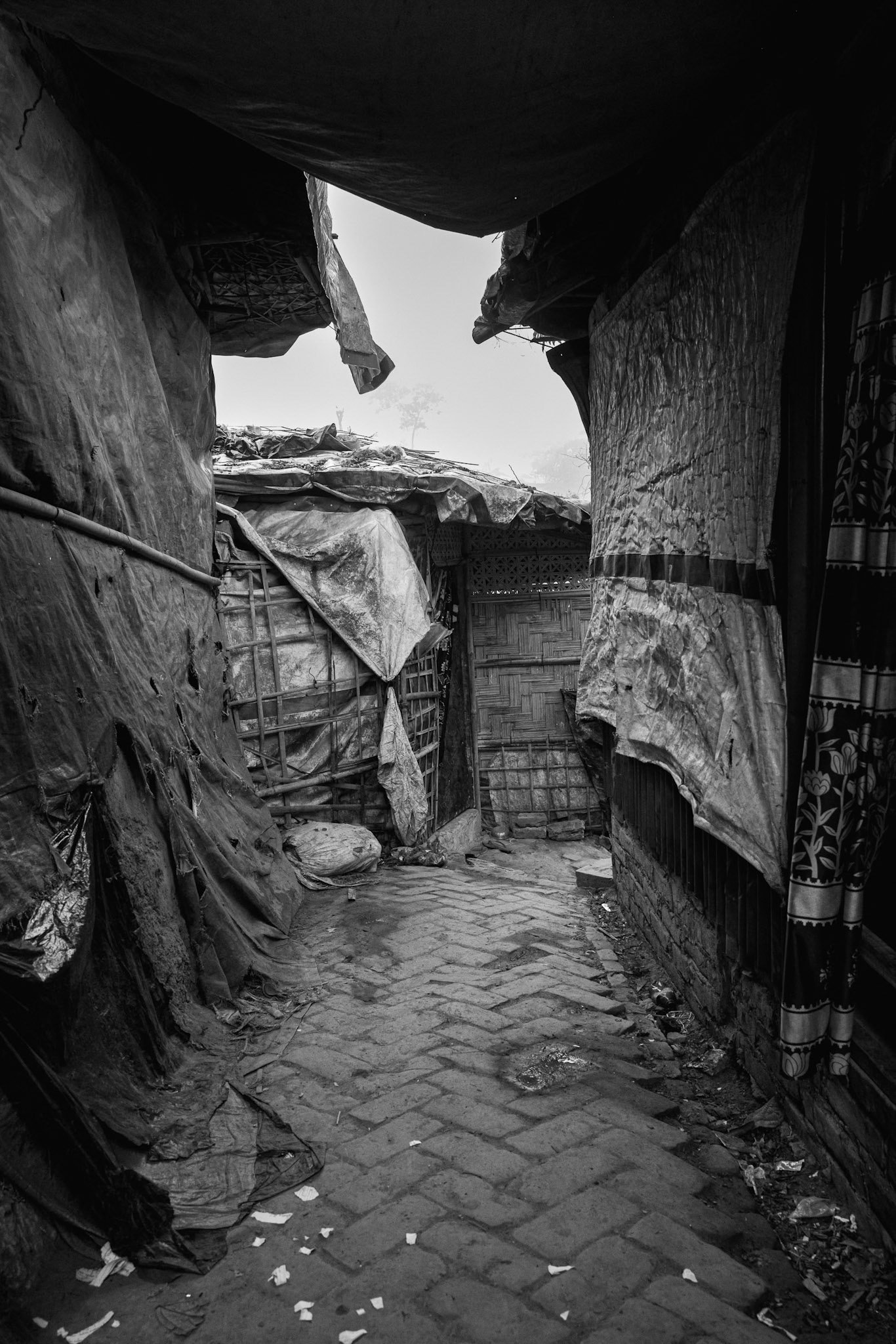
Life inside these dwellings is defined by extreme heat and lack of space, as families of ten or more often share a single small room. Balukhali camp, Bangladesh, January 2026
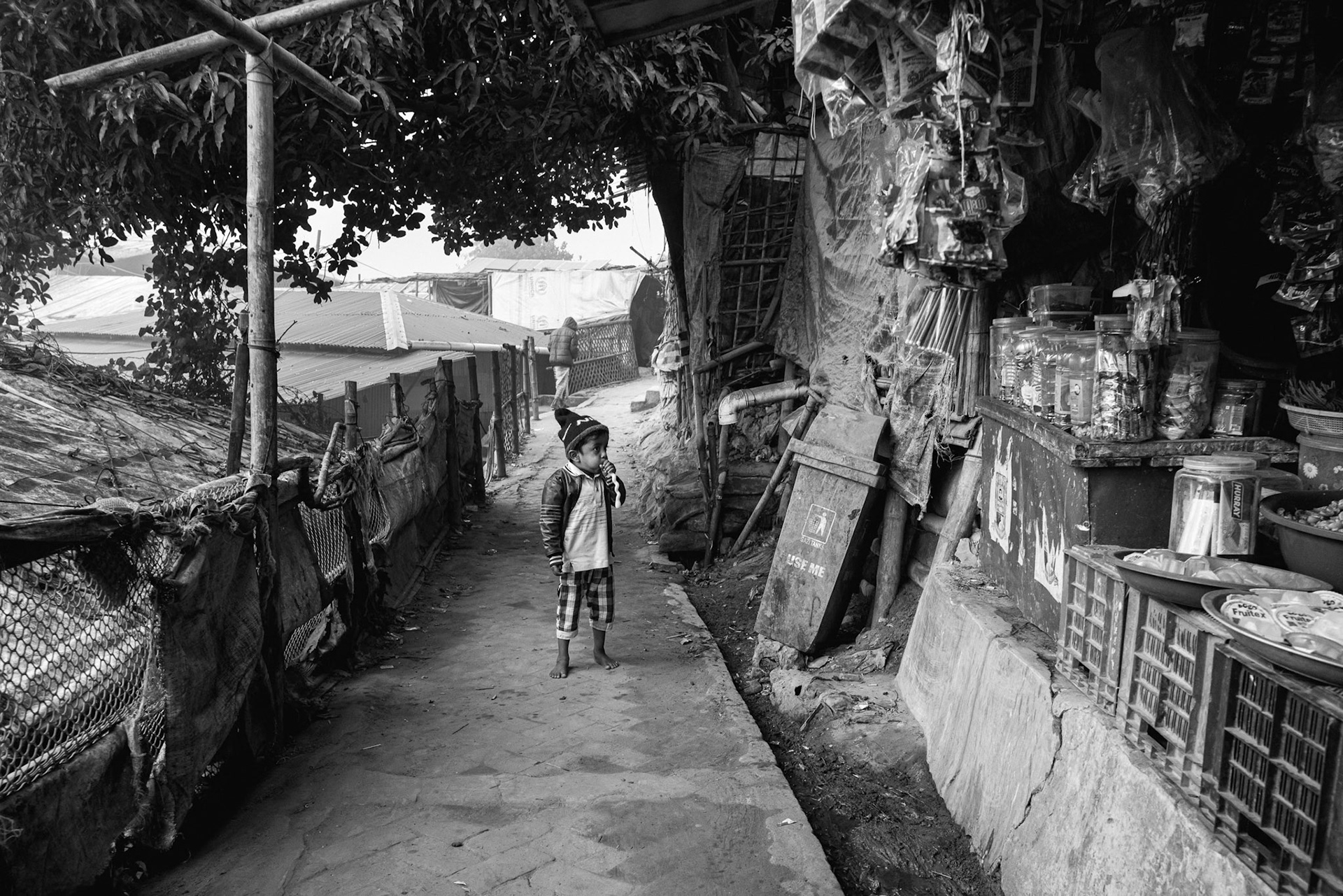
For children born in the camps since 2017, this fenced environment is the only world they have ever known, raising concerns about a "lost generation." Balukhali camp, Bangladesh, January 2026
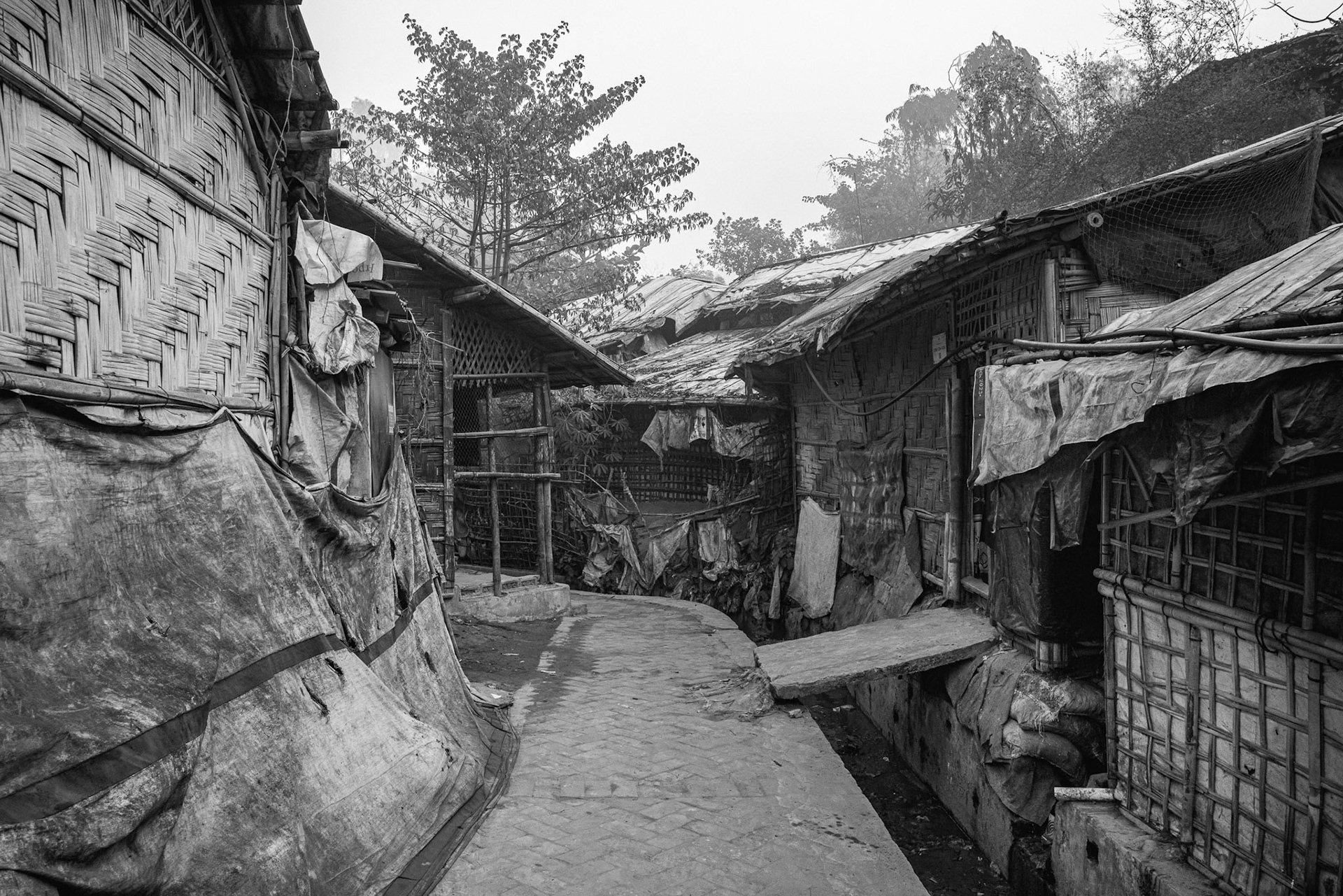
Without the right to build permanent structures, refugees must constantly repair their bamboo huts to survive the heavy tropical rains and cyclones. Balukhali camp, Bangladesh, January 2026
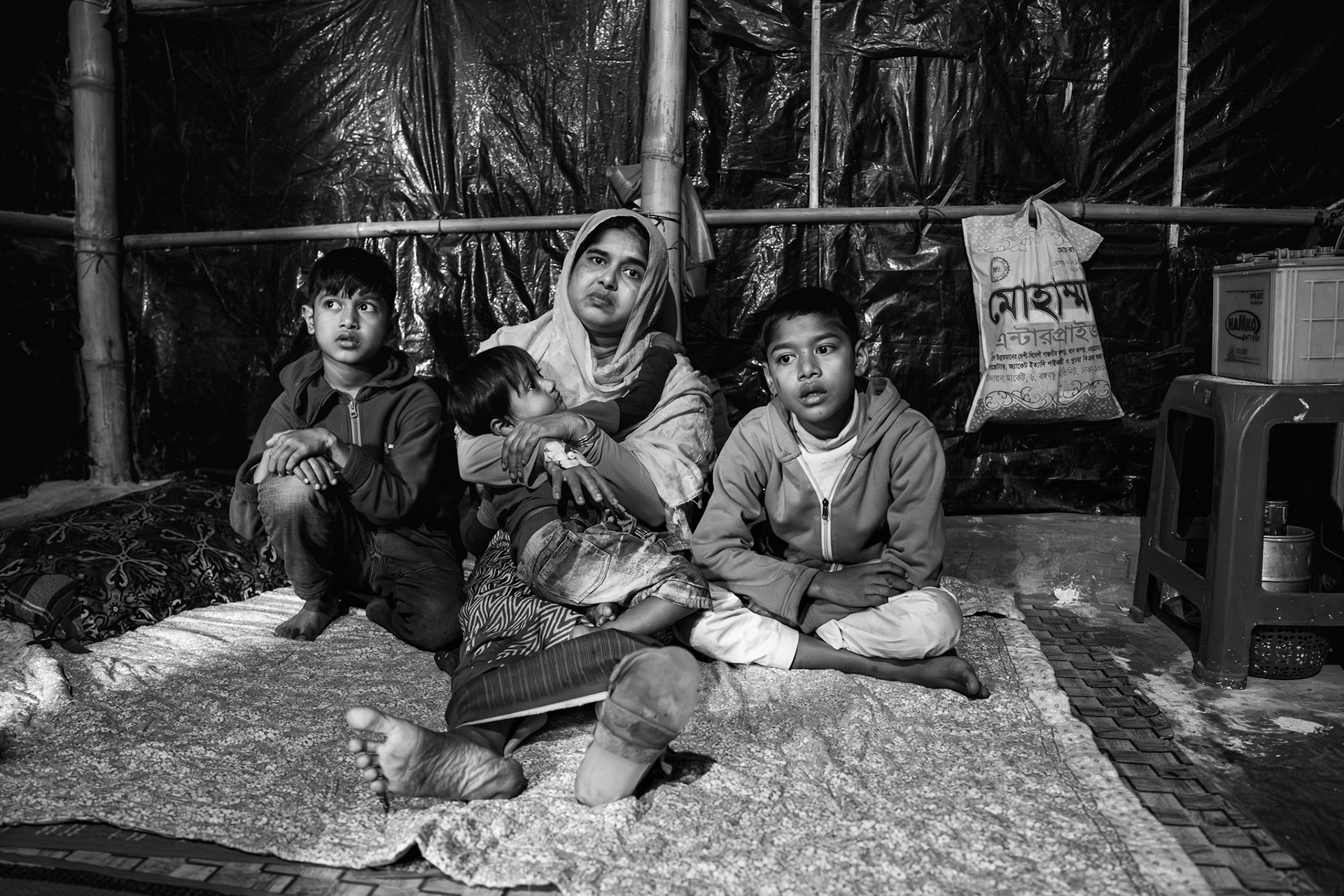
On August 2, 2024, Md Hares (45) and Setara (35) fled their home in Shidda Para, Rakhine, after an AA drone strike hit their house. The blast severely injured Setara, fracturing her femur. The tragedy deepened the following day when their 15-year-old son was arrested and tortured to death by the AA.Taking advantage of their village's proximity to the border, the couple immediately crossed into Bangladesh with their three surviving sons. Setara received initial treatment from MSF and was later referred to a hospital in Chittagong. Today, she remains dependent on crutches and external assistance to move. While she attends physiotherapy when possible, the family faces significant hurdles in accessing the specialized medical care she requires within the camp system. Leda Refugee Camp, Bangladesh, January 2026
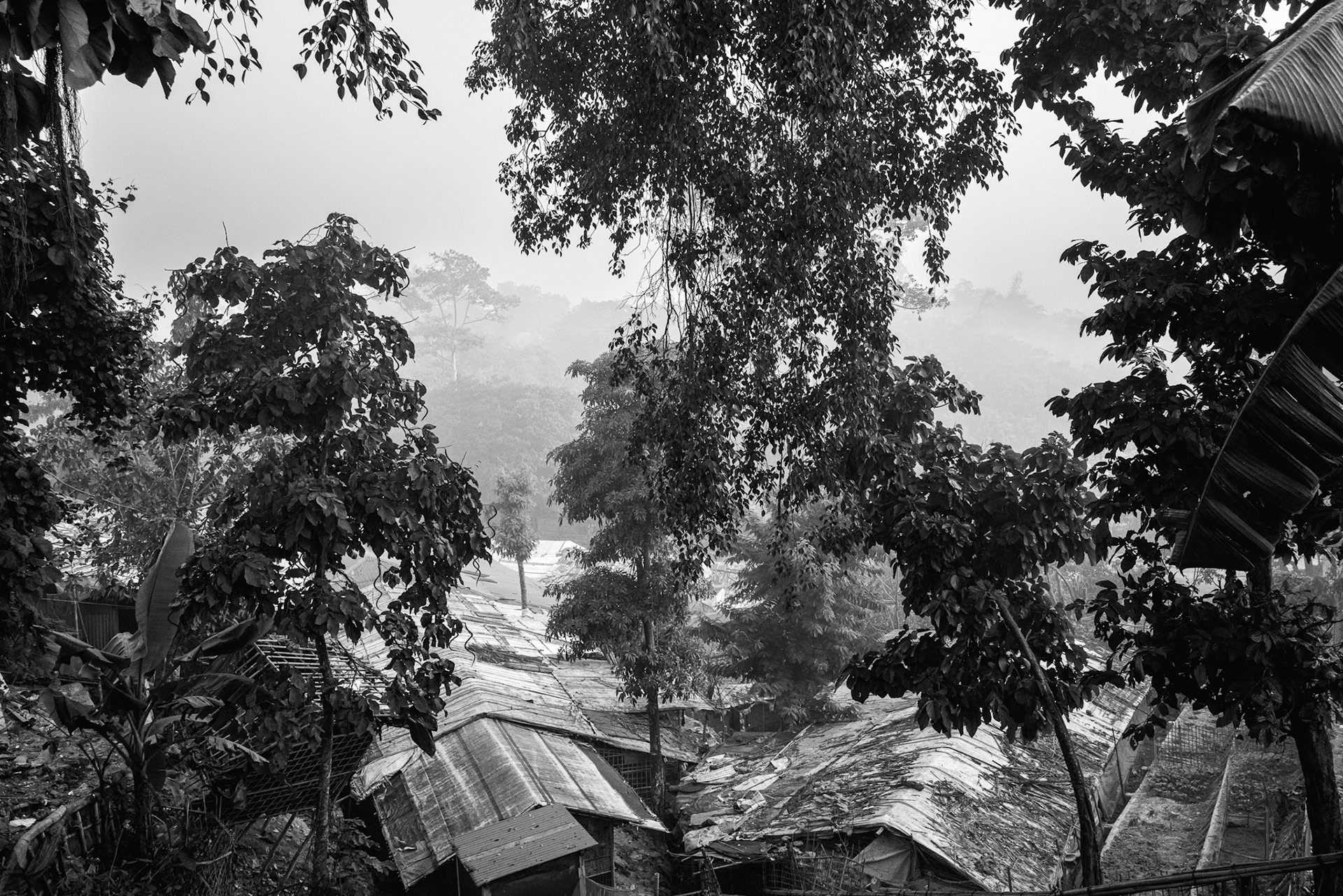
While some trees remain, most of the original forest was cleared during the 2017 exodus to make room for the hundreds of thousands of fleeing Rohingya. Balukhali camp, Bangladesh, January 2026
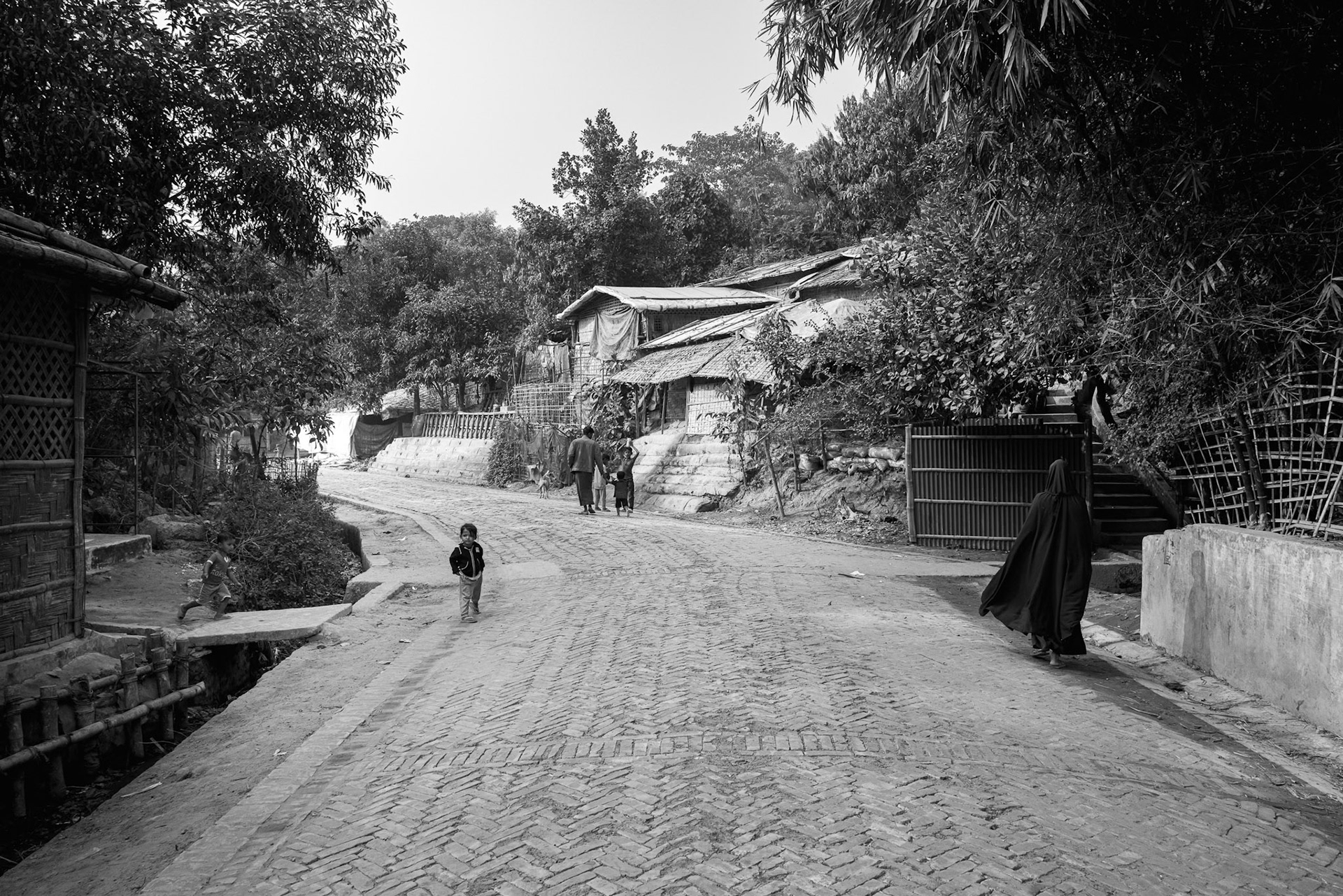
The scale of the Kutupalong-Balukhali expansion reflects a humanitarian crisis that has transitioned from an emergency to a protracted displacement with no immediate end in sight. Kutupalong camp, Bangladesh, January 2026
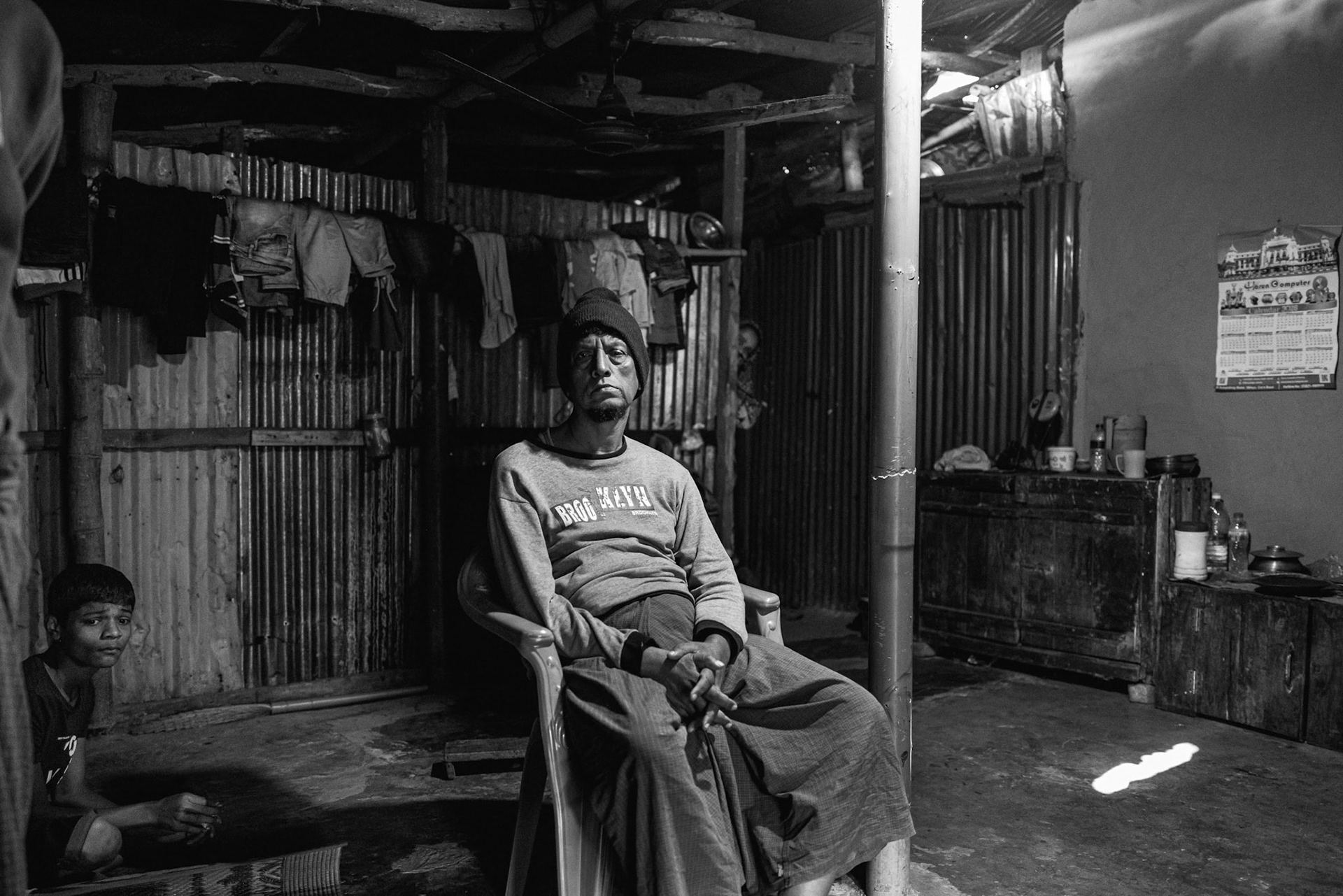
In this photo, Aji Nur, a 13-year-old boy who lives with mental health challenges, is seen with his uncle in Balukhali camp. Aji Nur was injured by shrapnel during a 2024 Arakan Army drone strike on his family home in Maungdaw downtown.The attack instantly killed his father, Md Isaak (45), and left his mother, Morijan (42), and two others wounded. Now displaced in Bangladesh, Aji Nur remains under the care of his surviving family members as they cope with the physical and psychological aftermath of the strike. Balukhali camp in Bangladesh, January 2026
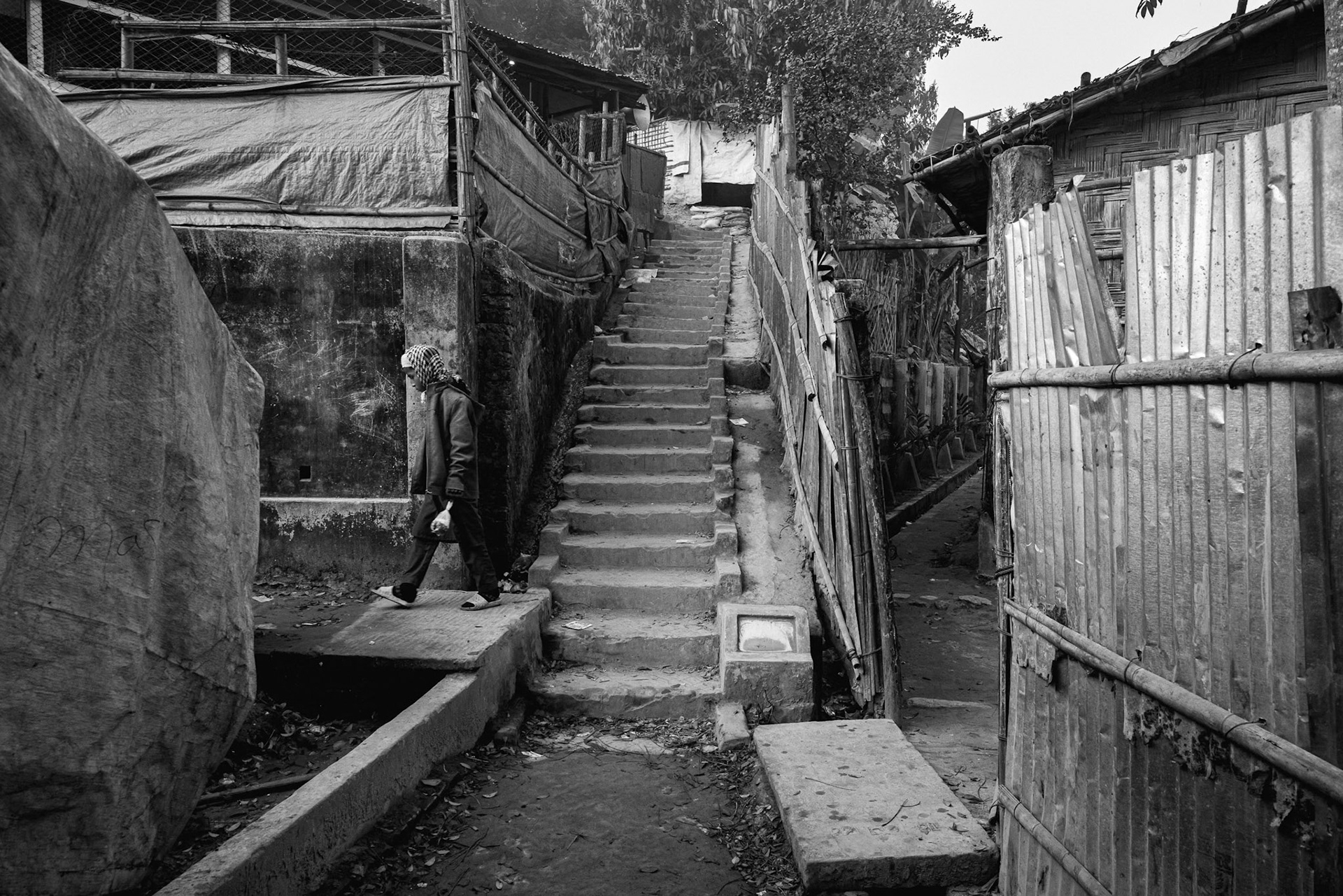
The vertical expansion of the camps is a direct result of the lack of available flat land to house the ever-growing refugee population. Balukhali camp, Bangladesh, January 2026
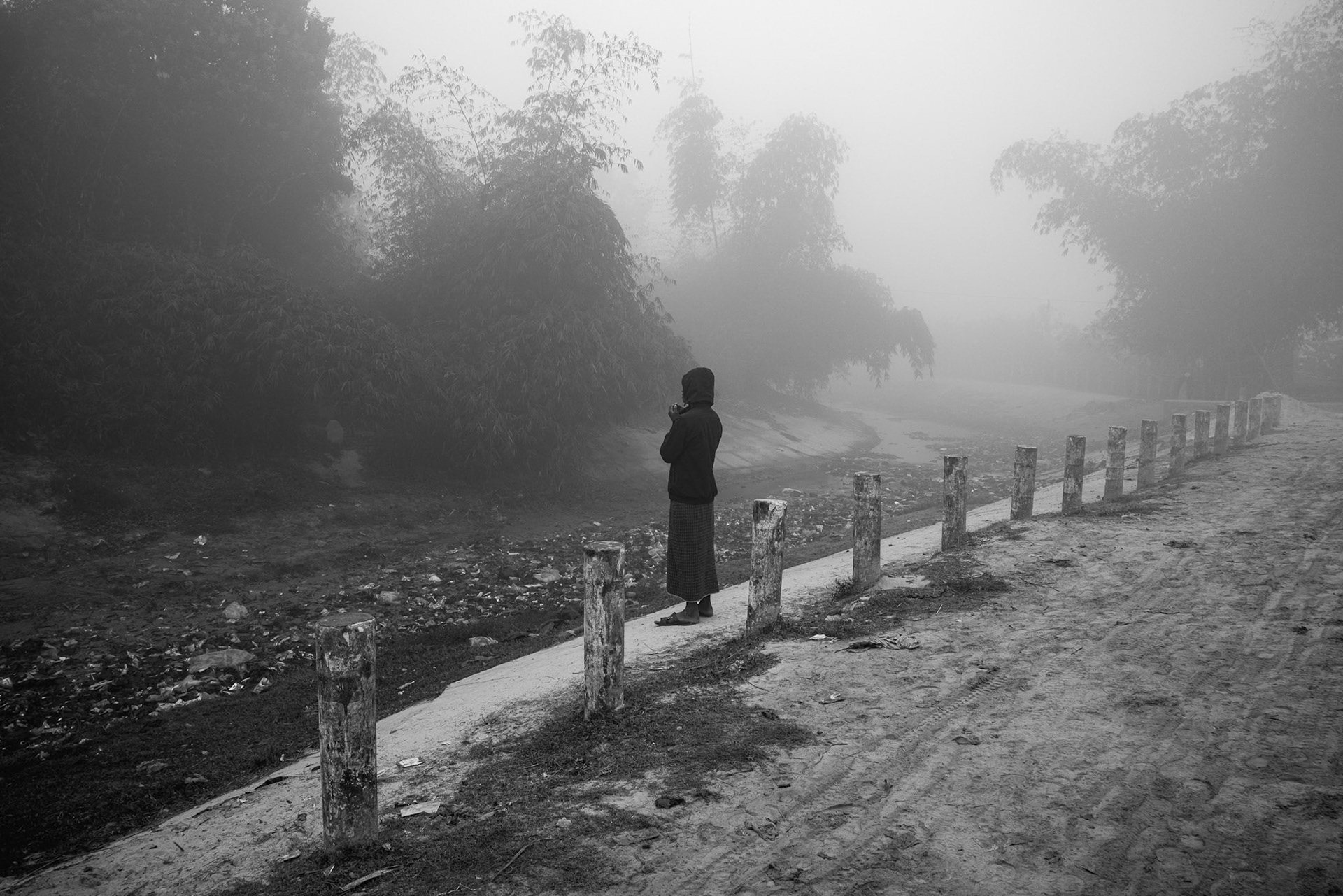
A misty morning view of a Rohingya refugee standing along a concrete-post fence overlooking a low-lying area. Balukhali camp, Bangladesh, January 2026
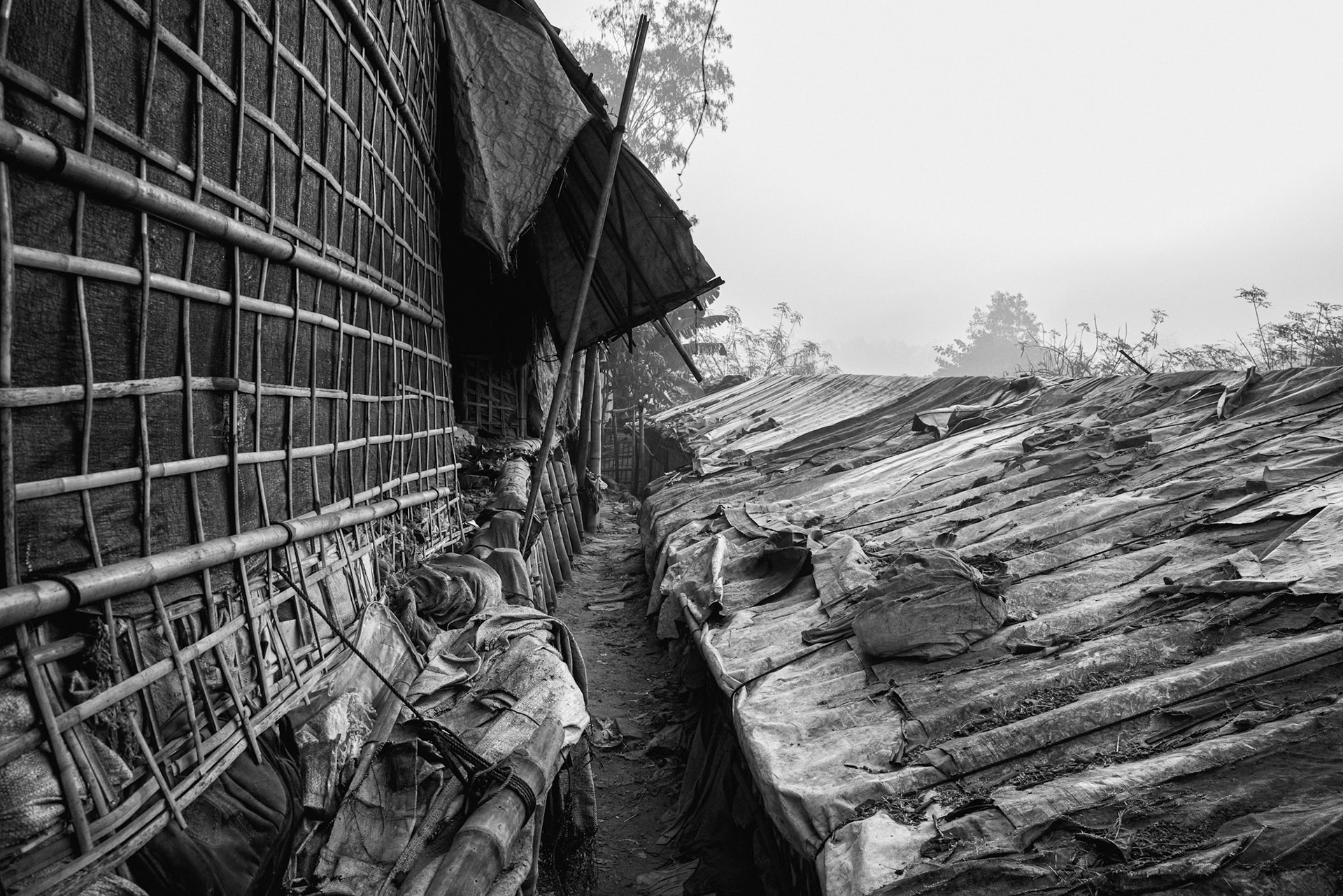
Close-up of bamboo wall construction. This lattice-work is the primary building material allowed in the camps, a stark reminder of the refugees' lack of permanent residency rights. Balukhali camp, Bangladesh, January 2026
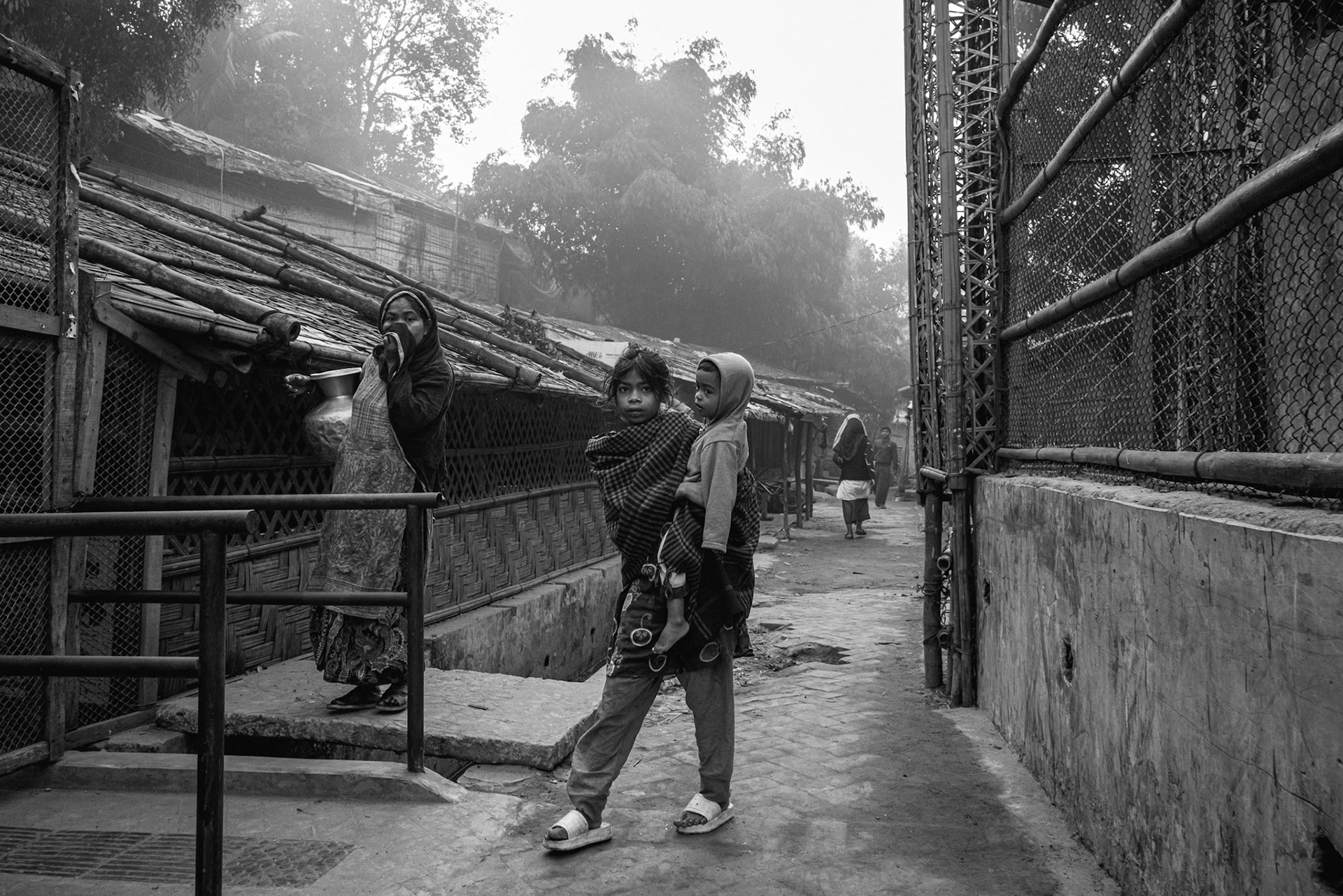
The presence of fencing underscores the restricted nature of the camps, where refugees are generally not permitted to leave the designated areas. Balukhali camp, Bangladesh, January 2026
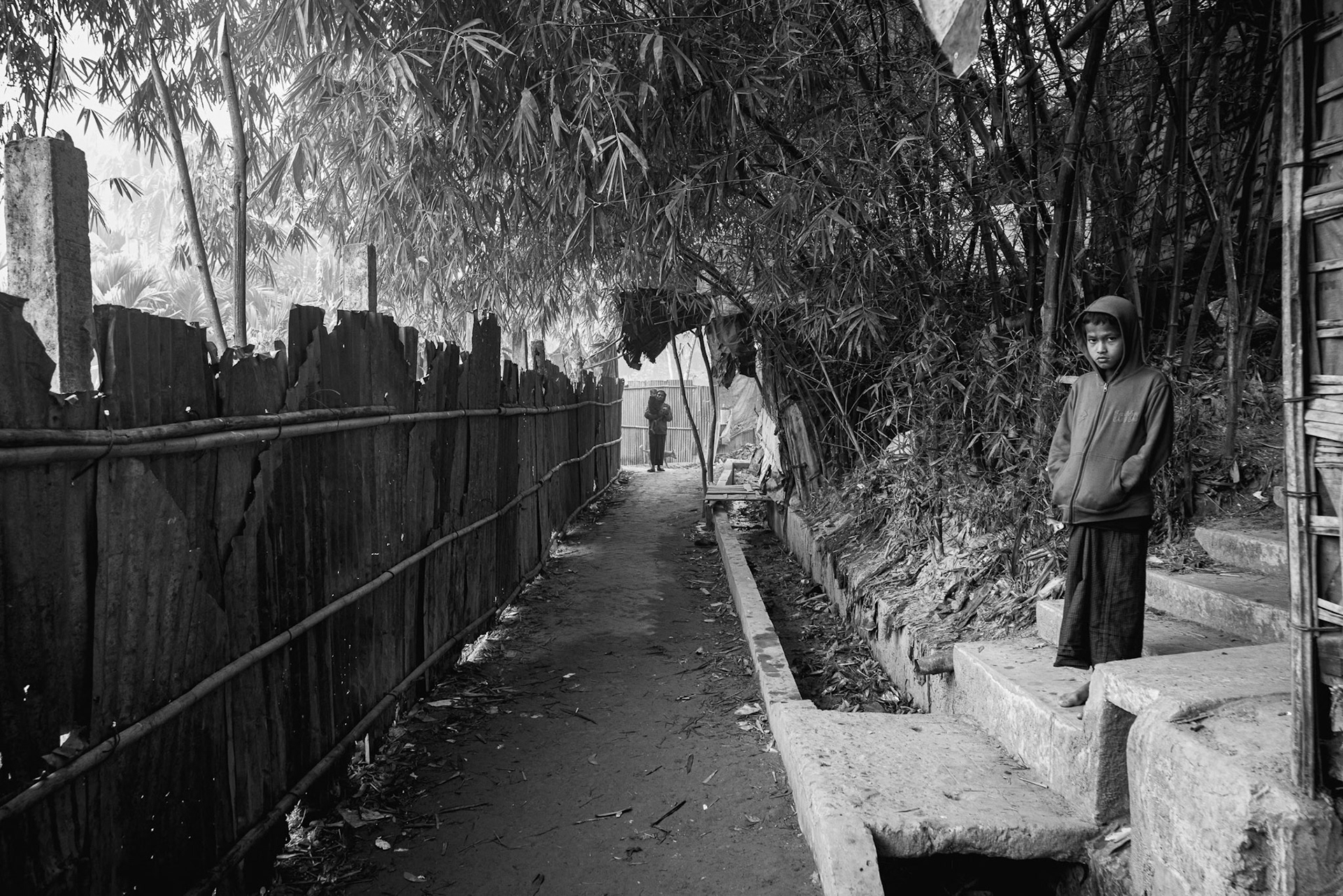
Every square meter of land is utilized in these camps to accommodate the steady influx of families fleeing renewed violence across the border in Myanmar. Balukhali camp, Bangladesh, January 2026