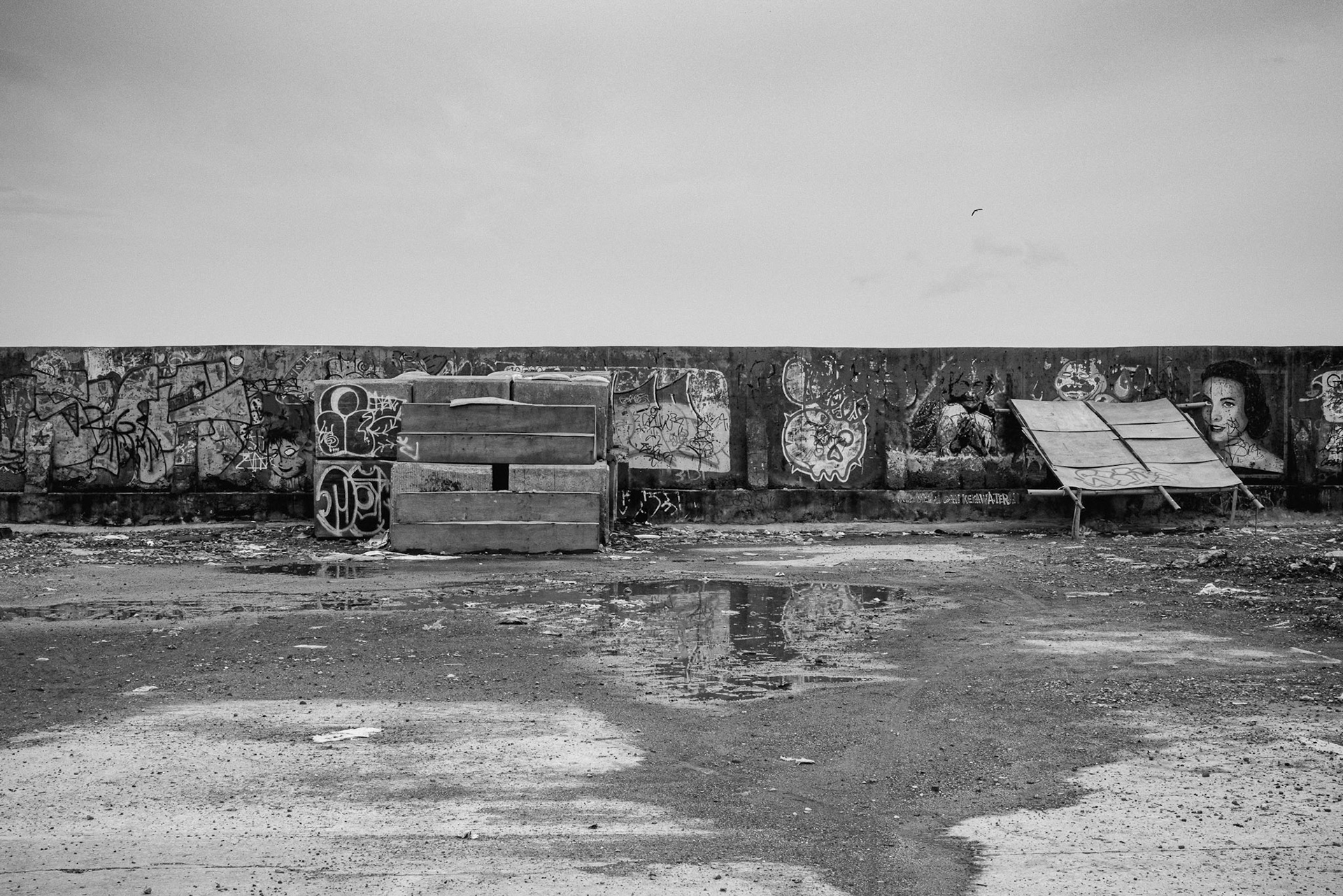
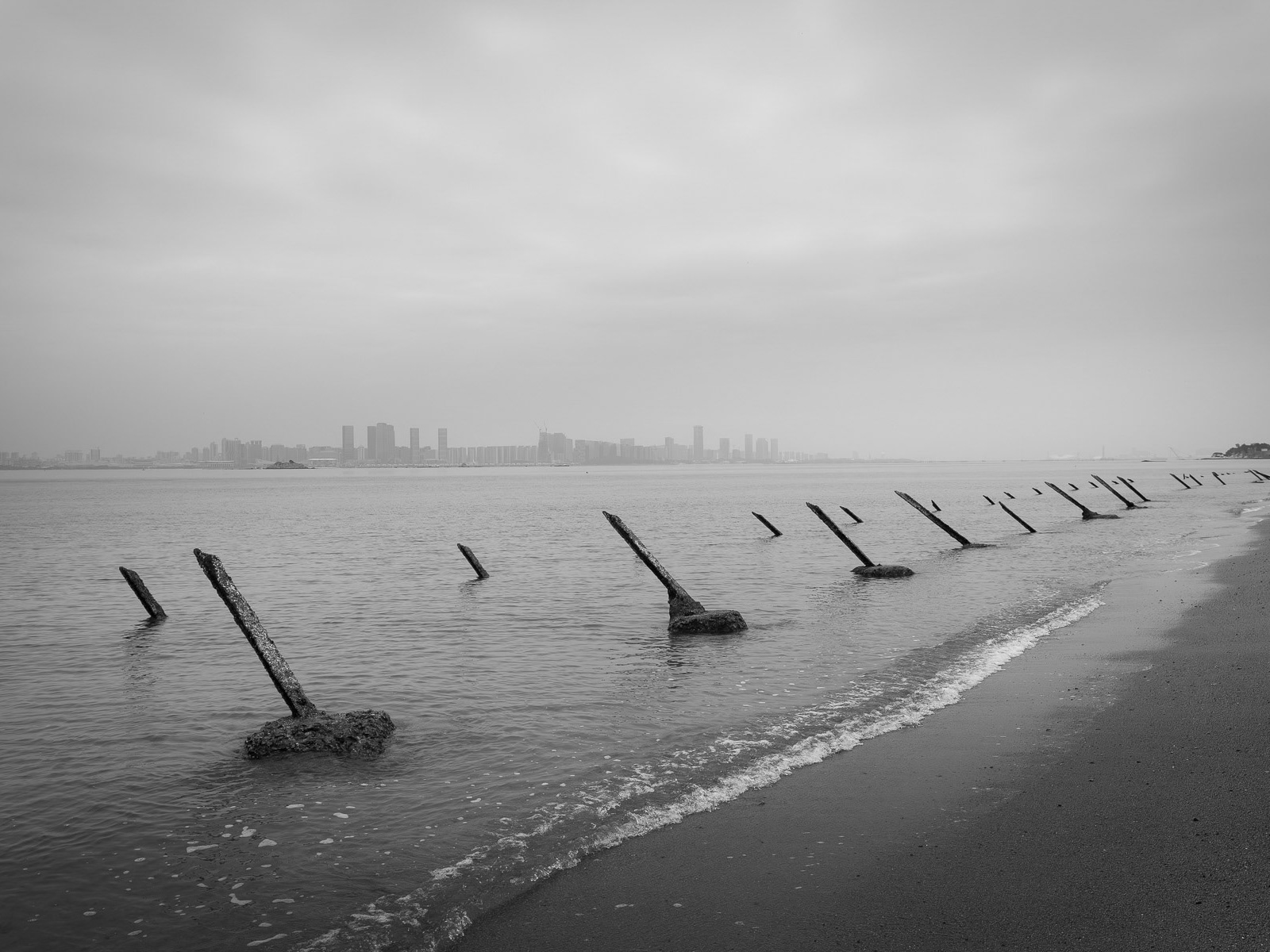
The transformation of North Jakarta’s coastline is a haunting masterclass in ecological consequence. Once a resilient landscape of dense mangrove forests, this "green wall" provided a natural bio-shield that bound the soil and absorbed the rhythmic pulse of the Java Sea. Today, as seen in this photographic series, that organic barrier has been replaced by a desperate, gray geometry of concrete and displacement.
The crisis is not merely a matter of rising seas, but of a city collapsing under its own weight. The rapid expansion of massive luxury condominiums and industrial complexes along the coast has accelerated a process of catastrophic land subsidence. These developments rely on deep-well groundwater extraction, pumping the subterranean aquifers dry. As the water reserves vanish, the silty soil above compresses and sinks—in some areas by as much as 25cm per year.
This sinking is exacerbated by the disruption of Jakarta’s natural drainage. The thirteen rivers that traditionally emptied into the bay are now choked. Ambitious land reclamation projects and the construction of artificial islands have created a "bottleneck" effect, blocking the natural outflow of river water. When the monsoon rains meet the rising tide, the water has nowhere to go. It remains trapped behind the sea walls, creating a permanent state of "Rob" (tidal flooding) for the communities in Muara Baru and Muara Angke.
The photographs move from the intimate struggle of residents—using discarded shells to manually raise their floors—to the monumental silence of the Sunken Mosque. This mosque serves as a modern ruin, a tombstone for land that once sat well above the high-water mark. Without the mangroves to stabilize the coast and without a sustainable approach to urban water management, the sea wall remains a temporary bandage on a deepening wound. As Jakarta continues its retreat, these images capture a threshold: a city fighting a war of attrition against an ocean it can no longer hold back.
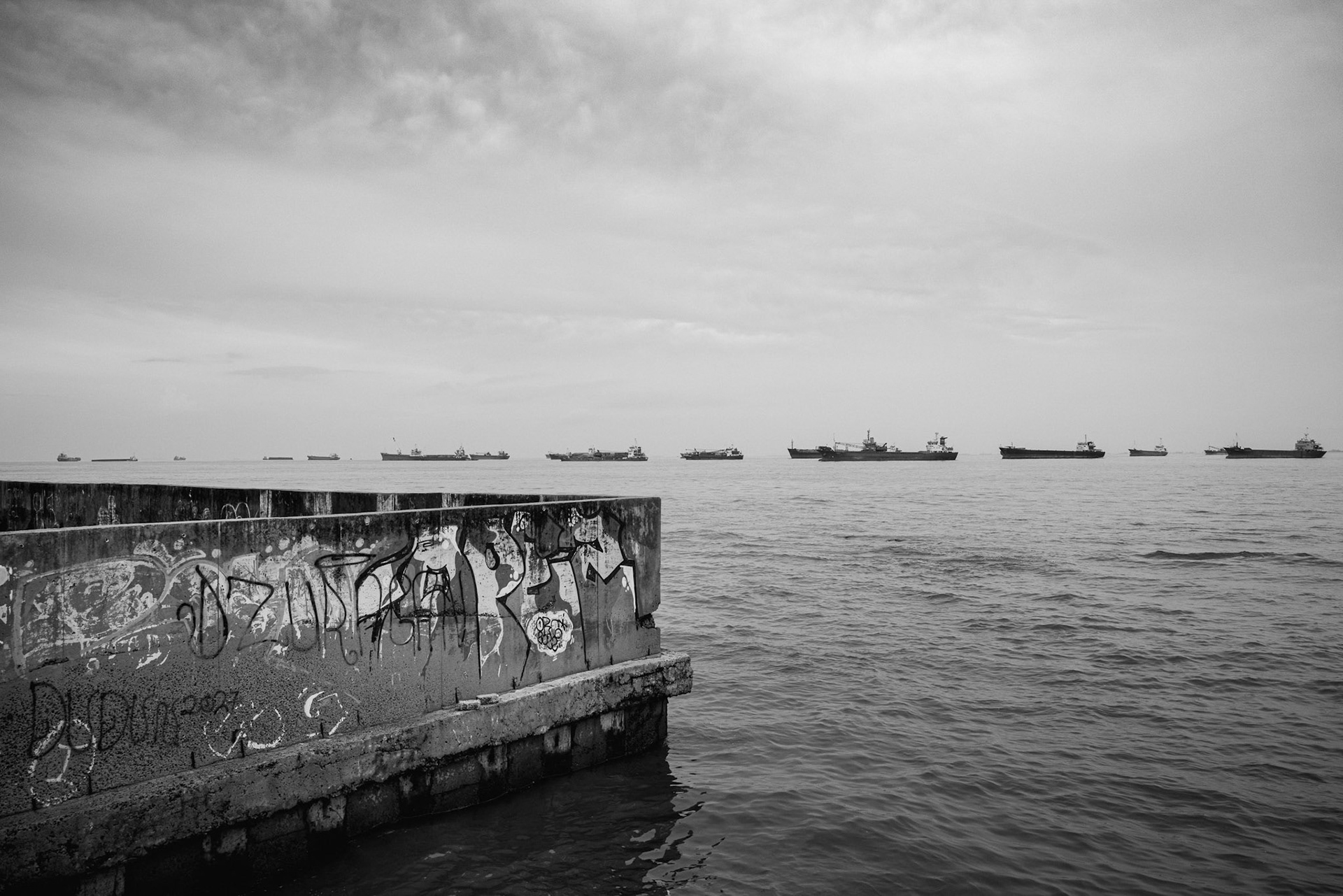
With the natural mangrove buffer gone, Jakarta’s only defense is this massive concrete barrier—a stark, artificial line against the sea. Muara Baru, Jakarta, January 2026
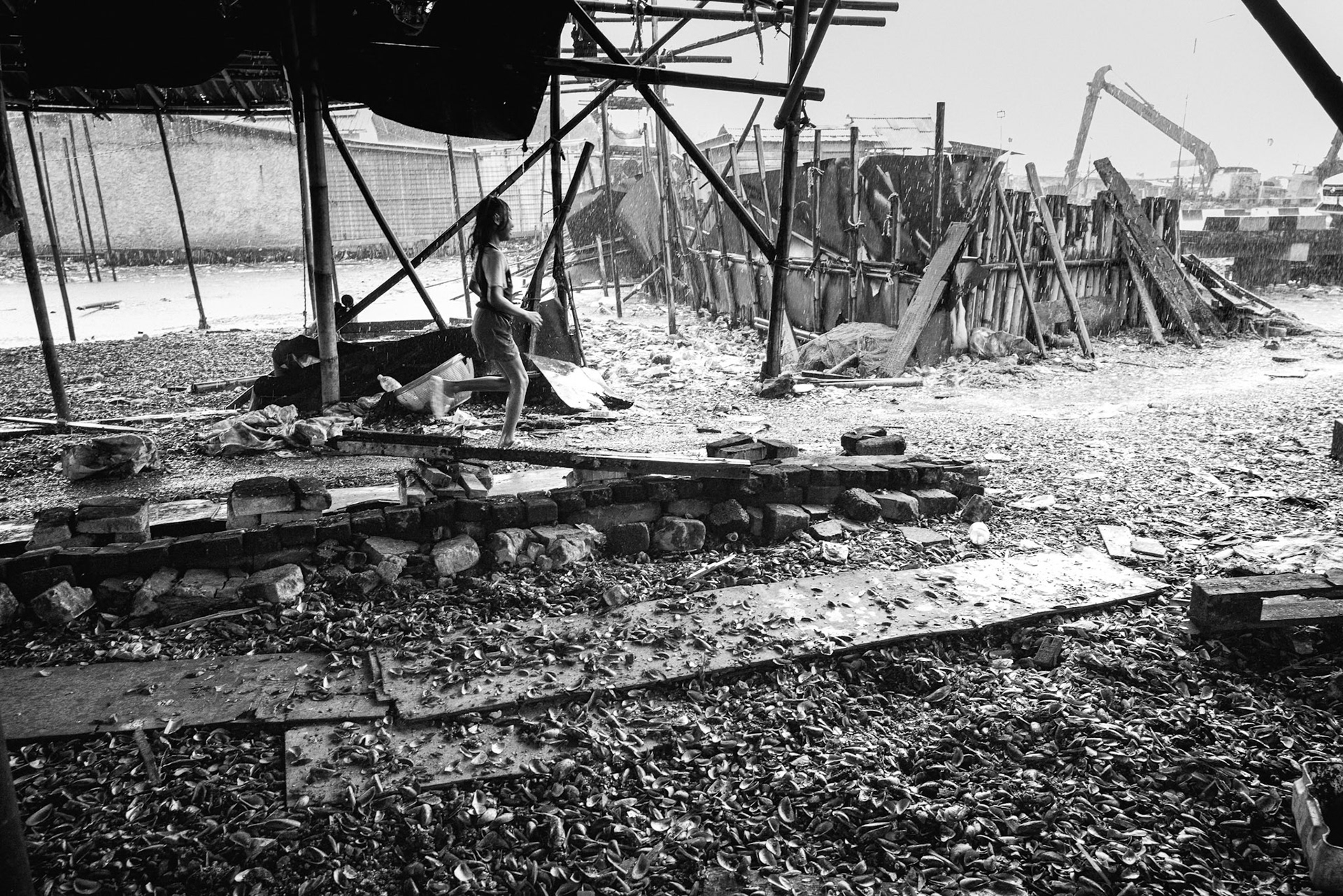
This temporary structure is a "placeholder" likely to vanish in the next super flood. In the background, excavators work frantically to patch an eroding coast that the ocean is determined to reclaim. Muara Angke, Jakarta, January 2026
Urban sprawl has choked out the coastal wetlands. The disappearance of this "green wall" has turned a manageable tidal cycle into a permanent flooding crisis. Jakarta, January 2026
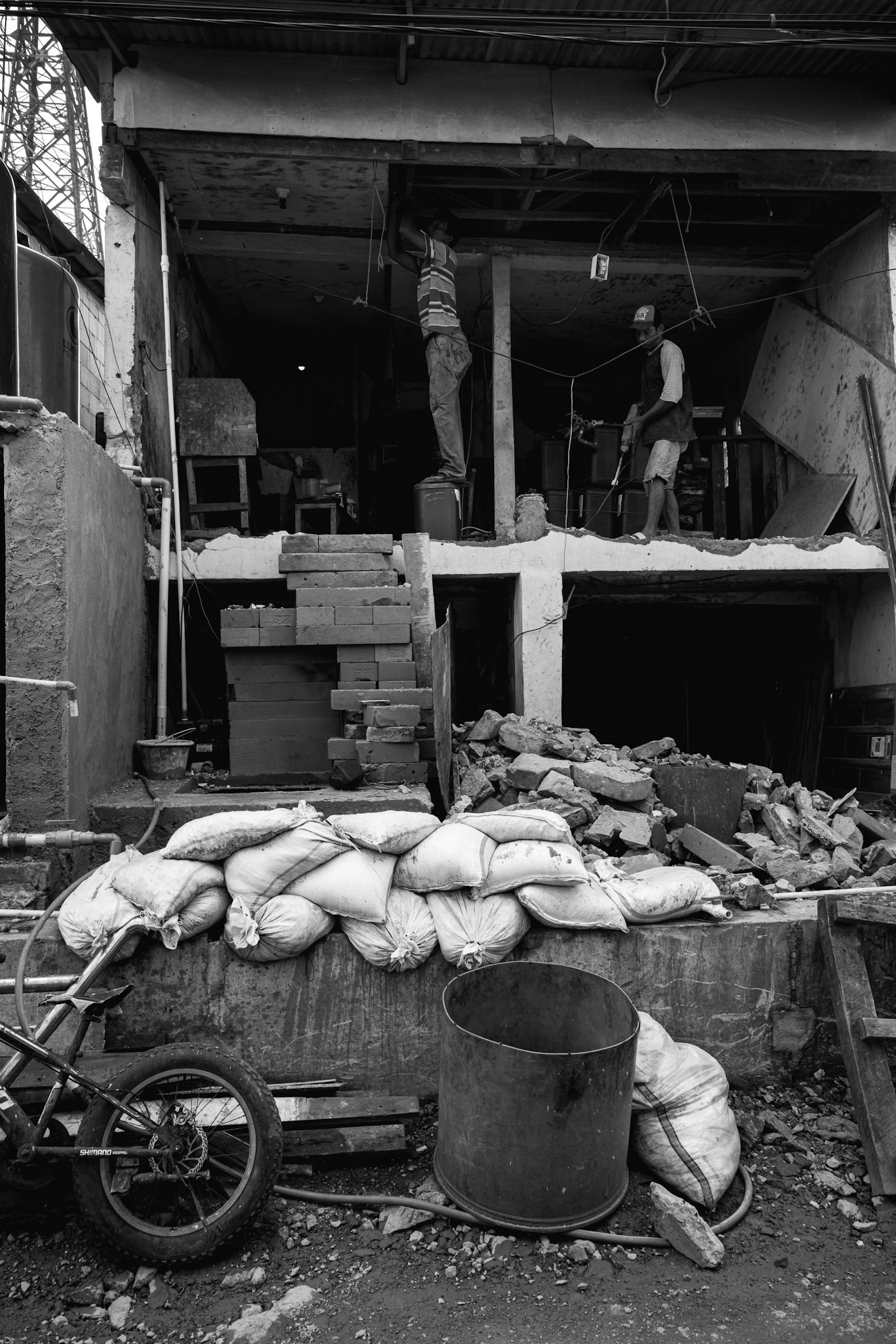
Vertical struggle: Residents are forced to constantly raise their floors and rebuild as the land beneath them subsides. Jakarta, January 2026
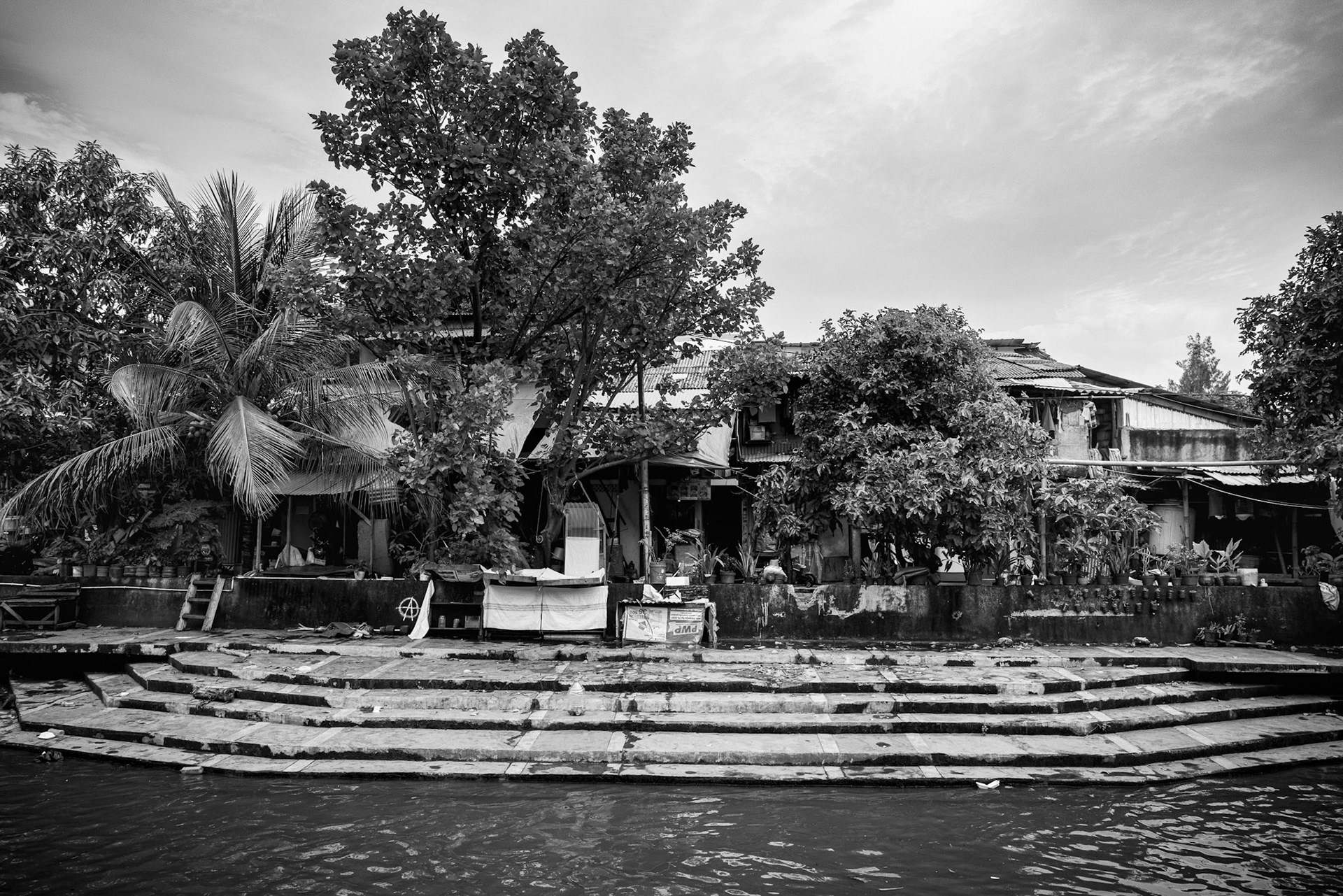
A community at the water's threshold: Constant maintenance is the price of living at sea level. Muara Baru, Jakarta, January 2026
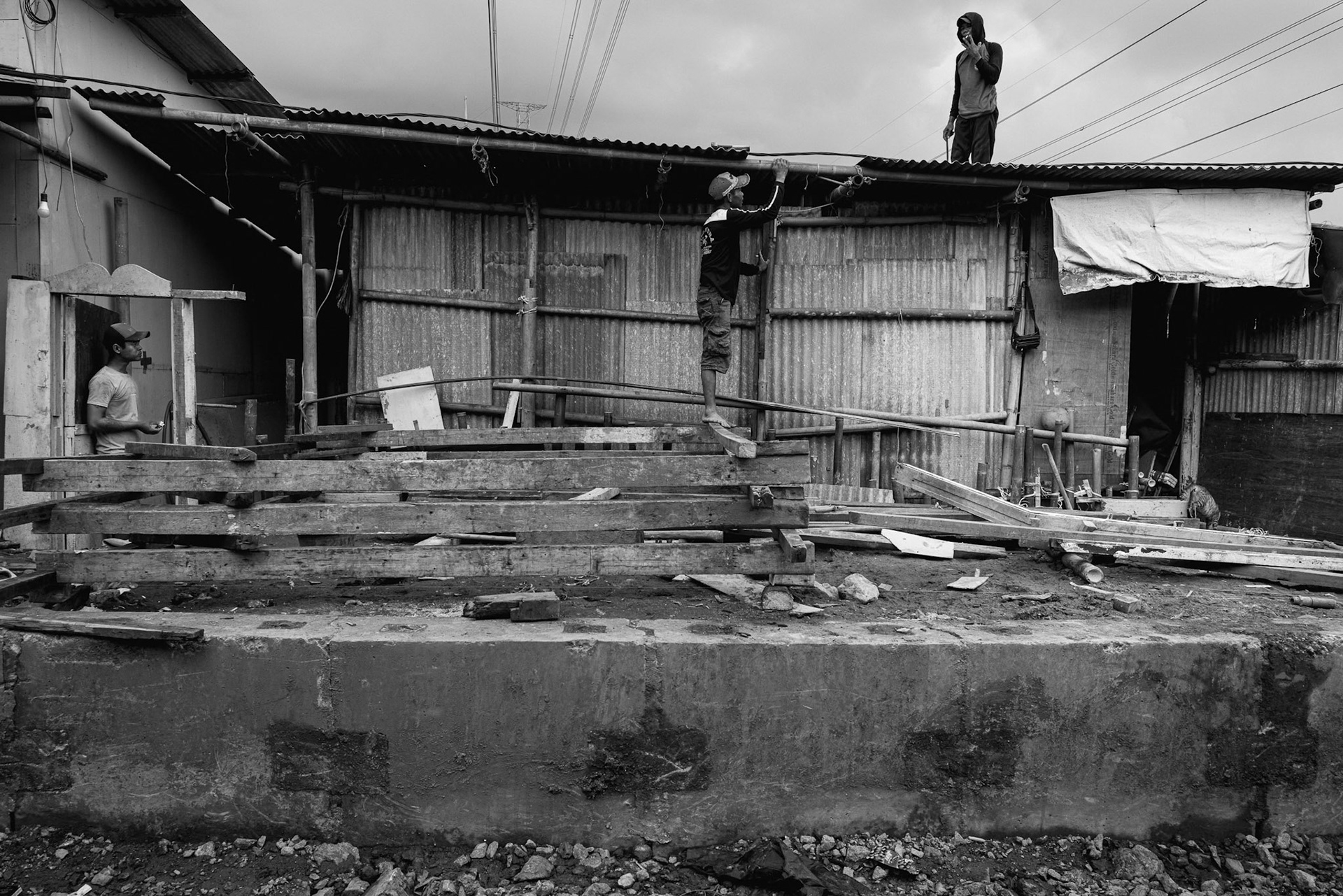
Vertical struggle: Residents are forced to constantly raise their floors and rebuild as the land beneath them subsides. Jakarta, January 2026
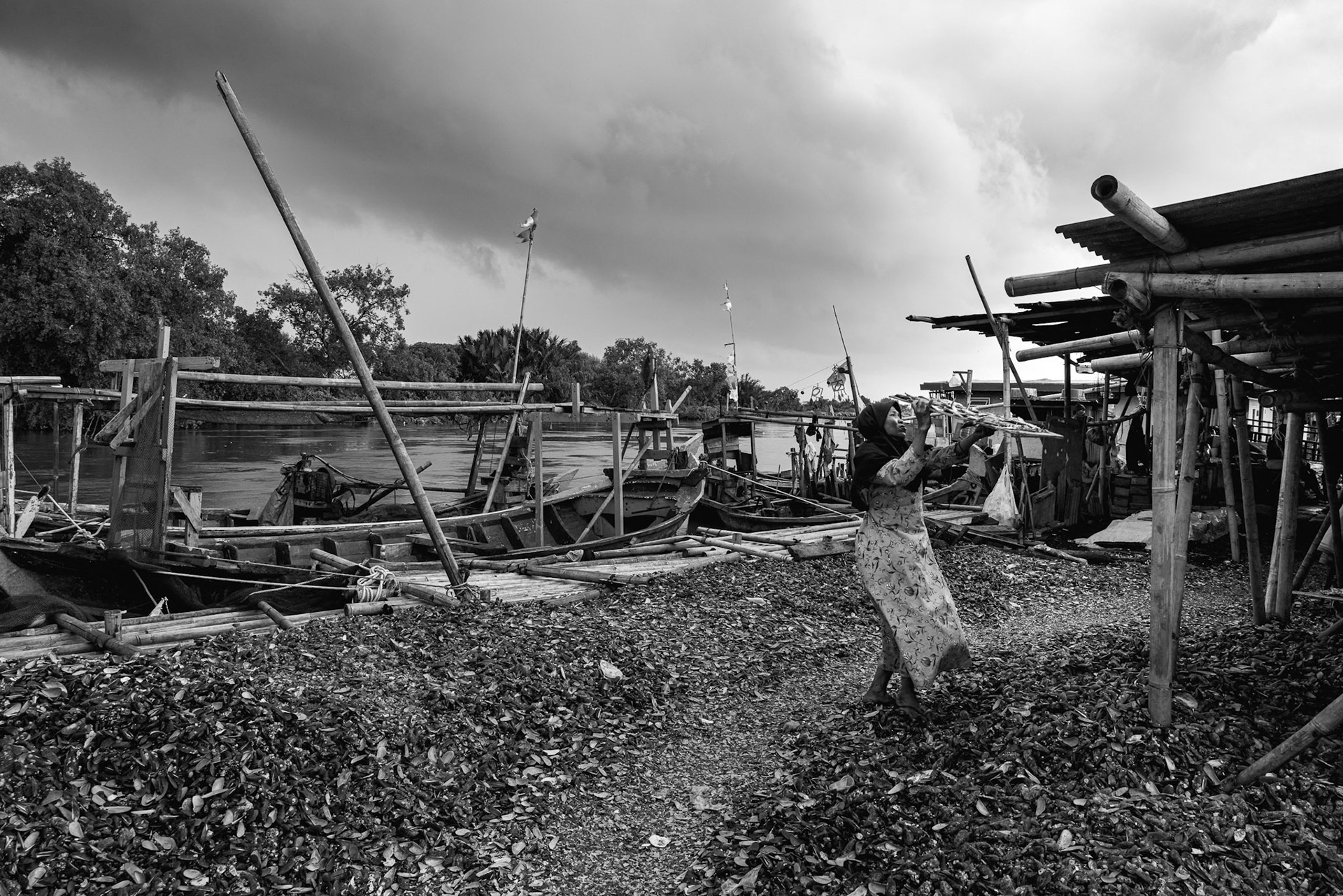
In the fisherman’s settlements of Muara Angke, discarded shells are repurposed as literal ground. This organic "pavement" is a constant, manual effort to level a soil that is perpetually sinking beneath their feet. Jakarta, January 2026
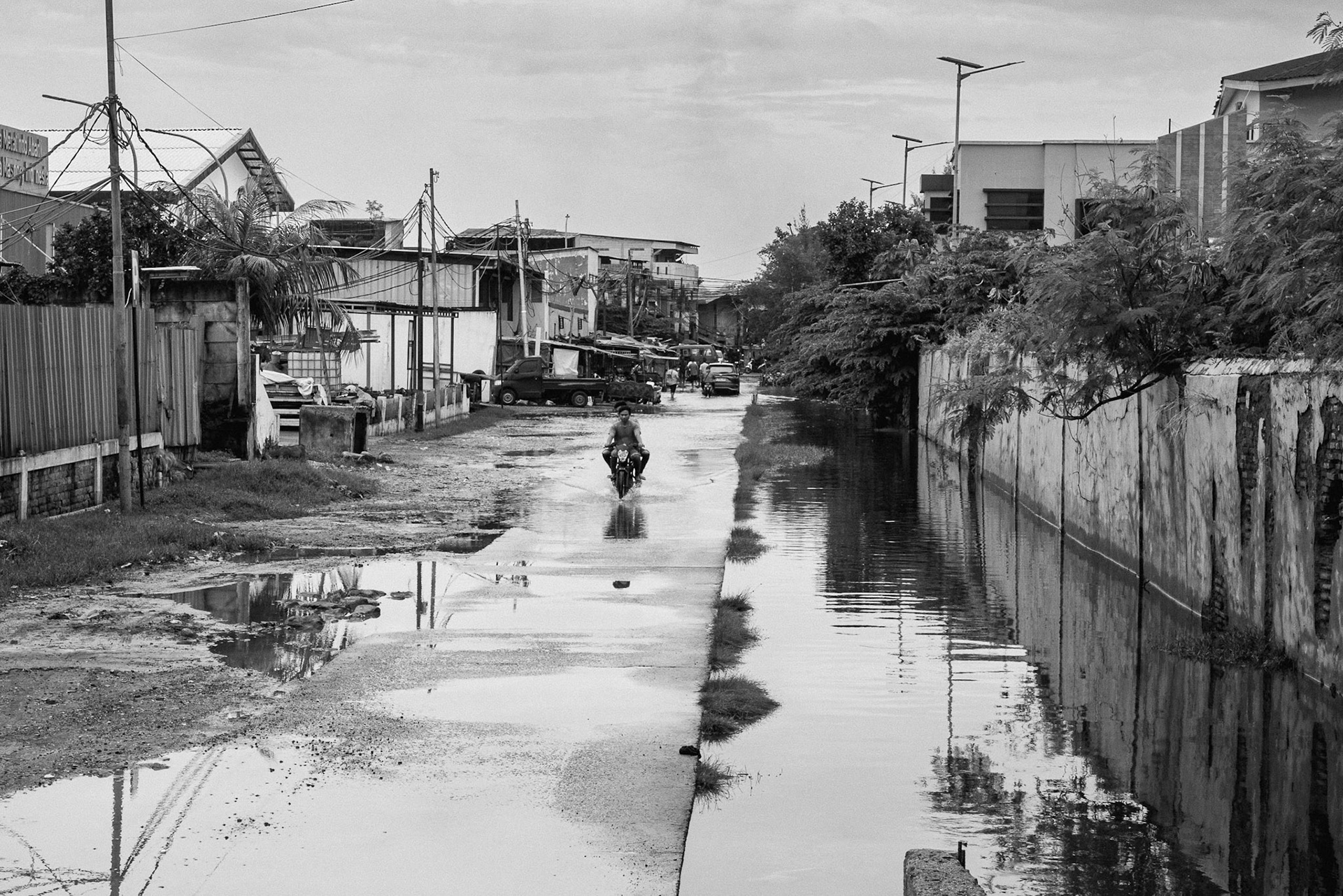
Even with the sea wall, the land behind it continues to sink. Without natural drainage or the soil-binding power of mangroves, floods are now a permanent neighbour. Muara Baru, Jakarta, January 2026
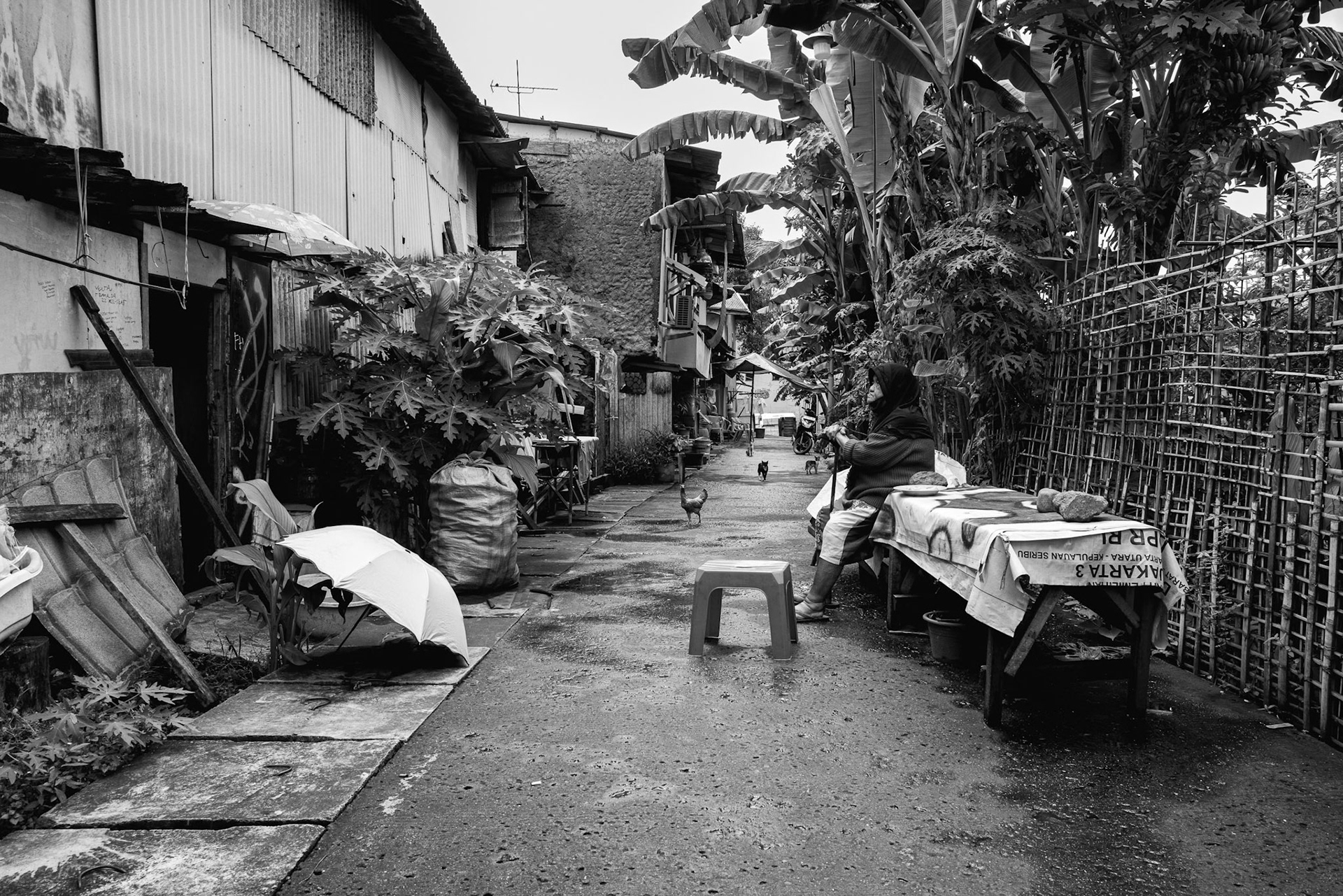
The narrow, high-density arteries of Muara Baru along the Ciliwung river, Jakarta, January 2026
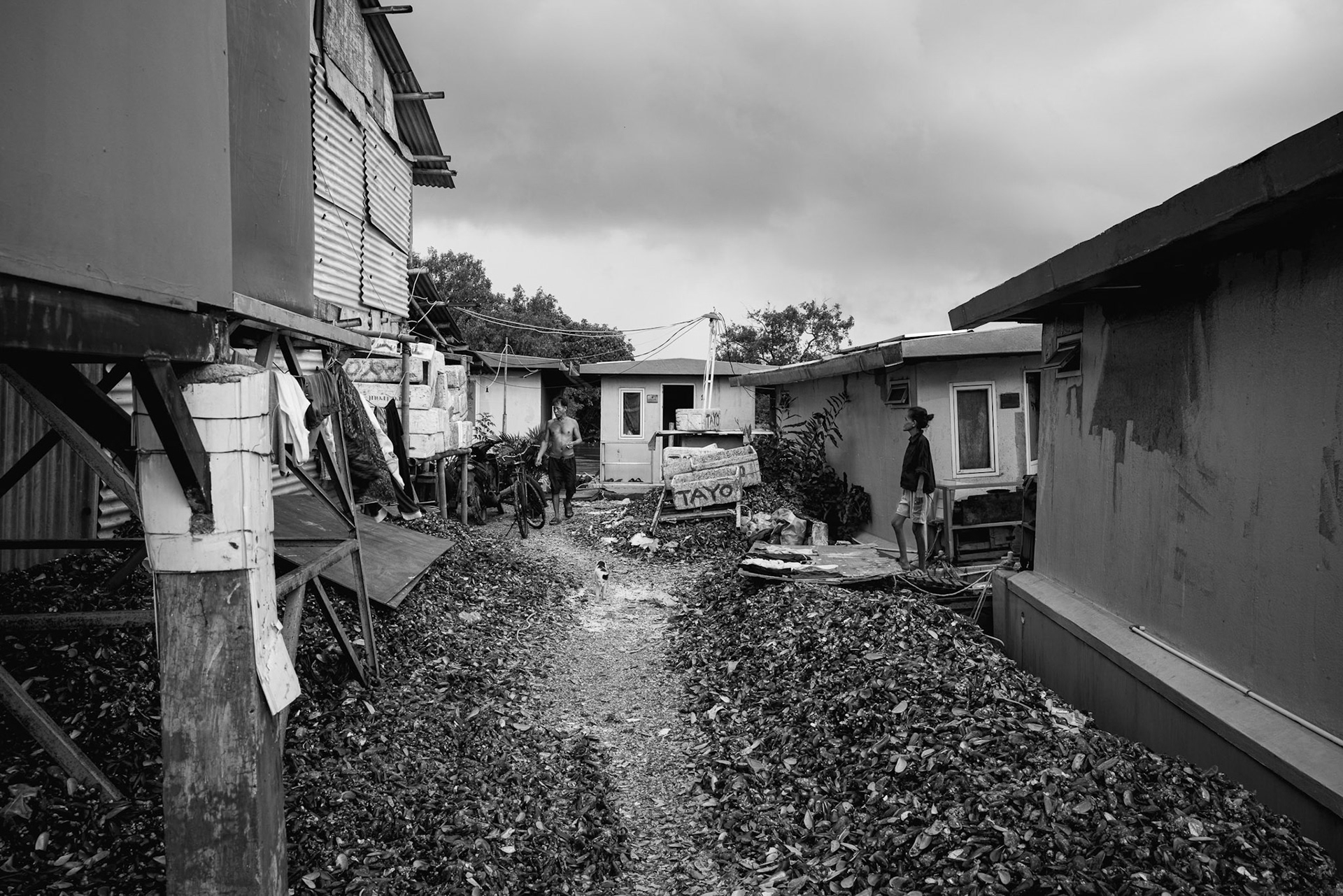
In the fisherman’s settlements of Muara Angke, discarded shells are repurposed as literal ground. This organic "pavement" is a constant, manual effort to level a soil that is perpetually sinking beneath their feet. Jakarta, January 2026
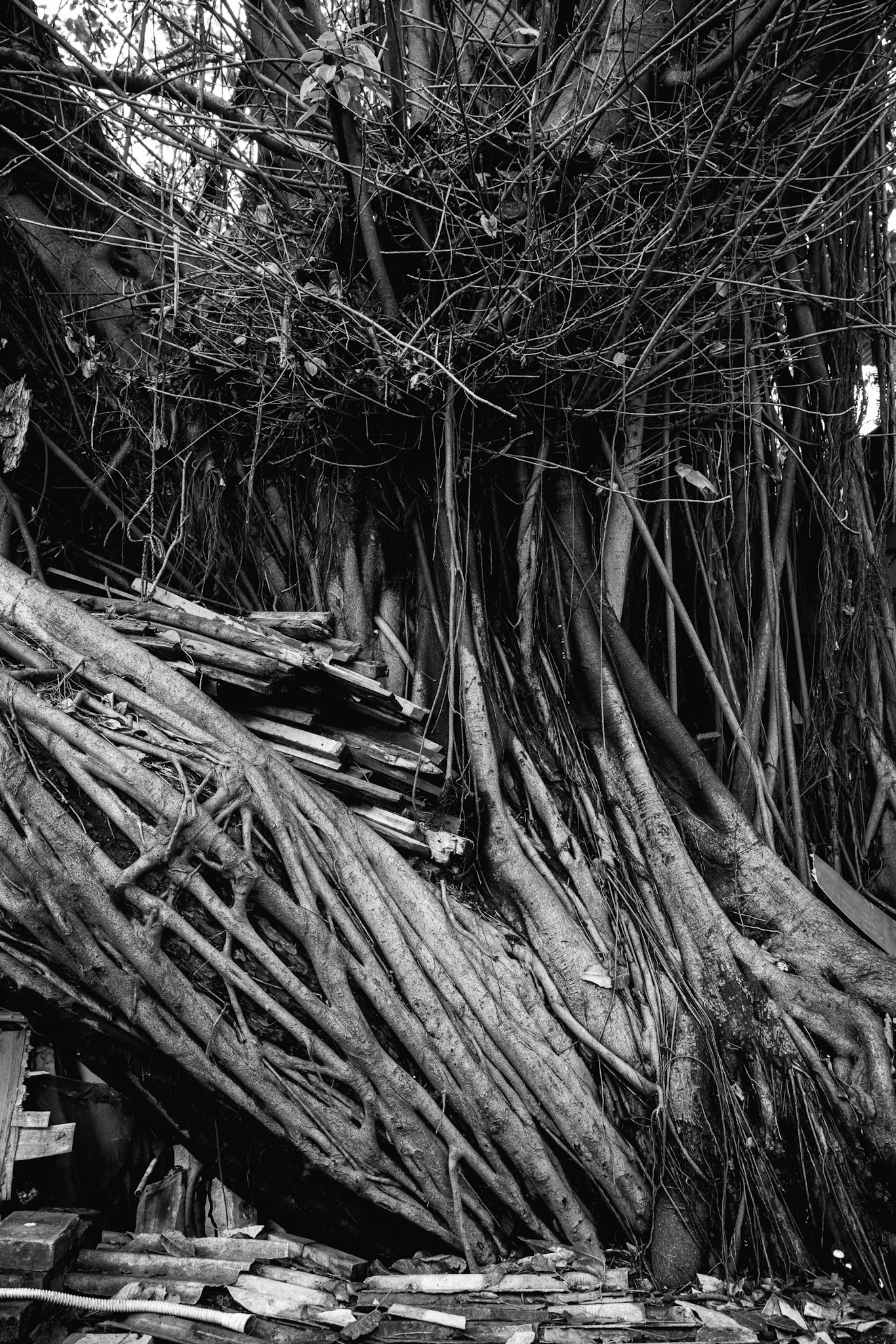
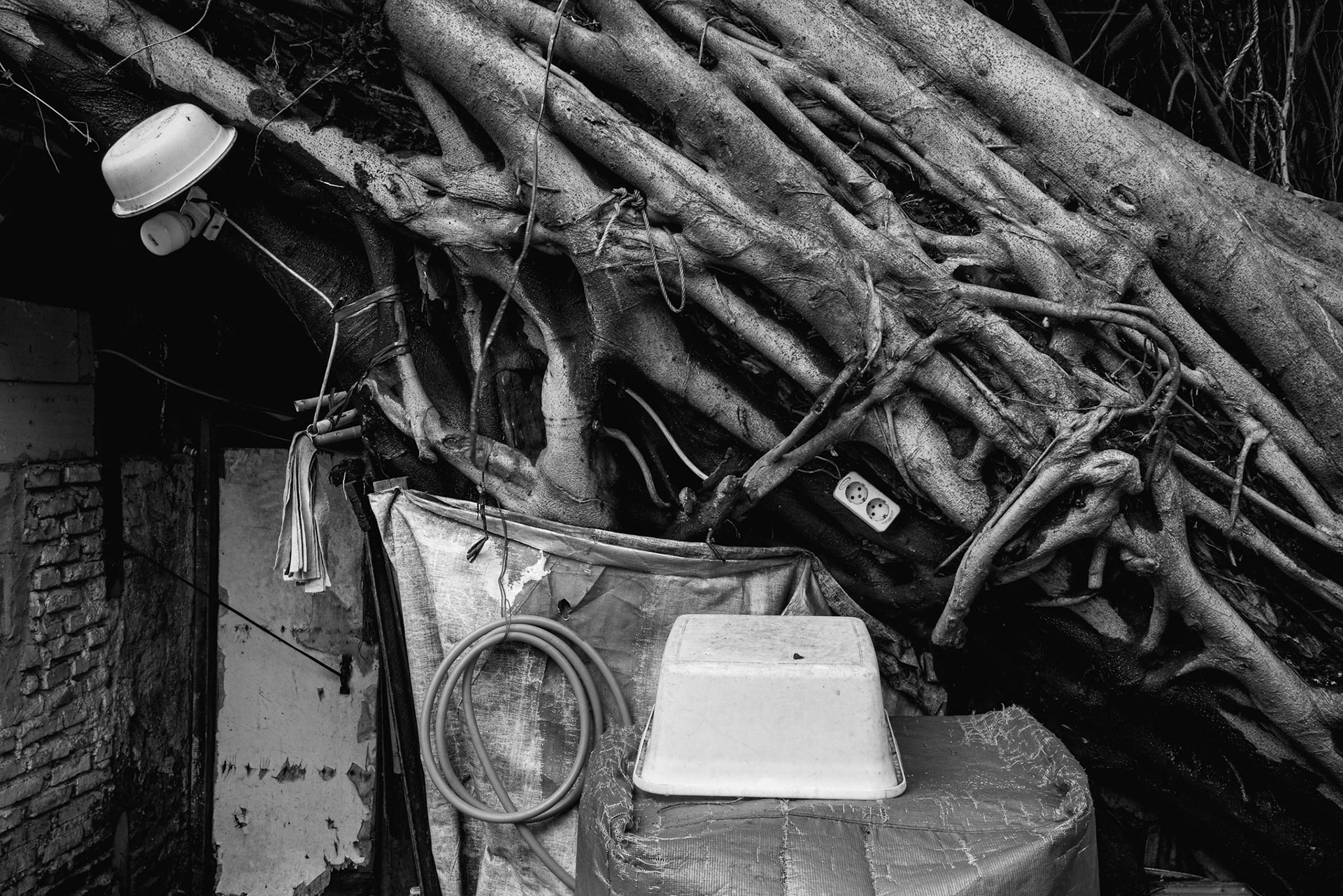
These skeletal remains are a reminder of the massive forest buffers that once protected North Jakarta. Without them, there is no natural "sponge" to absorb the rising tides. Muara Baru, Jakarta, January 2026
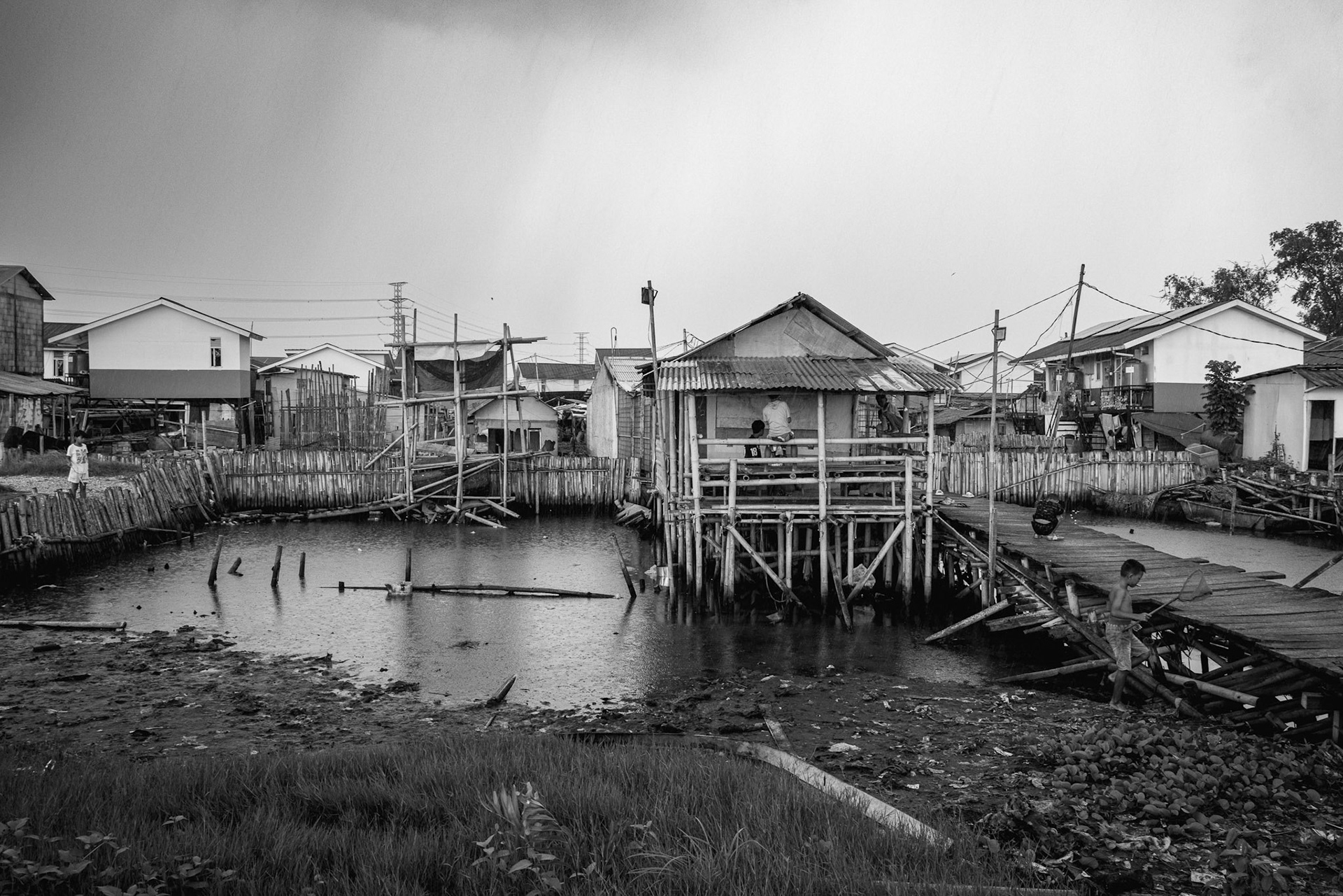
In Muara Angke, traditional stilted dwellings are no longer enough. The community is caught in a cycle of constant modification, extending structures upward and outward as the harbor floor continues to settle and the water levels climb. Jakarta, January 2026
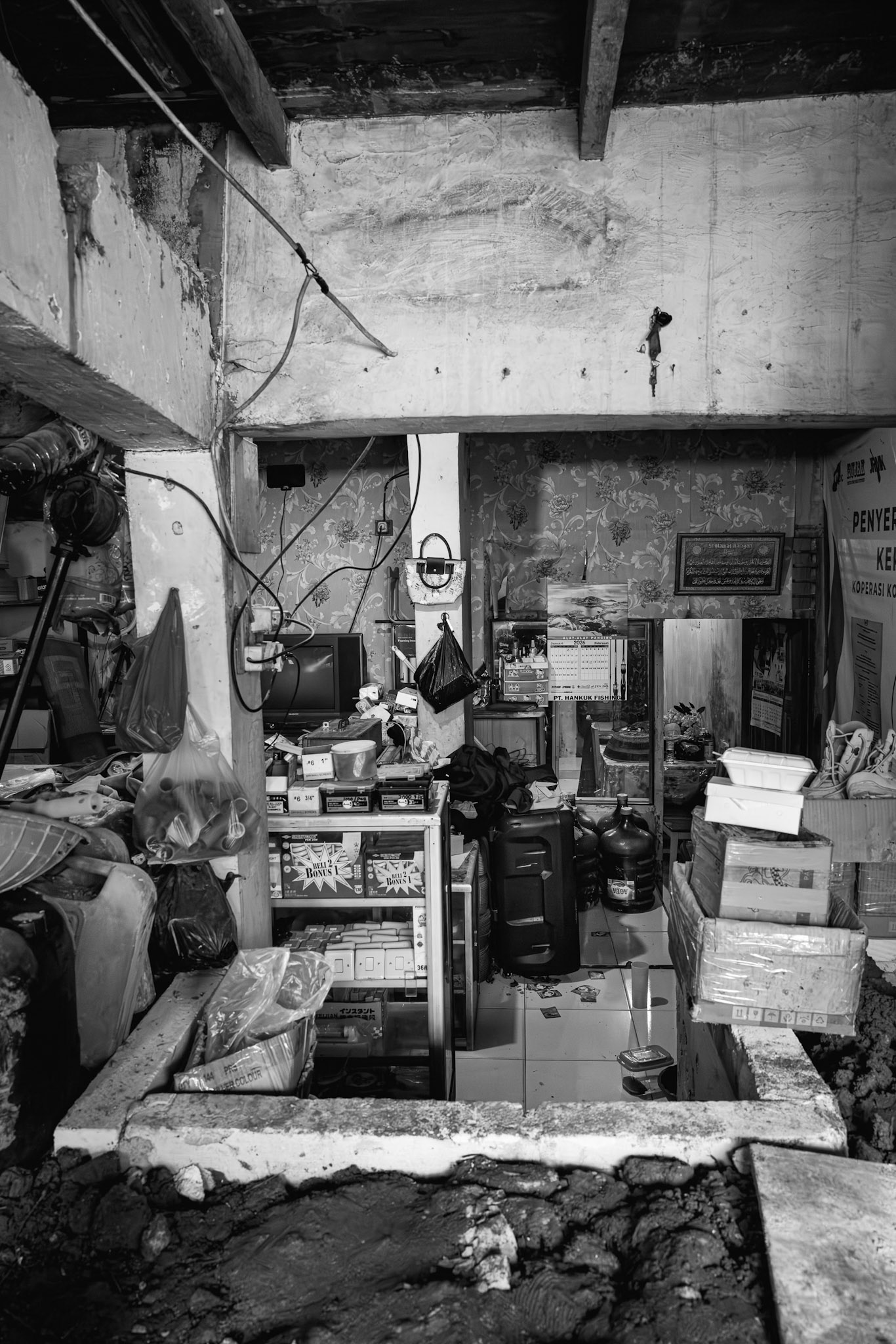
The cramped, dark interior of coastal living where the horizon is blocked by rising ground. Muara Angke, Jakarta, January 2026
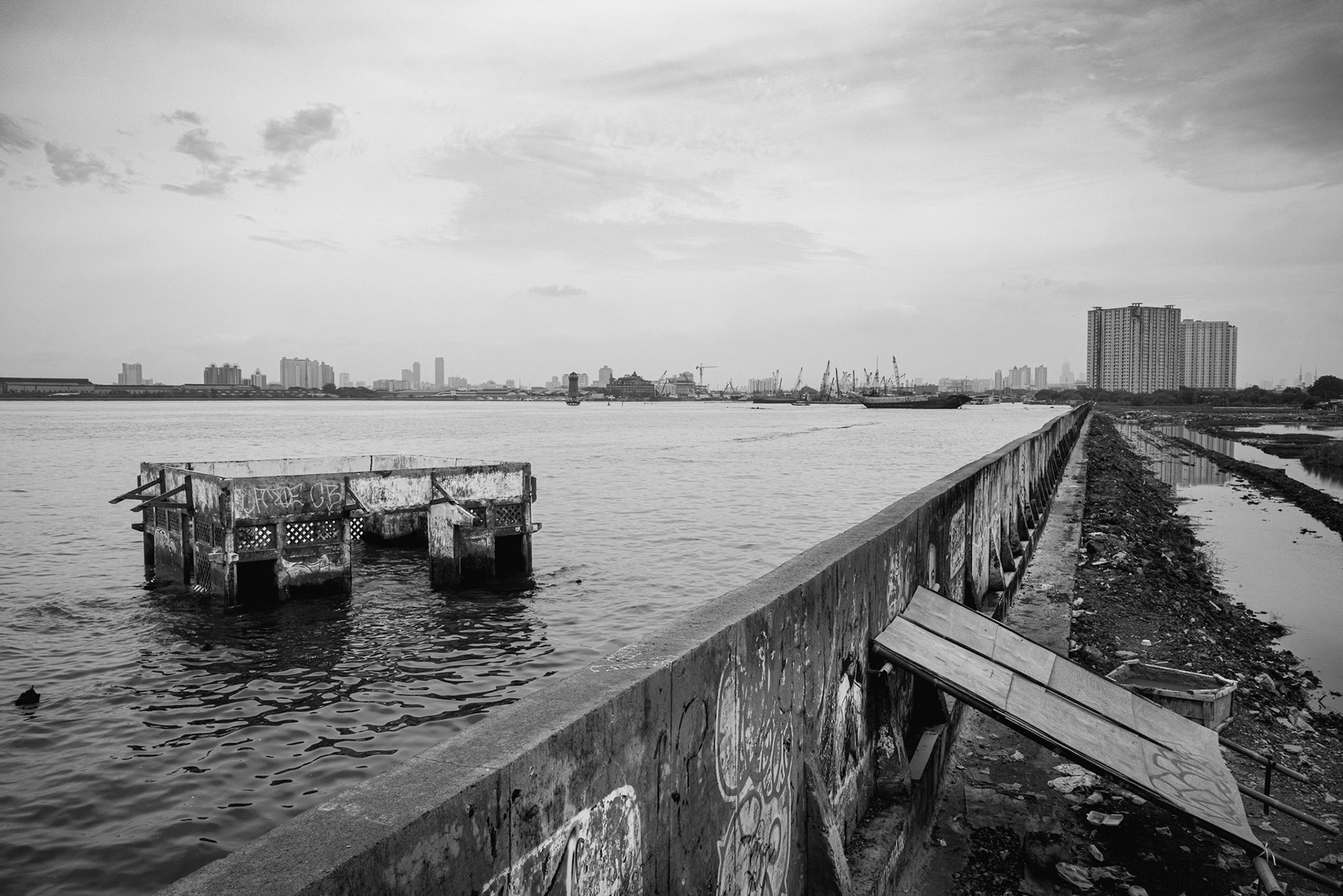
A half sunken mosque, a haunting monument to a city beneath the waves. Muara Baru, Jakarta, January 2026
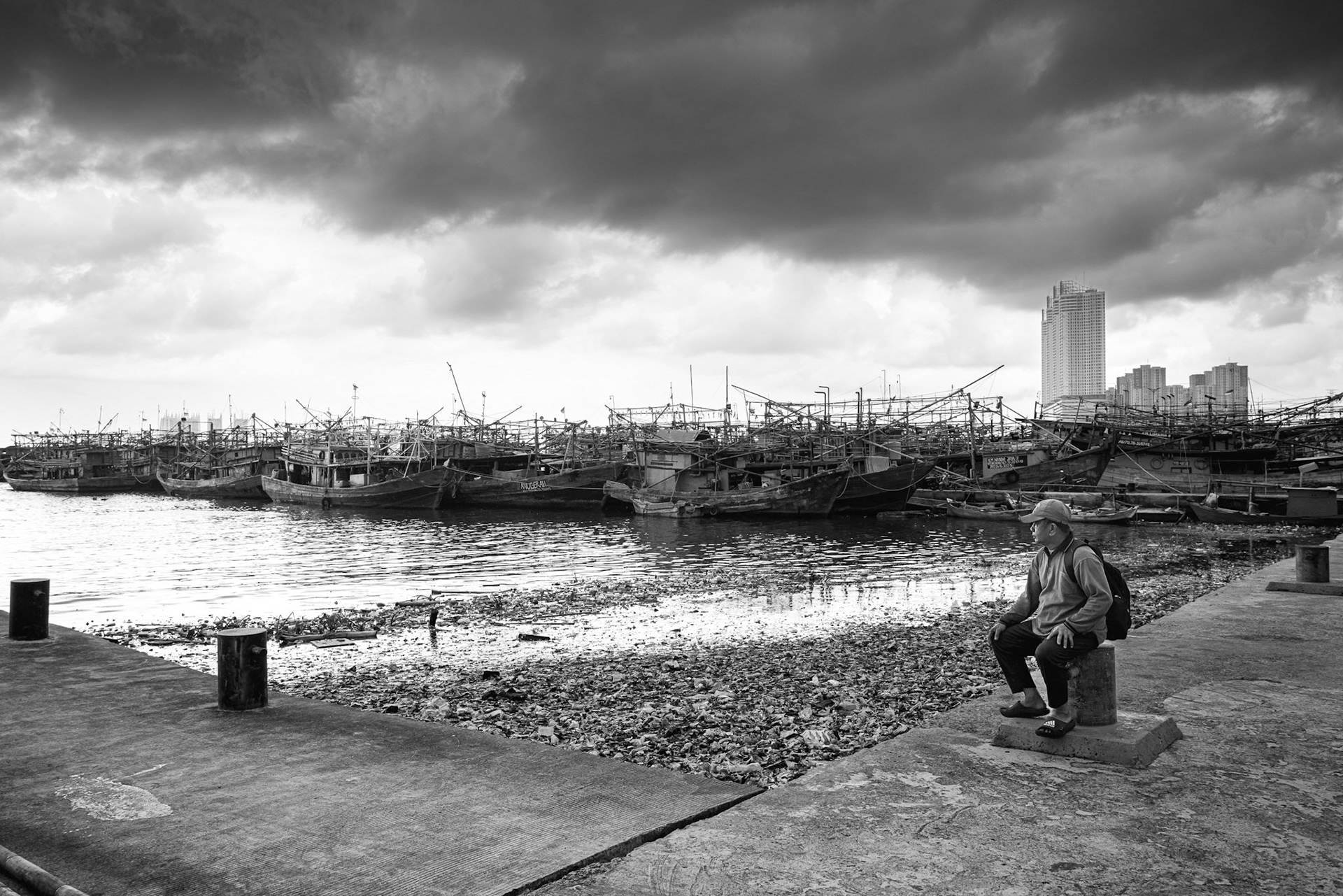
A moment of stillness in a harbor that is slowly being reclaimed by the Java Sea. Jakarta, January 2026
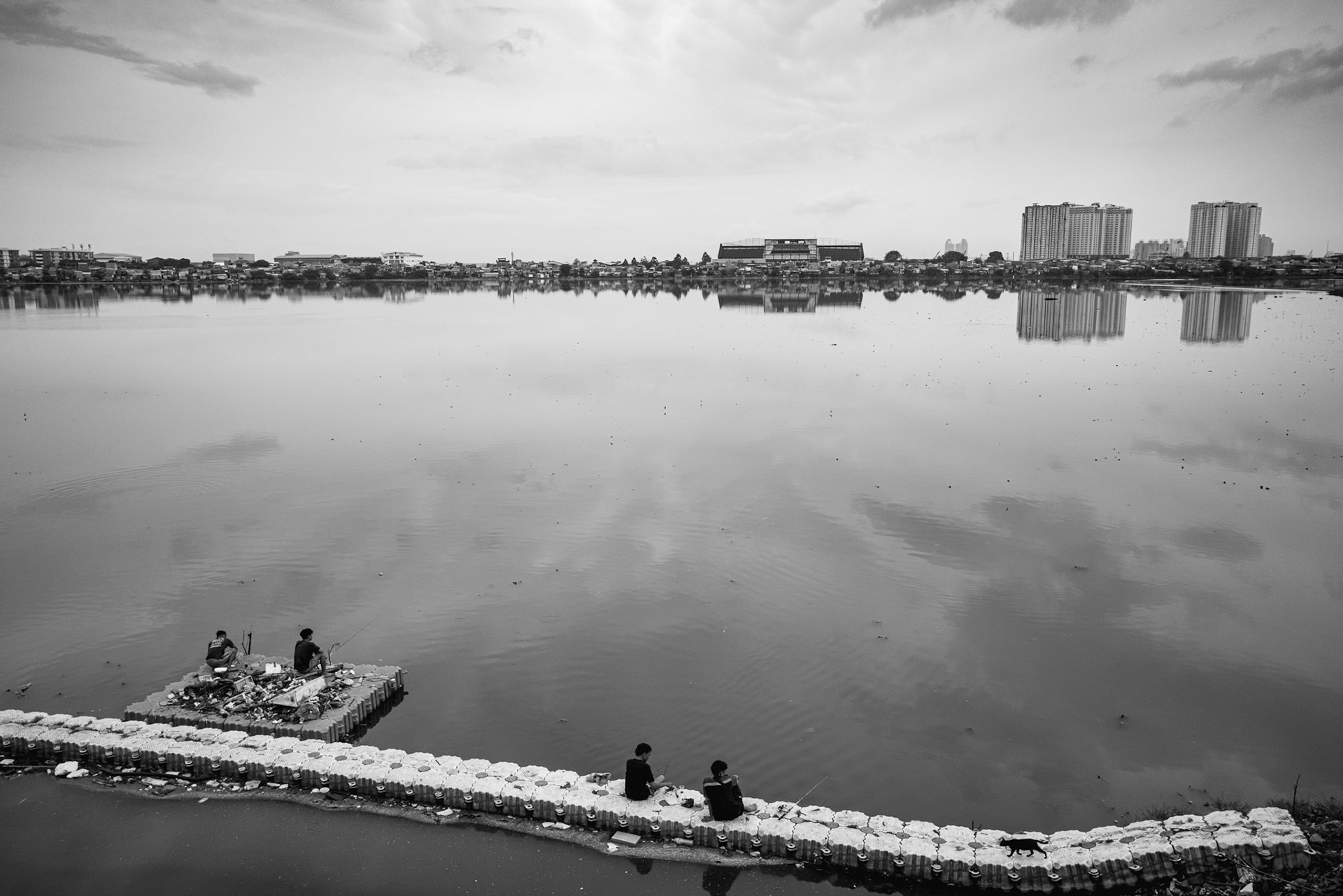
A mirror on the reservoir levels, showing a city balanced on a knife-edge of water management. Pluit reservoir in Northern Jakarta, January 2026