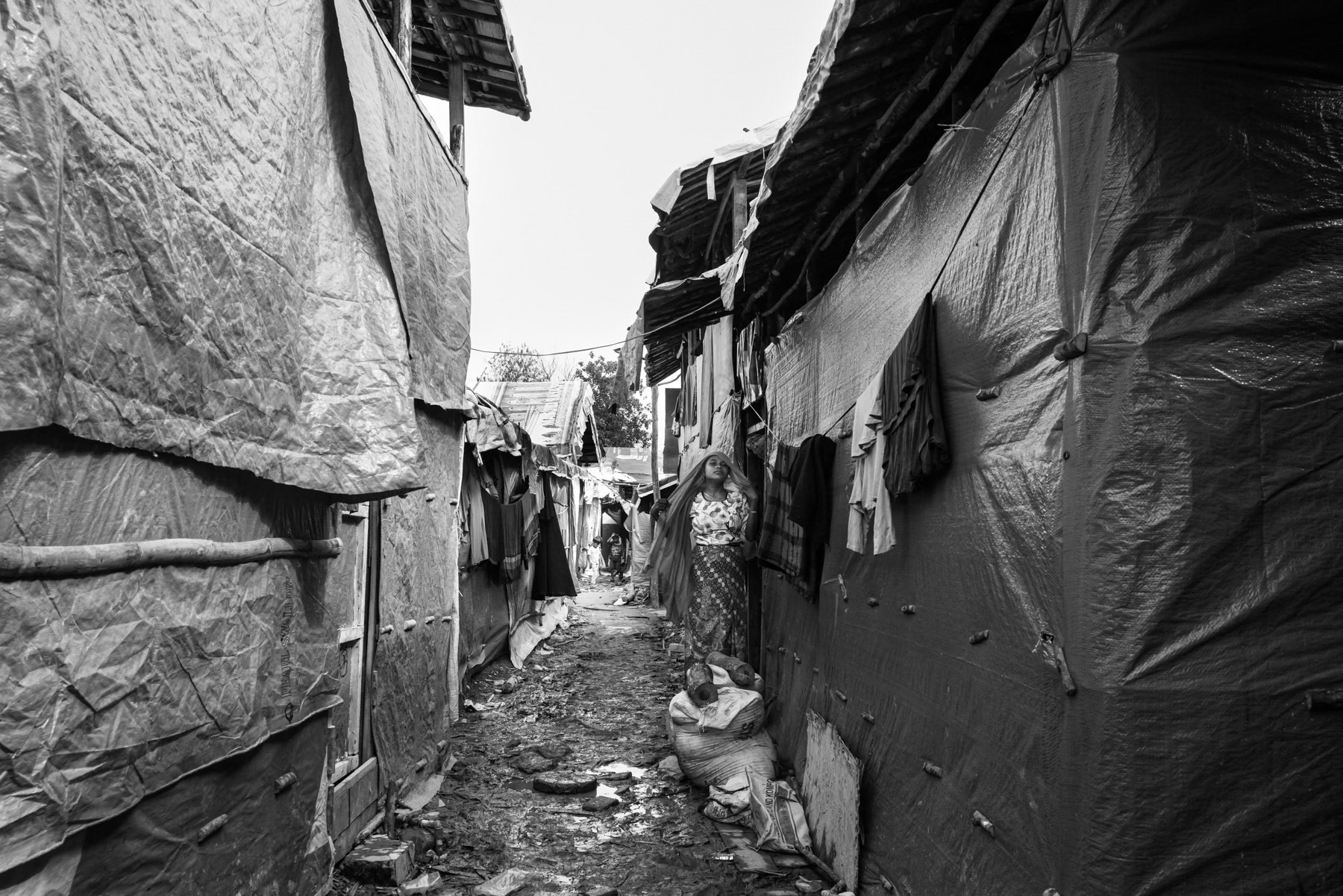
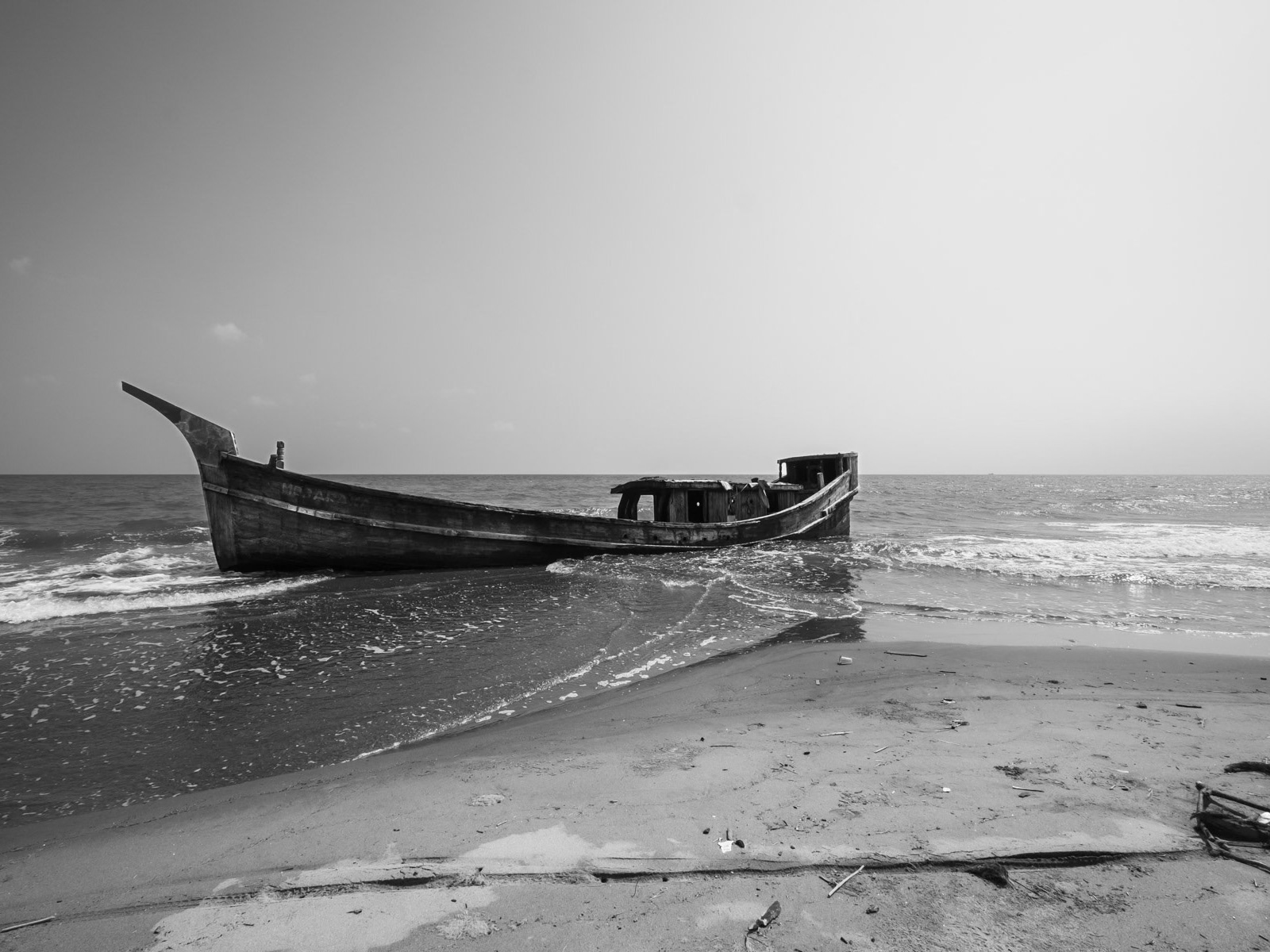
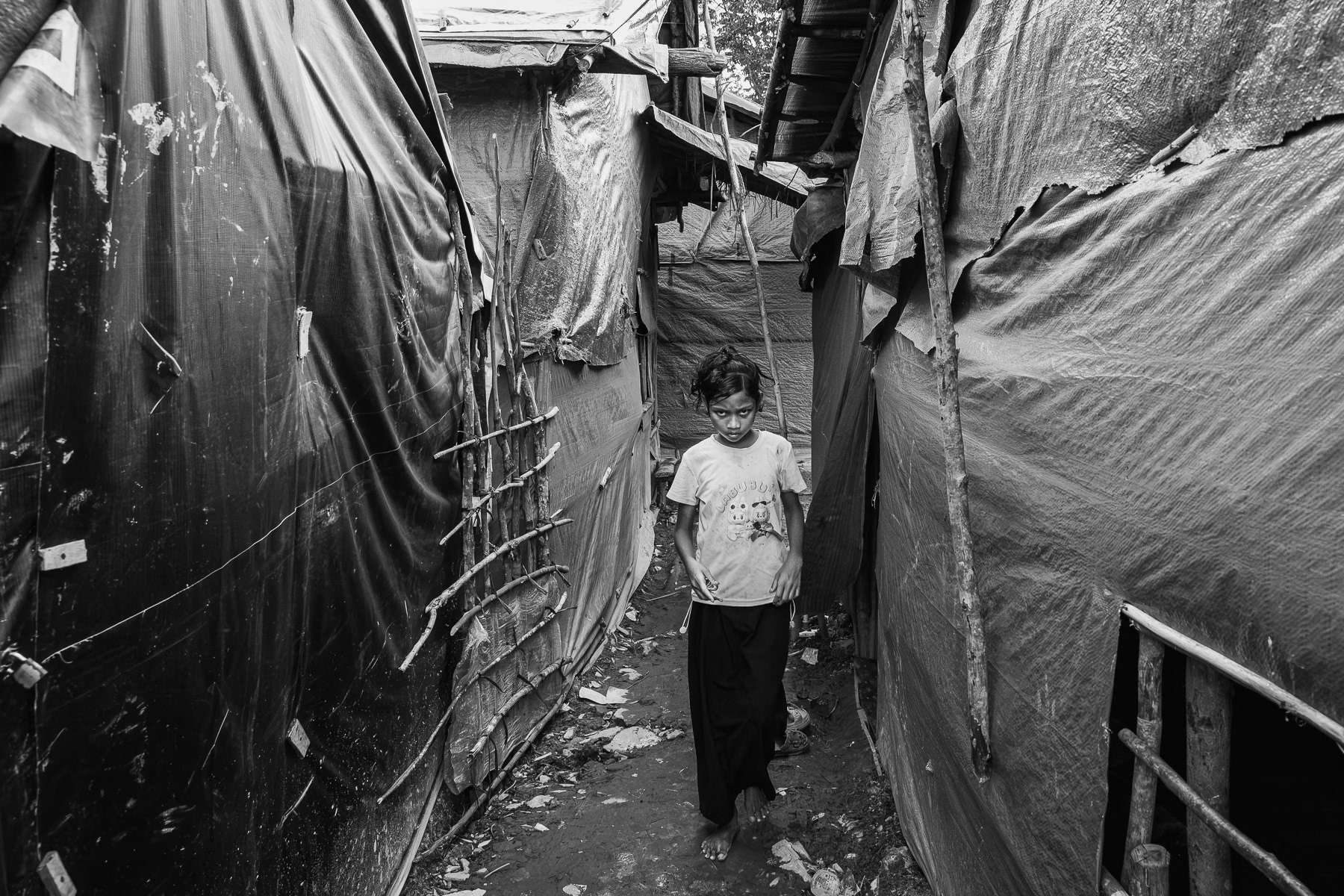
Along the fringes of Pekanbaru, a bustling city in Sumatra, Indonesia, a makeshift refugee camp has become a precarious home for part of the approximately 1,300 Rohingya currently living in the city. While around 600 remain in the camp, another 700 have been placed in privately rented accommodation scattered across Pekanbaru. All have escaped a long history of persecution in Myanmar, many enduring years in the overcrowded refugee camps of Bangladesh before embarking on a perilous sea journey toward what they hoped might be safety.
After months of surviving in harsh and uncertain conditions along the shores of Aceh, many of these stranded refugees undertook a long and arduous journey to Pekanbaru, clinging to the hope of eventual resettlement in a third country. Yet their present circumstances remain defined by extreme hardship. The camp, a testament to both resilience and desperation, offers little in the way of basic human necessities.
Sanitation is a major concern, with inadequate facilities contributing to persistent unhygienic conditions. Clean water is scarce, creating a constant risk of waterborne disease. Shelters, pieced together from whatever materials are available, offer little protection from torrential rains and sweltering heat. As a result, child illnesses are widespread — a heartbreaking consequence of their fragile living environment.
Compounding these struggles is the growing phenomenon of forced trafficking and smuggling from Teknaf in Bangladesh and from northern Rakhine State. Increasing numbers of Rohingya are being taken onto boats against their will and subjected to threats and violence so their families can be pressured into paying for their release. Survivors report beatings, extortion, and even the separation of mothers from their children. In October, I met individuals who had endured this ordeal — including one man, and a mother with her two young children — each carrying the physical and psychological scars of unwilling trafficking.
This camp, and the broader Rohingya presence in Pekanbaru, stands as a stark reminder of the worsening regional refugee crisis — a place where hope remains fragile, exploitation is on the rise, and survival is a daily balancing act between resilience and vulnerability.
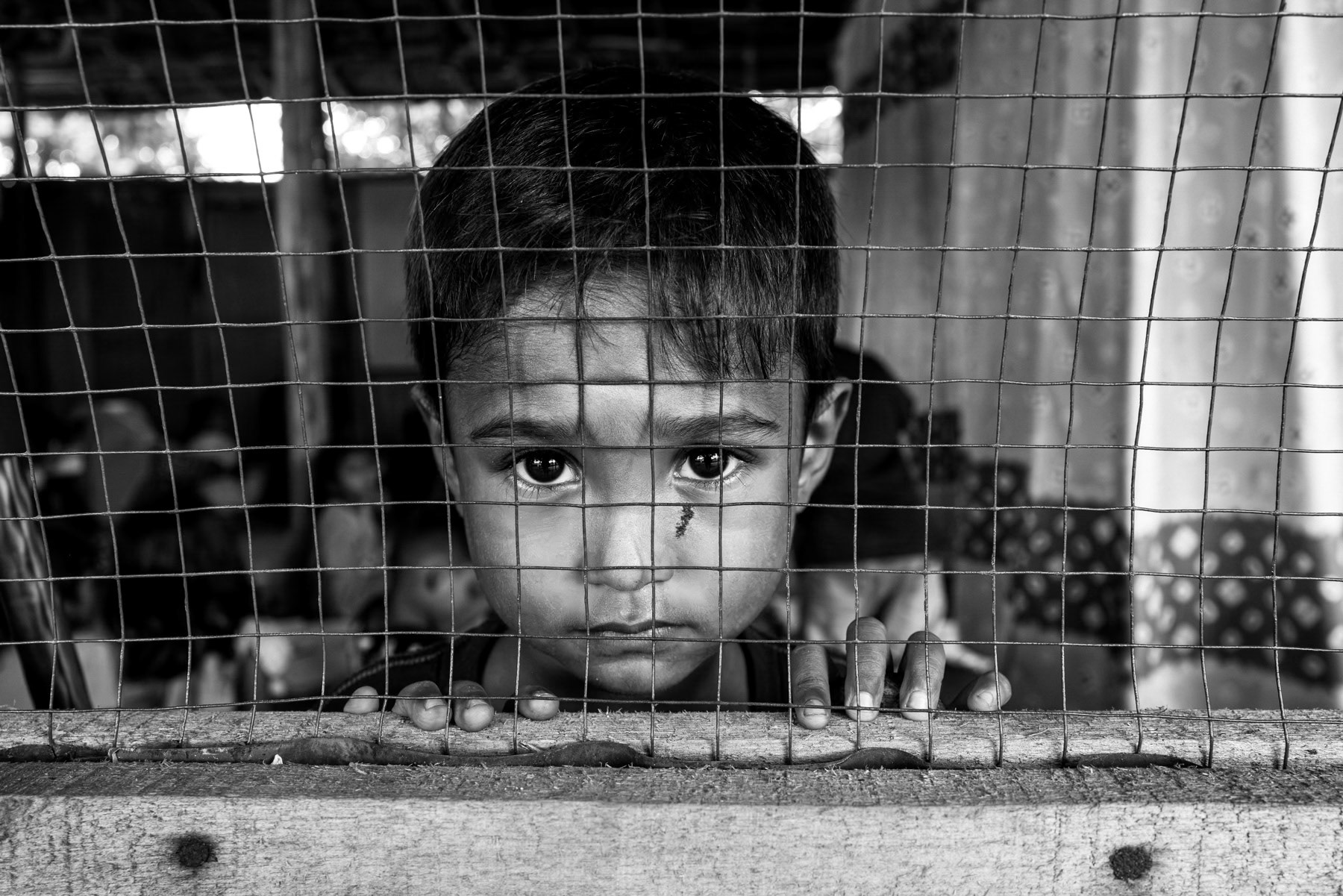
A Rohingya child attends a community-run improvised classroom, where volunteers teach basic lessons to boys and girls who are barred from attending local schools. Pekanbaru, Indonesia, October 2025
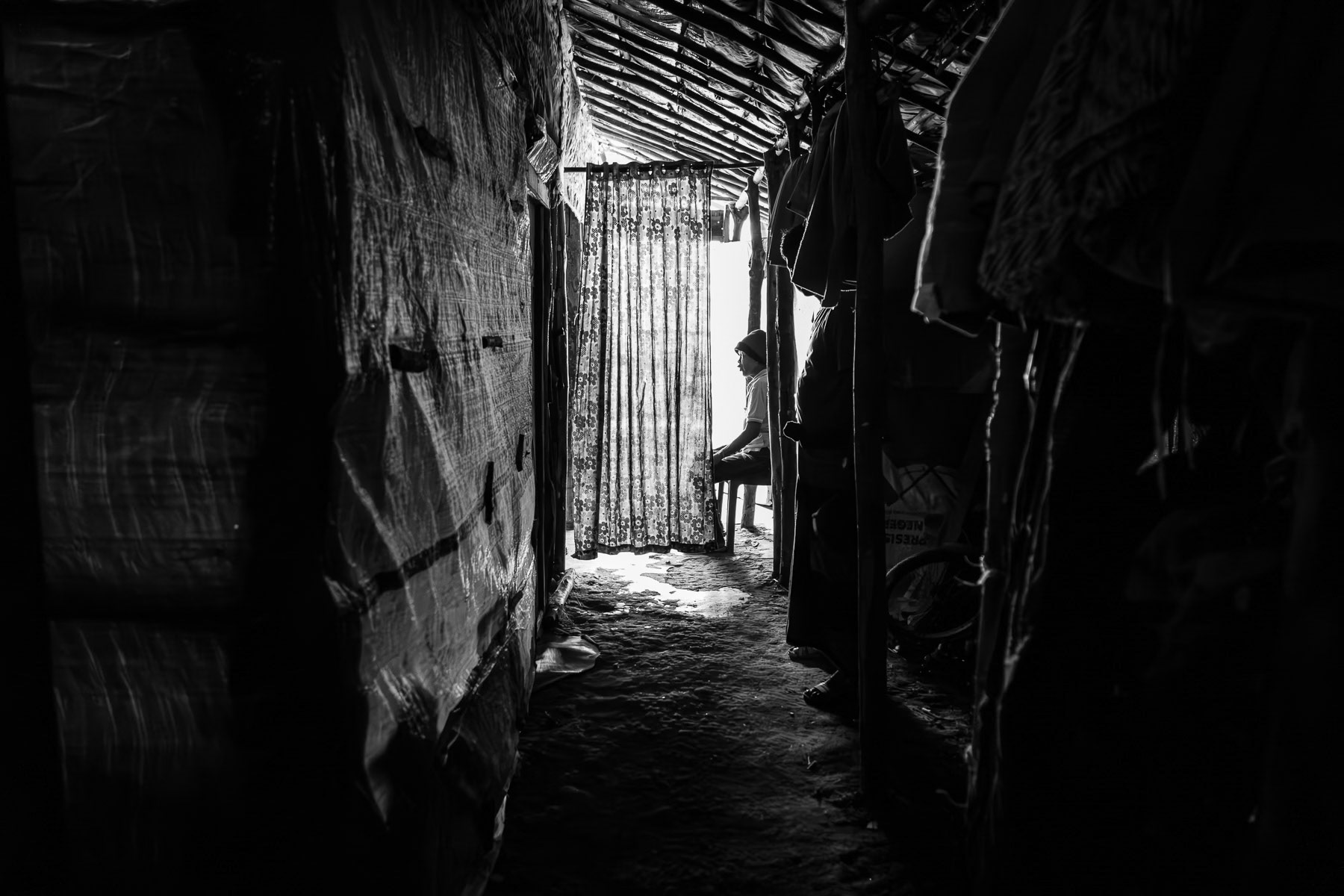
Months after a perilous boat journey, a Rohingya refugee finds a fragile home in a makeshift camp in Sumatra. Pekanbaru, Indonesia, May 2025
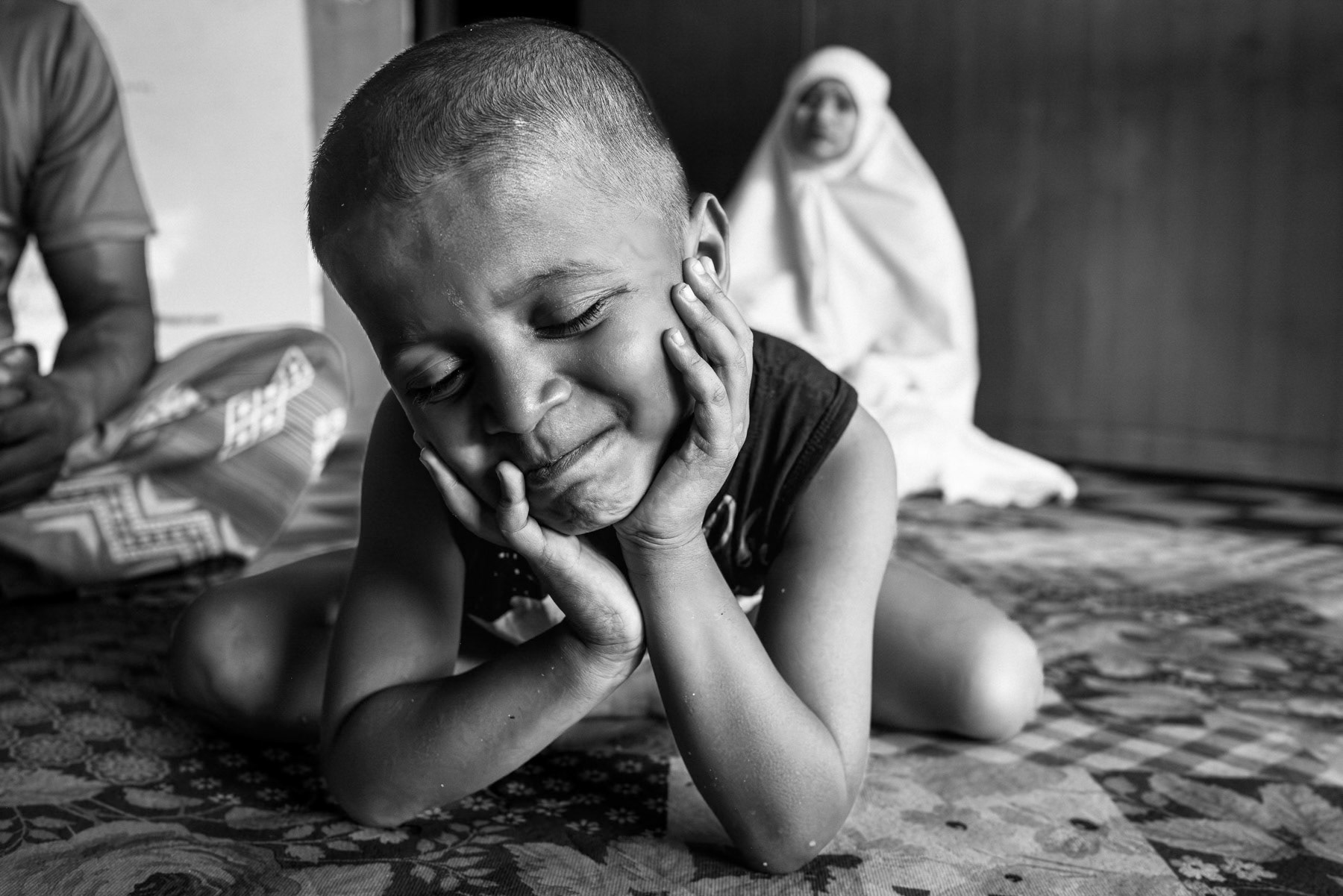
Nur Kolima's youngest son, from Phen Daw Phin village near Maungdaw, fled Myanmar in May 2025 with her two children—an eight-year-old daughter and a six-year-old son—after months of intensified fighting between the Myanmar military (SAC) and the Arakan Army. Her husband, Rafik, had already escaped in December 2024 after being tortured, travelling through Malaysia before reaching Indonesia. Nur and the children initially intended to flee to relatives in the Bangladesh refugee camps, but after crossing the Naf River they were intercepted by traffickers and forced onto a boat. Upon arrival in Dumai, Indonesia, she was separated from her children and threatened until payment was made. The family has since been reunited, but all remain deeply traumatized by the violence in their home country and the ordeal of being trafficked. Pekanbaru, Indonesia, October 2025
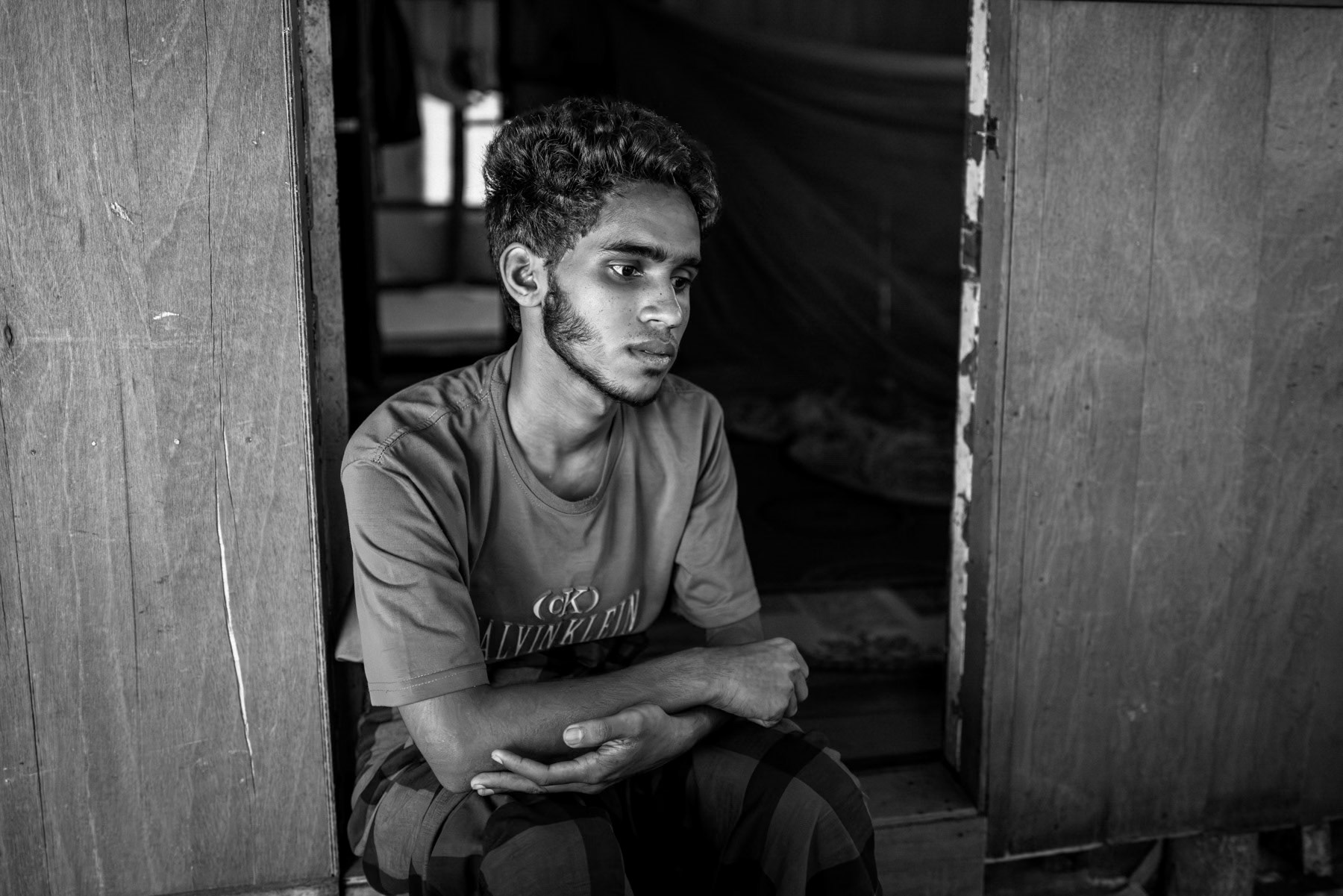
Eighteen-year-old Zani Alam, from Taung Bazar in Buthidaung, fled to Bangladesh with his family in 2017. He was kidnapped from Bukhali camp on 29 September 2025 and held in captivity in the Teknaf area before being sold to another trafficker operating between Indonesia and Malaysia. After three days in custody, he was transported by boat with around 300 others on a ten-day journey to Dumai, a key trafficking hub used to funnel Rohingya refugees into Malaysia for resale. In Dumai, traffickers beat him with metal rods—mainly on his arm—when he refused to continue to Malaysia and demanded he repay the cost of the voyage, about 4,000 USD. Four days ago, he escaped at around 4 a.m., hid until daylight, and, with help from local residents, reached a police station. Authorities transferred him to Pekanbaru, from where he arrived at the camp on 21 October 2025. Rohingya refugee camp in Pekanbaru, Indonesia, October 2025
This camp, sheltering approximately 600 Rohingya people from Myanmar, illustrates the harsh reality after a perilous sea journey: a struggle for survival against inadequate clean water, sanitation, and the ever-present danger of disease. Pekanbaru, Indonesia, May 2025
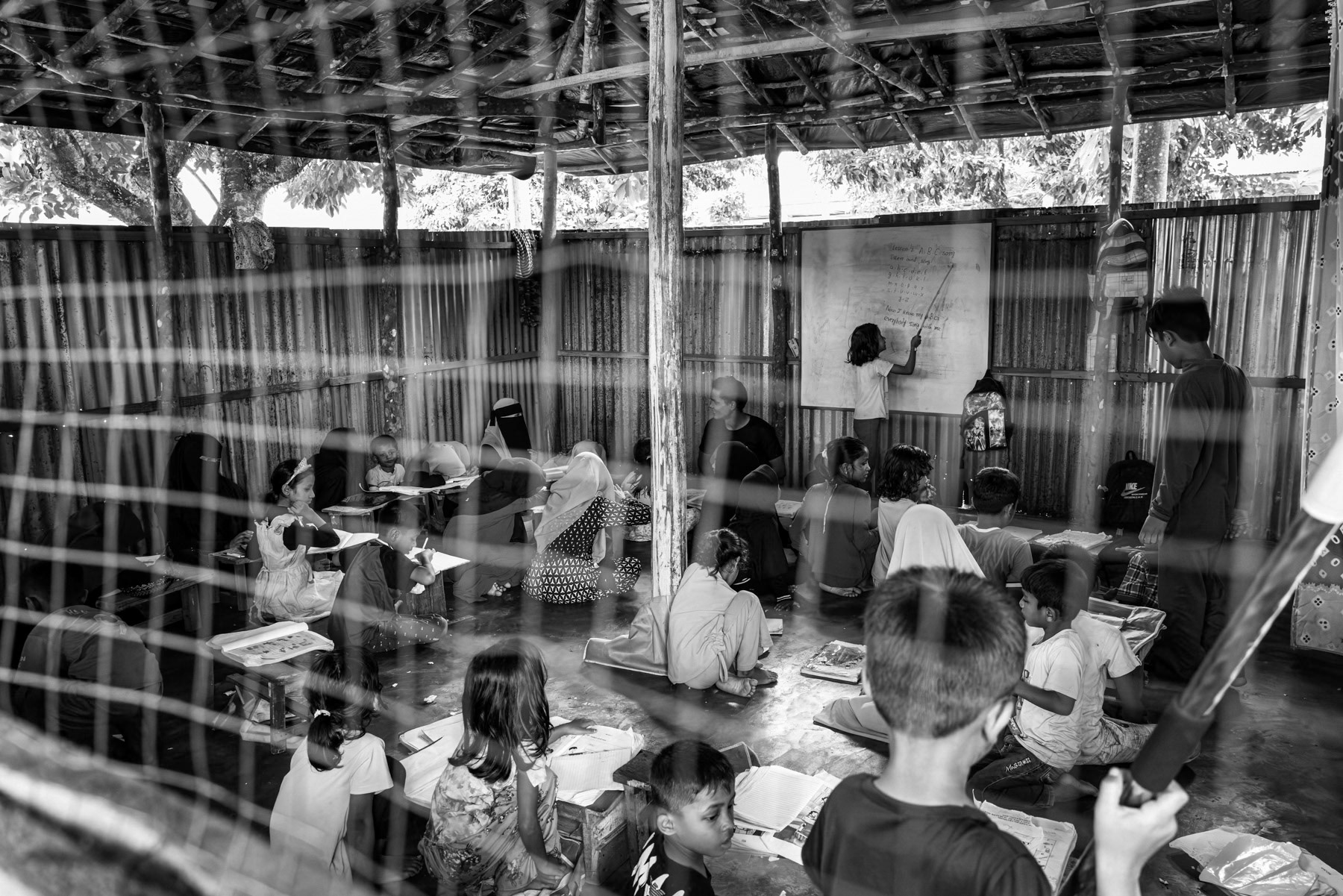
Rohingya children and young adults attends a community-run improvised classroom, where volunteers teach basic lessons to boys and girls who are barred from attending local schools. Pekanbaru, Indonesia, October 2025
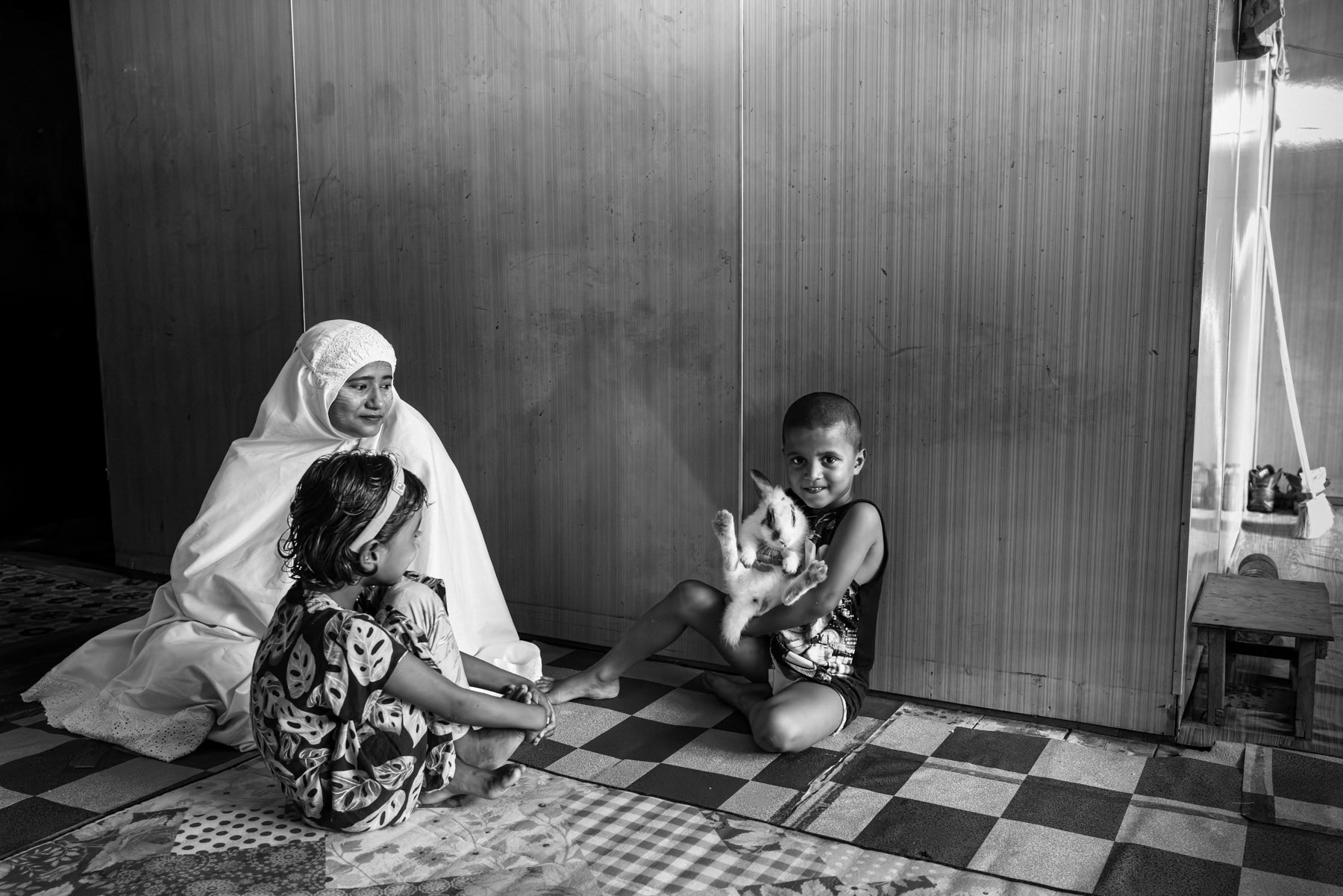
Nur Kolima, from Phen Daw Phin village near Maungdaw, fled Myanmar in May 2025 with her two children—an eight-year-old daughter and a six-year-old son—after months of intensified fighting between the Myanmar military (SAC) and the Arakan Army. Her husband, Rafik, had already escaped in December 2024 after being tortured, travelling through Malaysia before reaching Indonesia. Nur and the children initially intended to flee to relatives in the Bangladesh refugee camps, but after crossing the Naf River they were intercepted by traffickers and forced onto a boat. Upon arrival in Dumai, Indonesia, she was separated from her children and threatened until payment was made. The family has since been reunited, but all remain deeply traumatized by the violence in their home country and the ordeal of being trafficked. Pekanbaru, Indonesia, October 2025
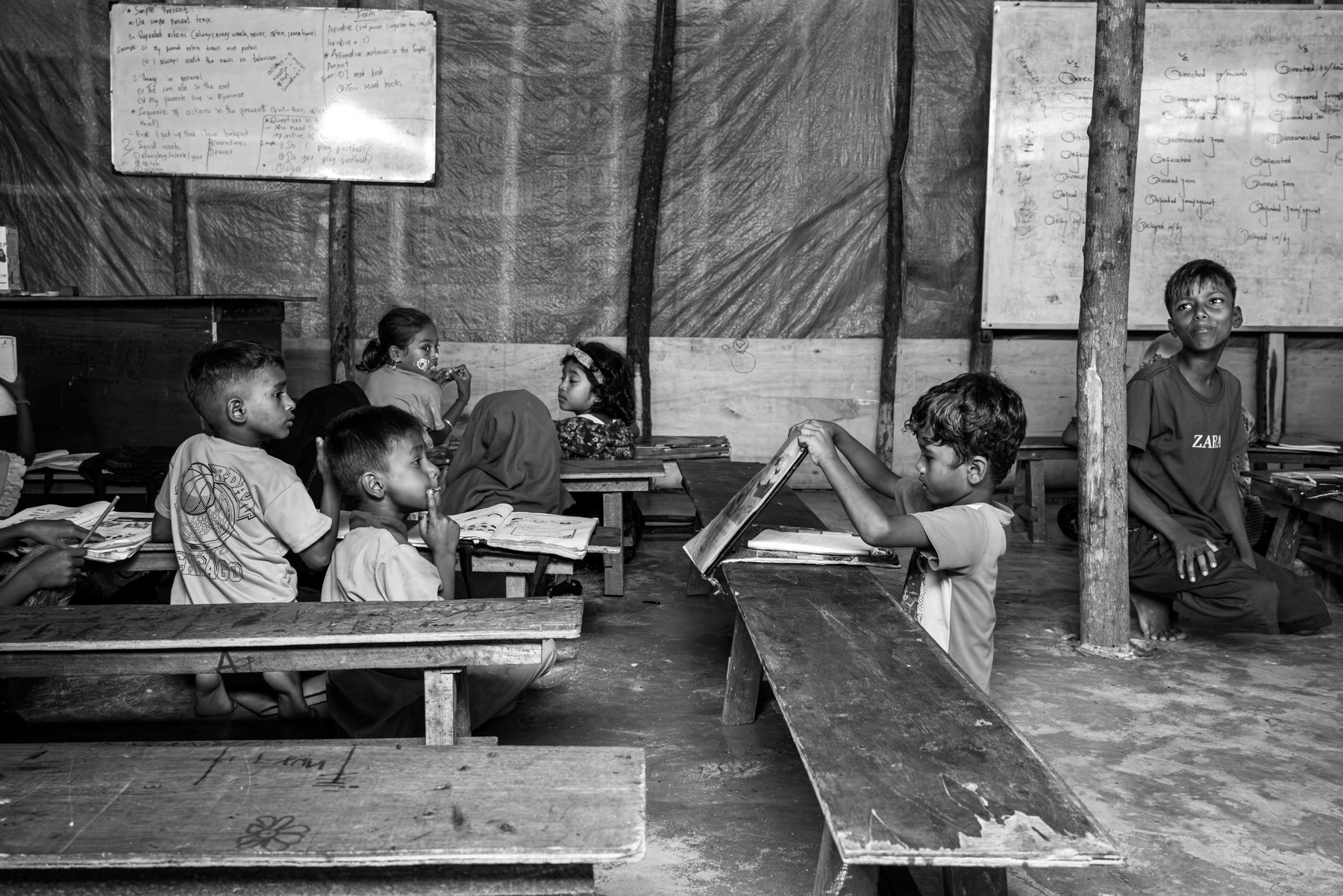
Young Rohingya student takes part in informal lessons organized by the community, offering children a rare chance to learn despite being excluded from local school. Rohingya refugee camp in Pekanbaru, Indonesia, October 2025
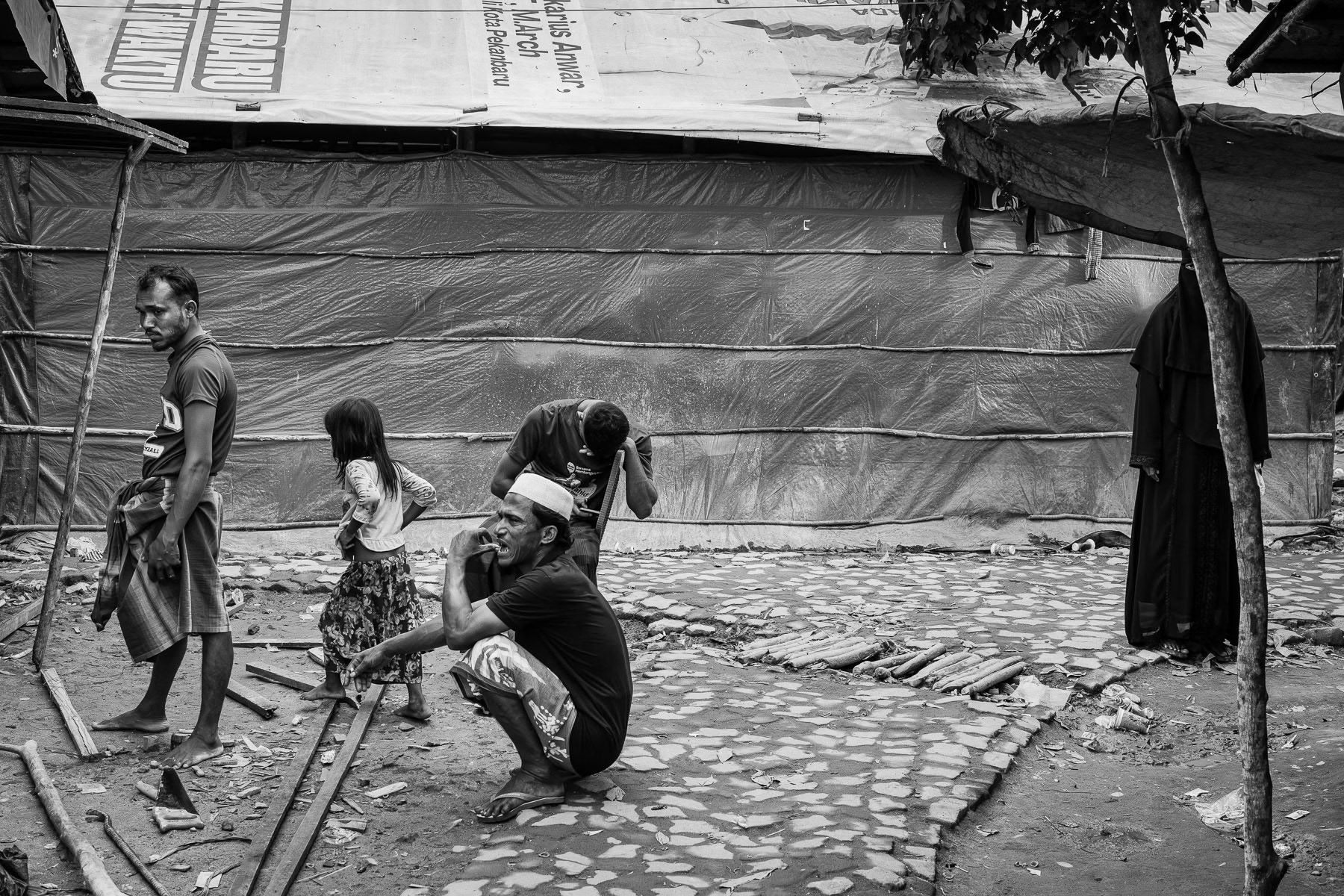
After enduring treacherous sea voyages, 600 Rohingya refugees find little respite in a camp plagued by insufficient clean water and sanitation, making it a breeding ground for disease. Pekanbaru, Sumatra, May 2025
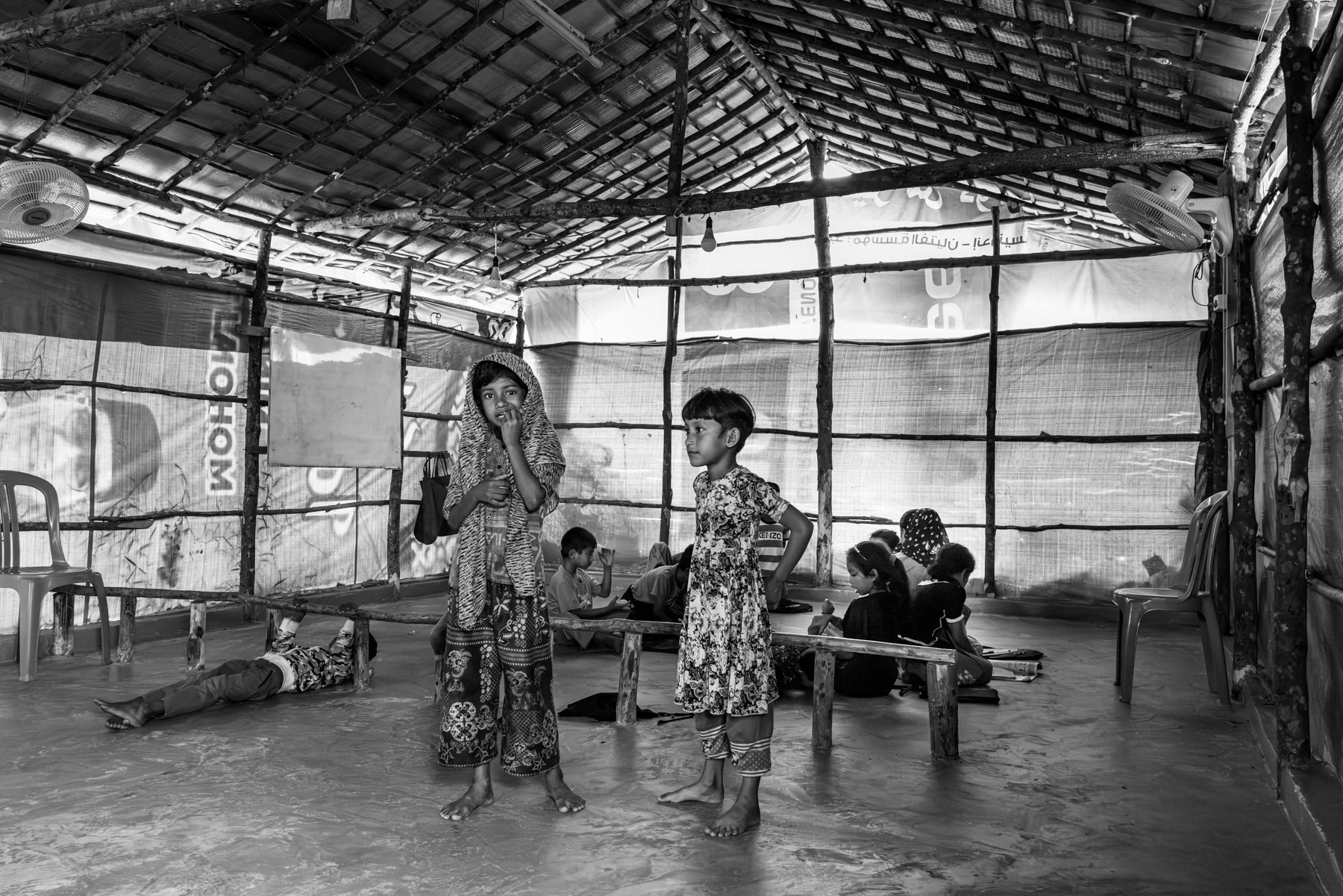
Young Rohingya student takes part in informal lessons organized by the community, offering children a rare chance to learn despite being excluded from local school. Rohingya refugee camp in Pekanbaru, Indonesia, October 2025
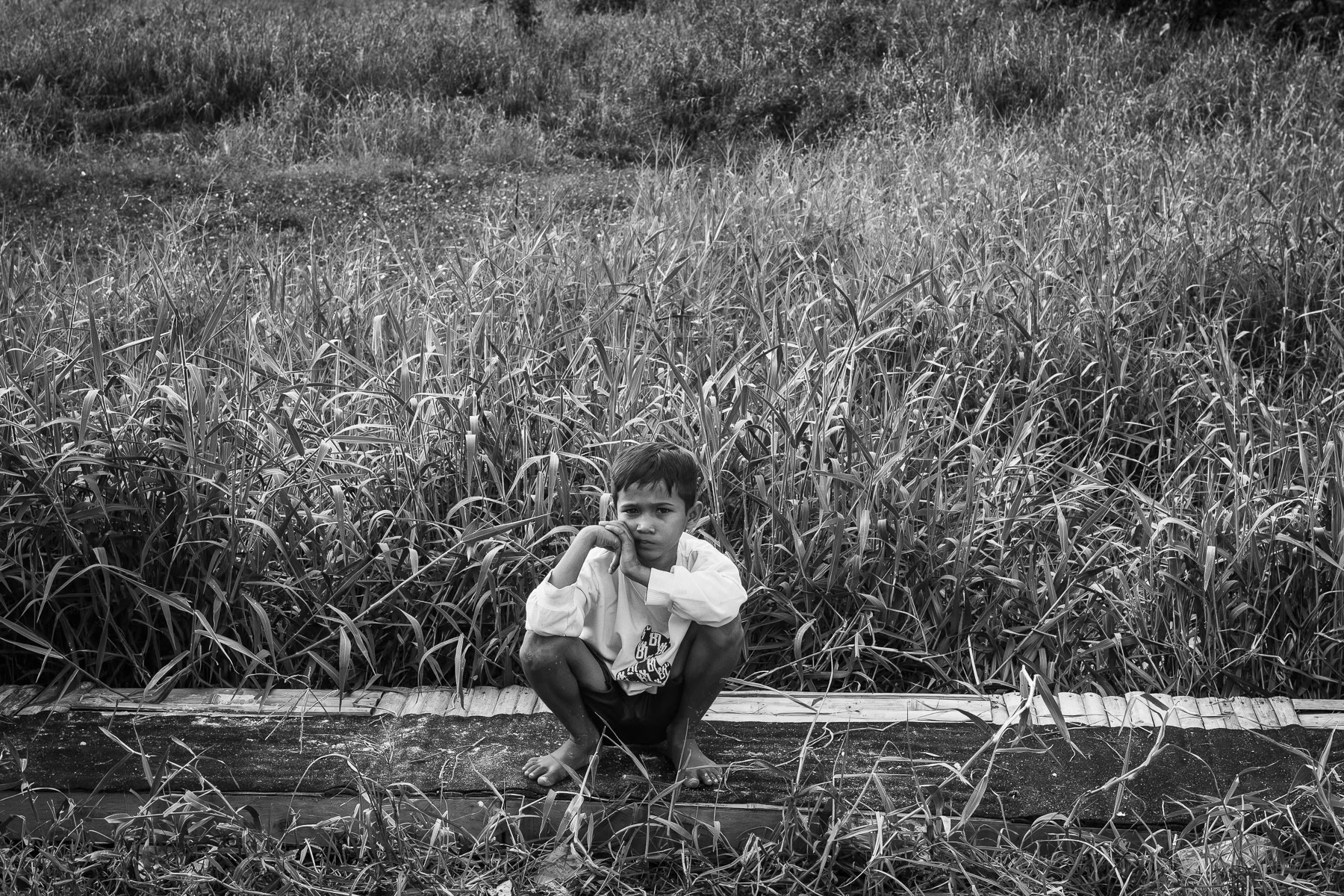
Washed ashore in Sumatra, a Rohingya child refugee begins a new chapter after a harrowing journey by boat. Pekanbaru, Indonesia, May 2025
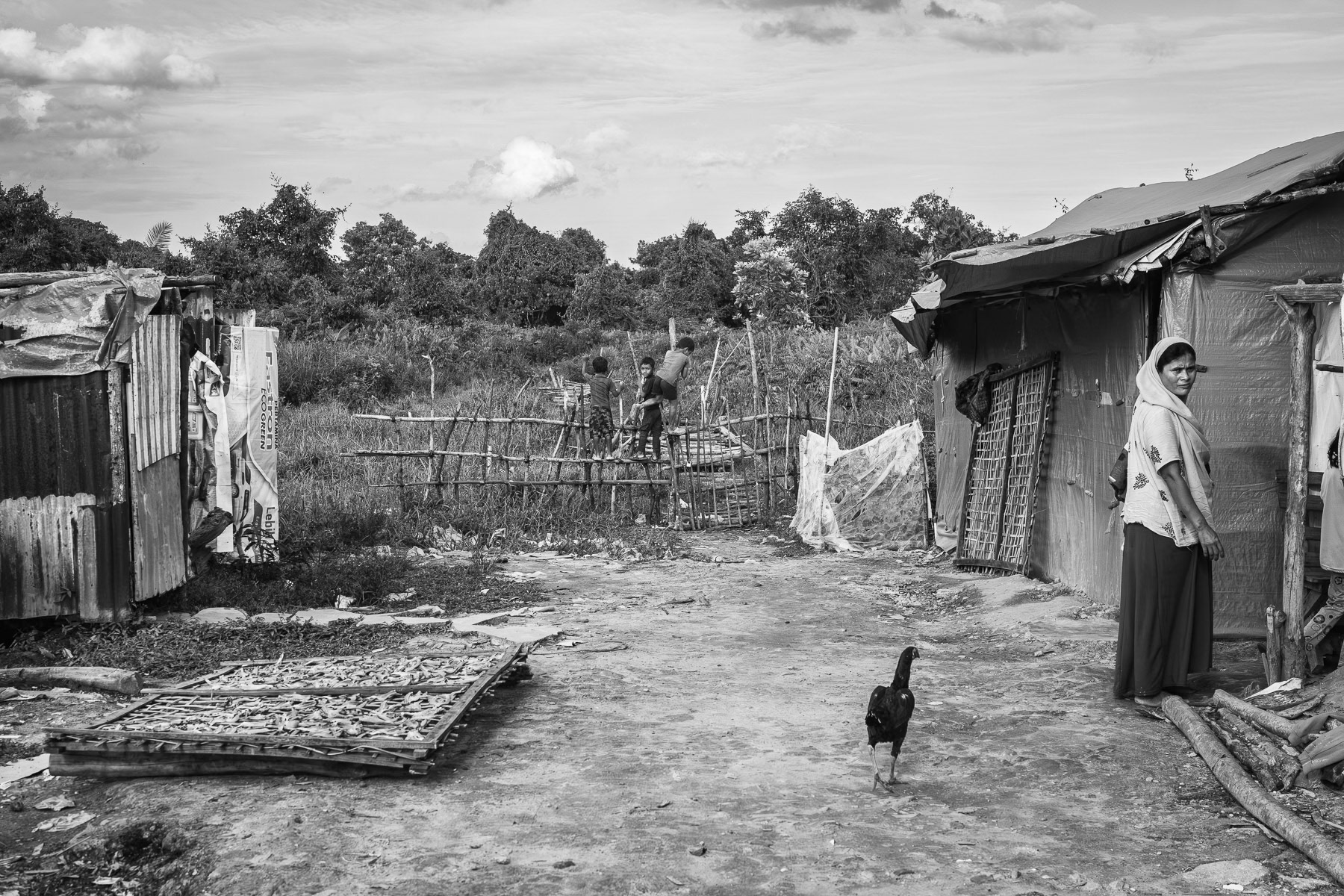
Etched with quiet strength, a Rohingya refugee's journey continues in a makeshift camp, months after a treacherous boat journey. Pekanbaru, Indonesia, May 2025
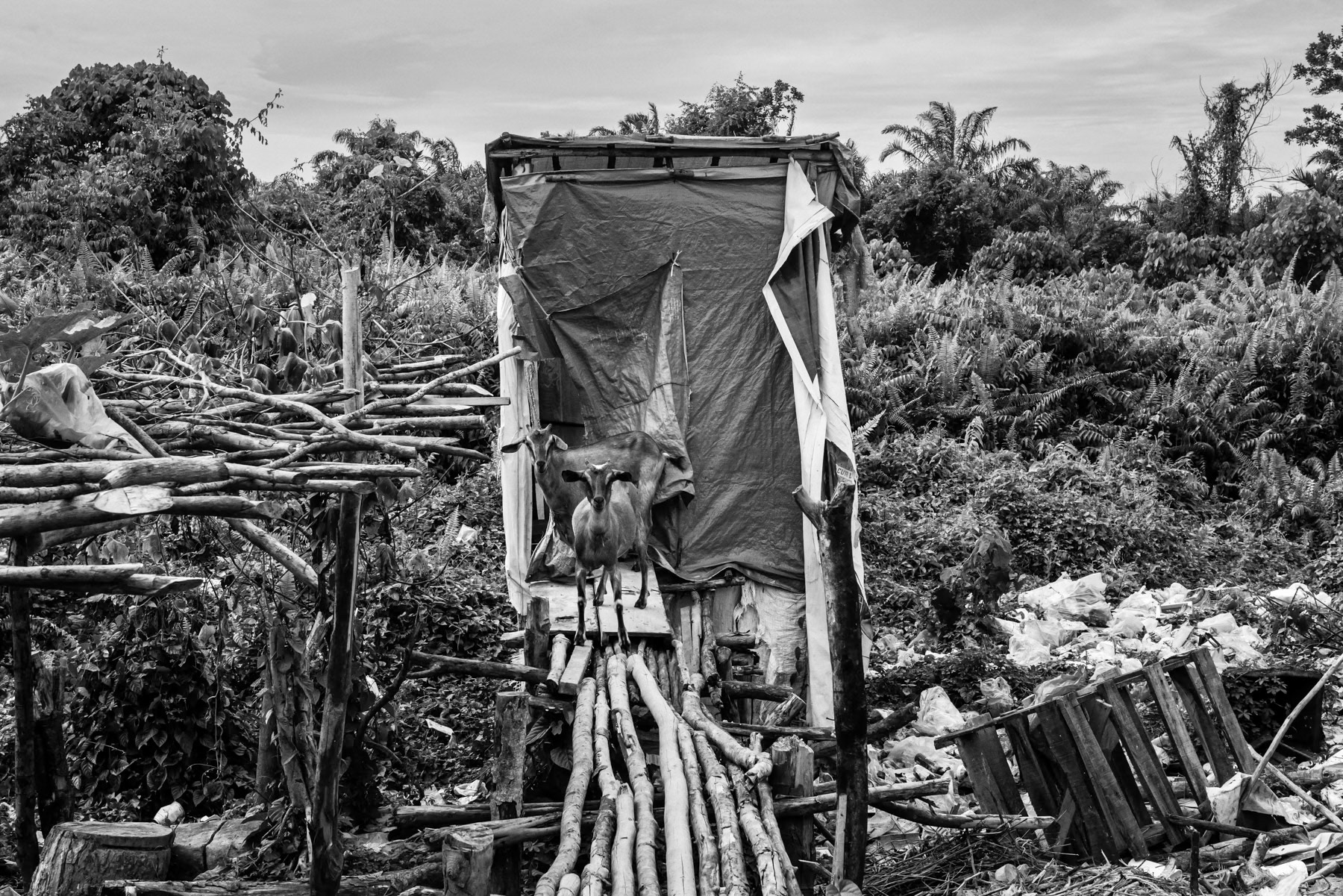
Latrine in a camp, sheltering more than 700 Rohingya people from Myanmar, illustrates the harsh reality after a perilous sea journey: a struggle for survival against inadequate clean water, sanitation, and the ever-present danger of disease. Pekanbaru, Indonesia, October 2025
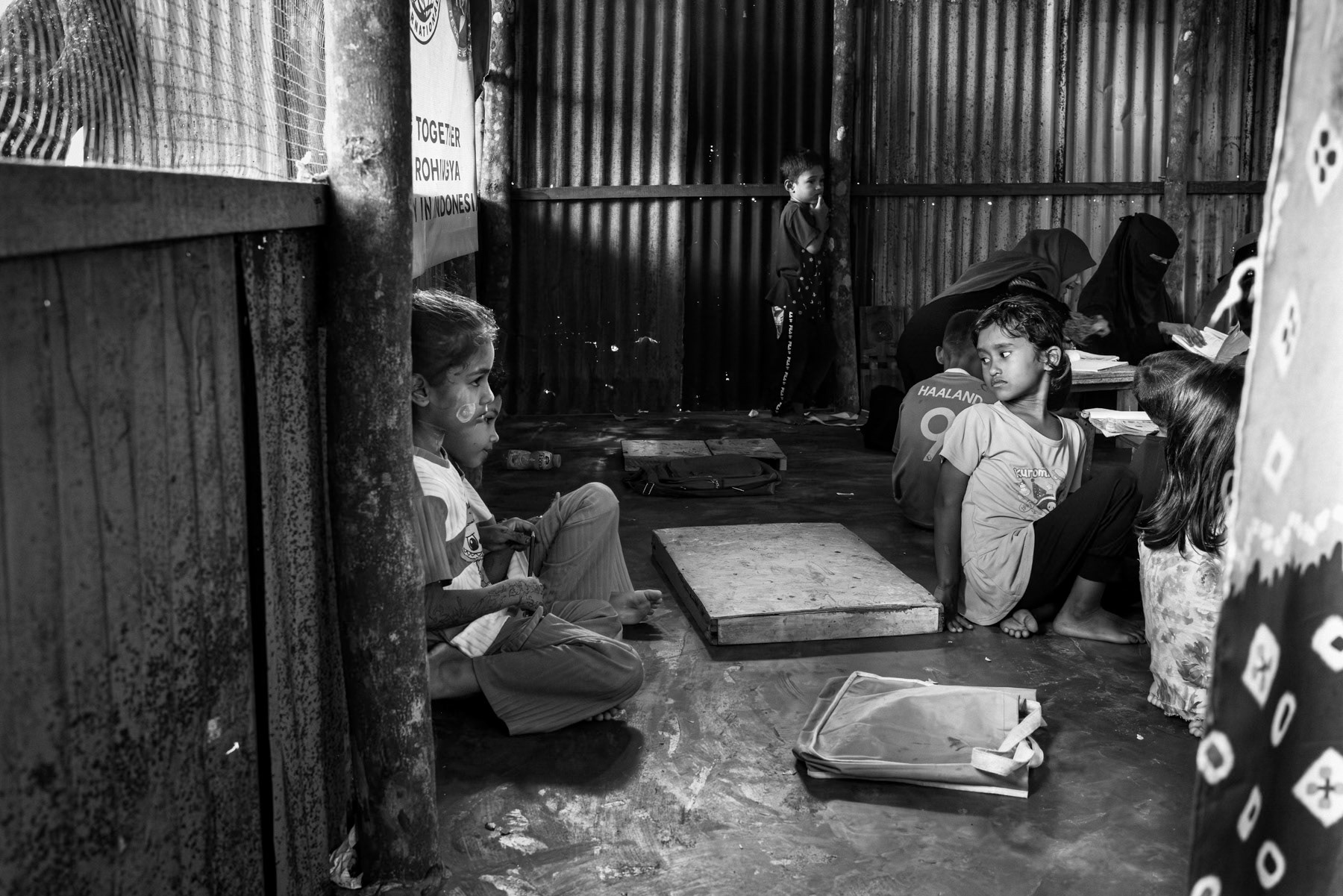
Rohingya girls and women attends a community-run improvised classroom, where volunteers teach basic lessons to boys and girls who are barred from attending local schools. Pekanbaru, Sumatra, Indonesia, October 2025
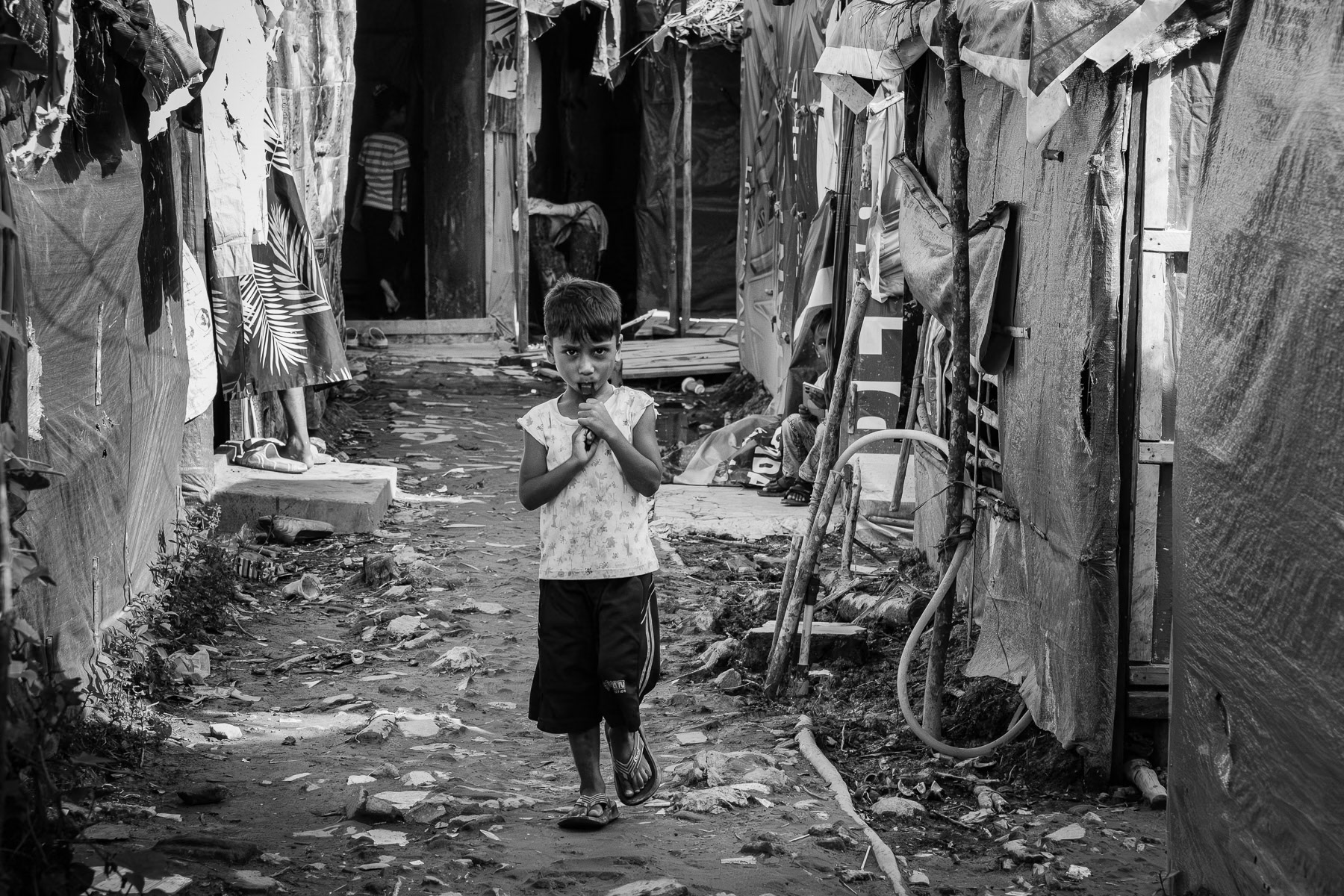
Months after a perilous boat journey, a Rohingya refugee finds a fragile home in a makeshift camp in Sumatra. Pekanbaru, Indonesia, May 2025
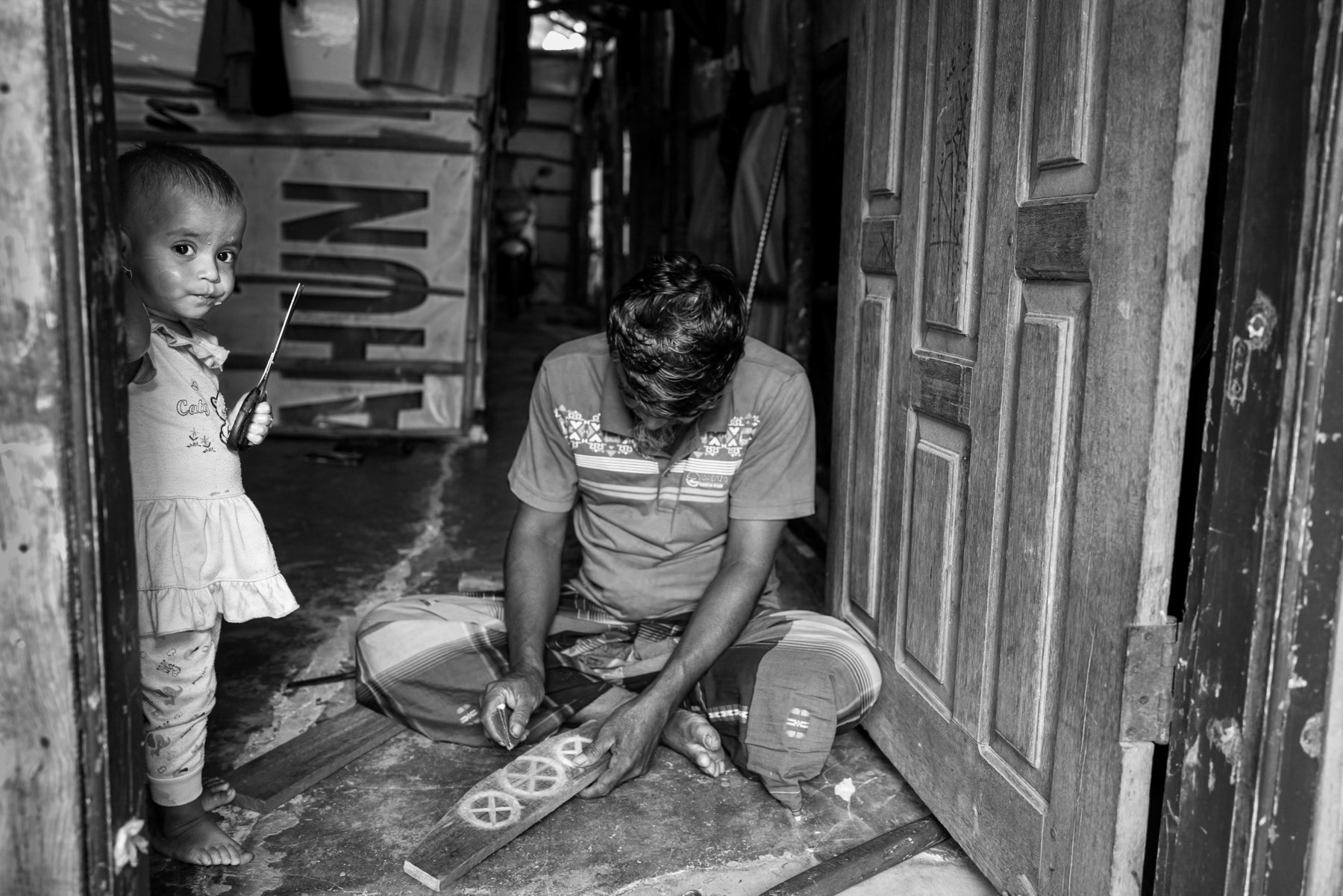
Rohingya refugees in their makeshift shelter in Pekanbaru, Indonesia, October 2025
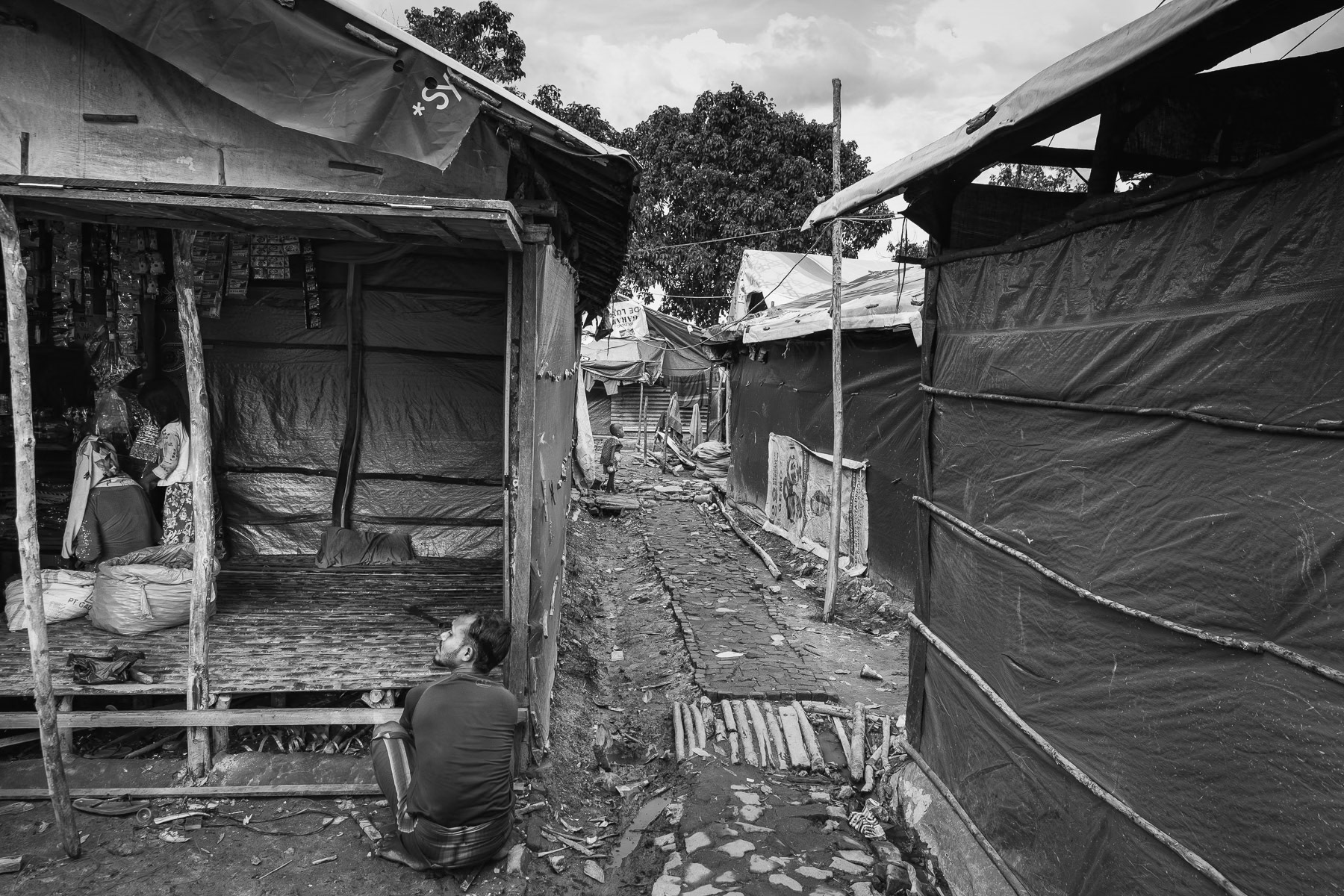
This camp, sheltering approximately 600 Rohingya people from Myanmar, illustrates the harsh reality after a perilous sea journey: a struggle for survival against inadequate clean water, sanitation, and the ever-present danger of disease. Pekanbaru, Indonesia, May 2025
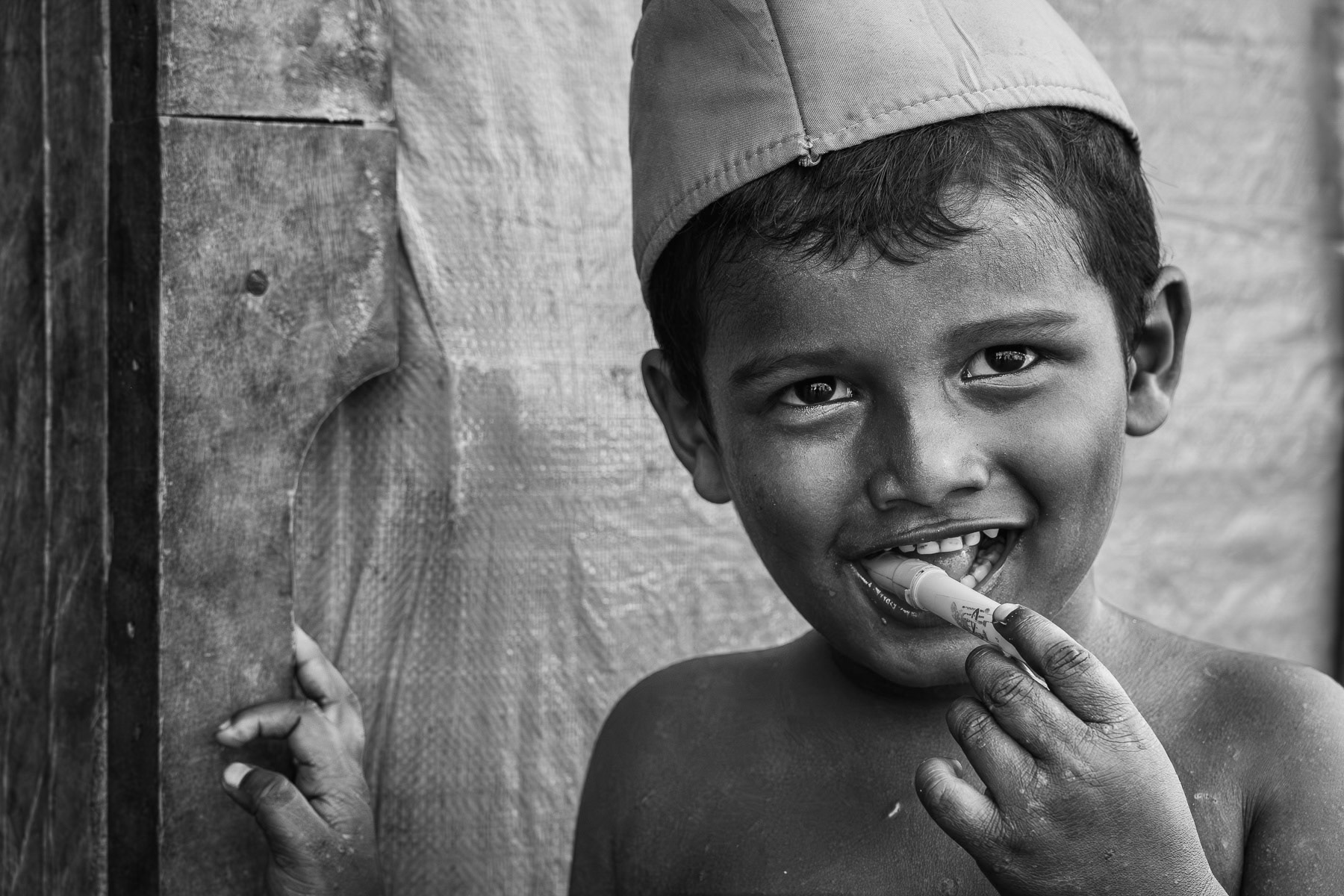
A young Rohingya child endures the harsh realities of a squalid refugee camp in Sumatra, Indonesia, May 2025
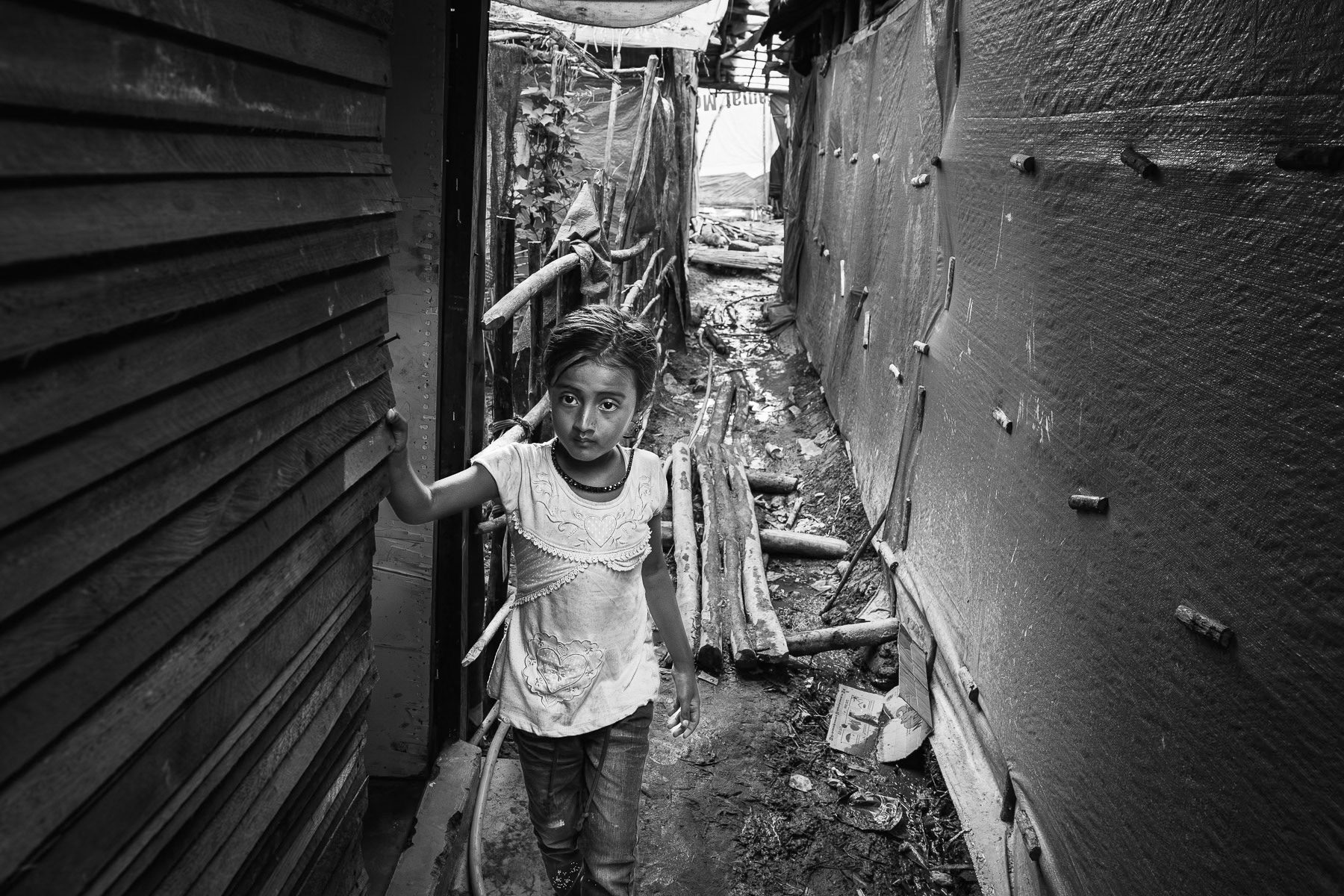
Etched with quiet strength, a Rohingya refugee's journey continues in a makeshift camp, months after a treacherous boat journey. Pekanbaru, Indonesia, May 2025
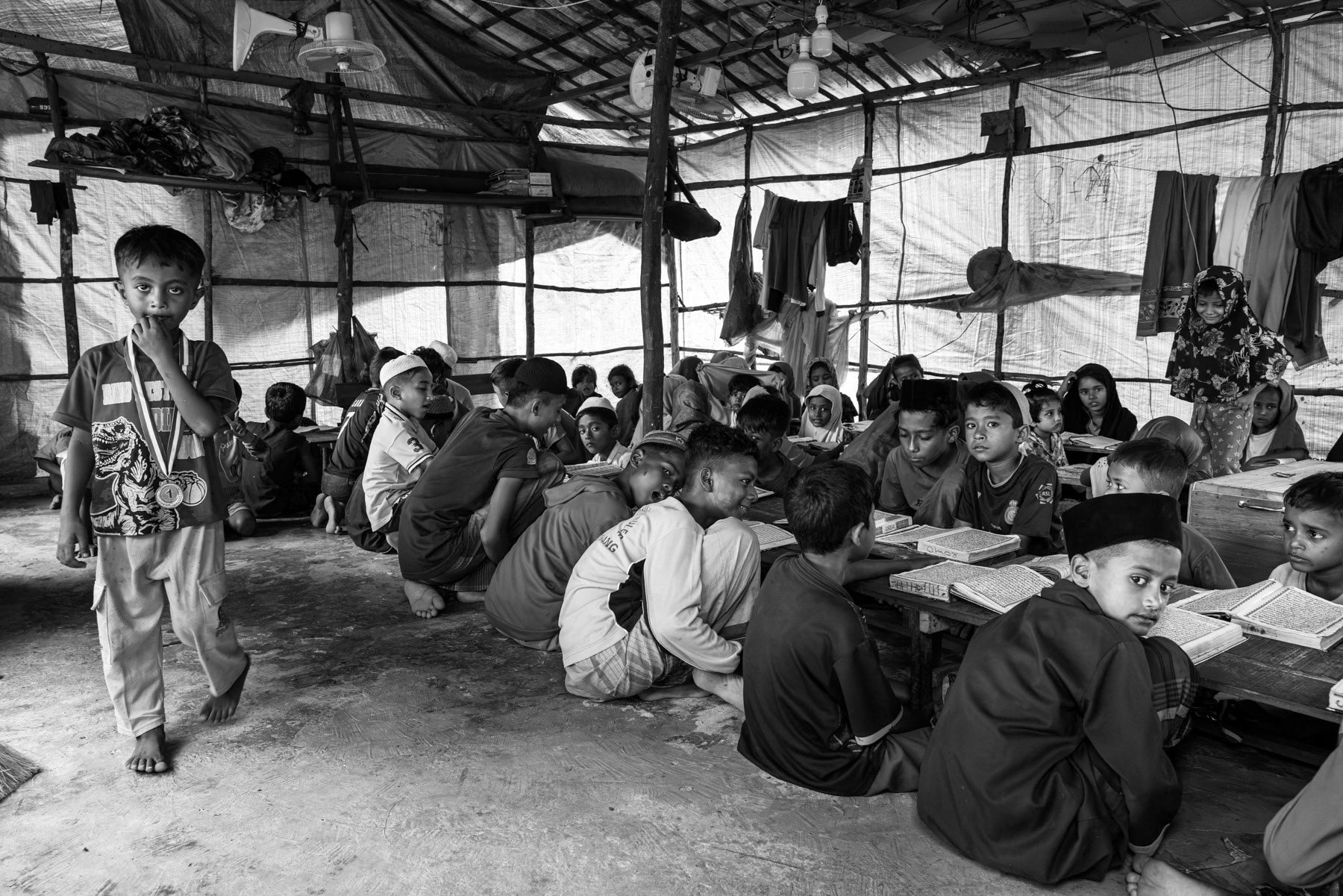
In a makeshift classroom set up by refugees, Rohingya children study the coran and other basic subjects. Rohingya refugee camp in Pekanbaru, Indonesia, October 2025
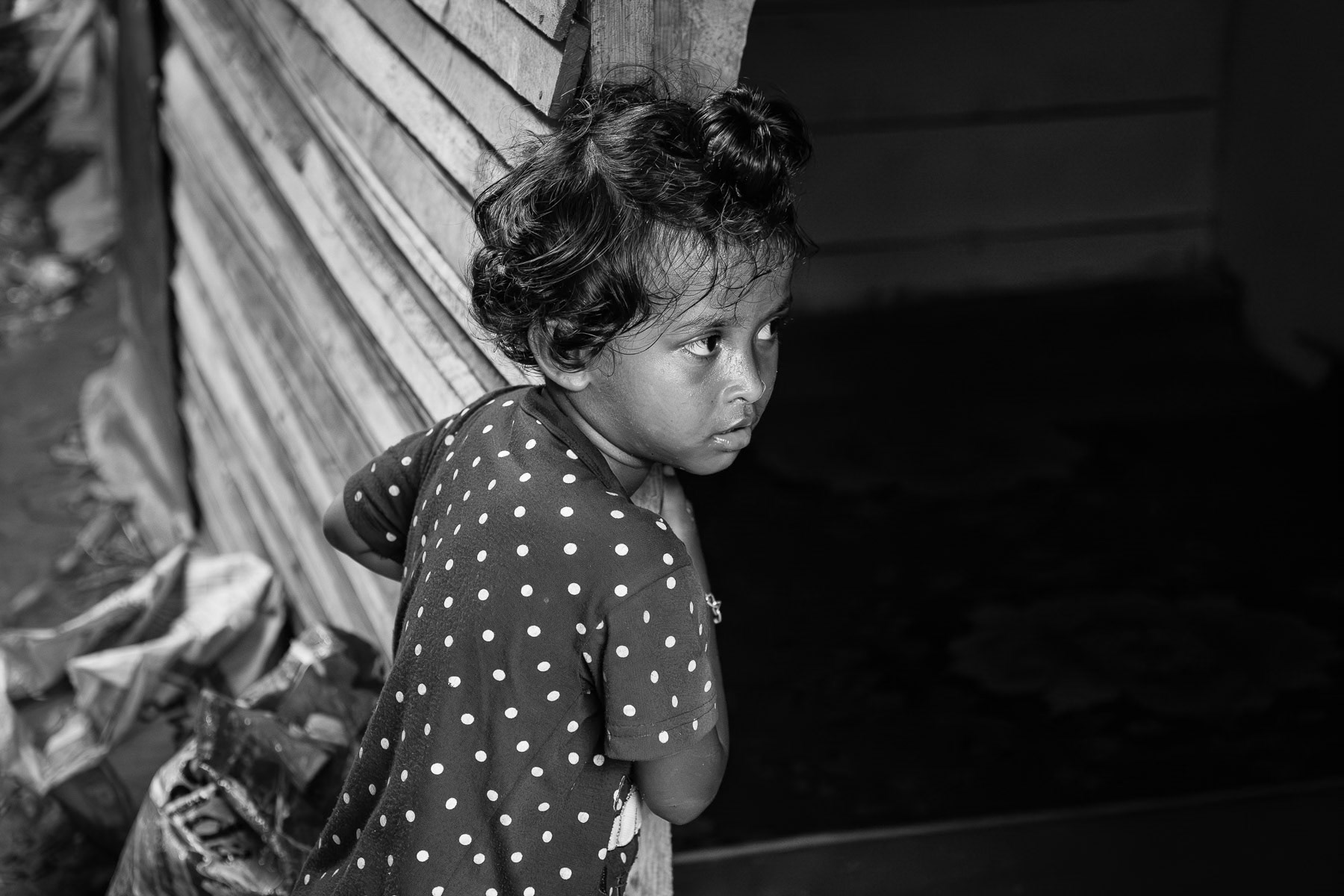
A young Rohingya girl endures the harsh realities of a squalid refugee camp in Sumatra, Indonesia, May 2025
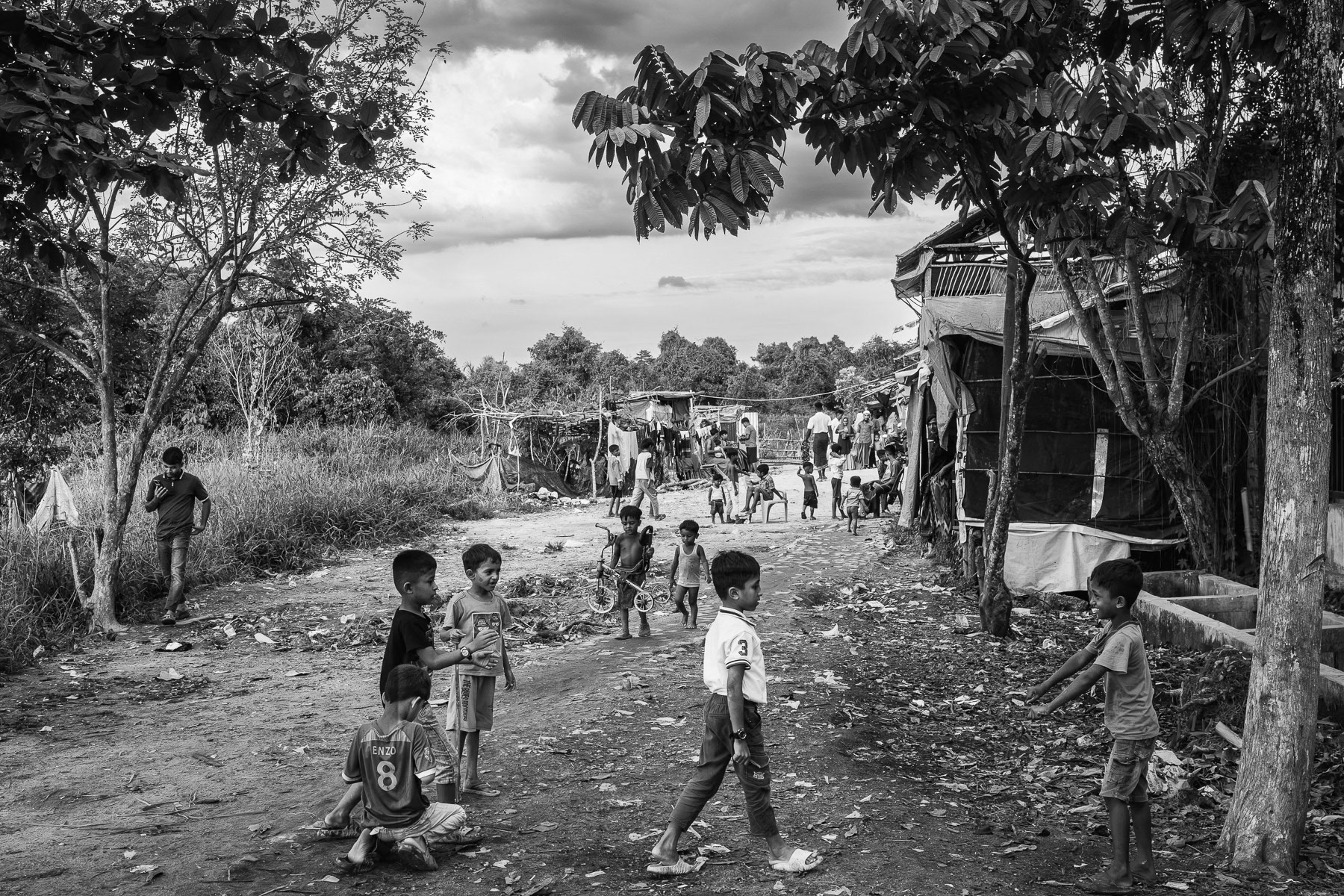
This camp, sheltering approximately 600 Rohingya people from Myanmar, illustrates the harsh reality after a perilous sea journey: a struggle for survival against inadequate clean water, sanitation, and the ever-present danger of disease. Pekanbaru, Indonesia, May 2025